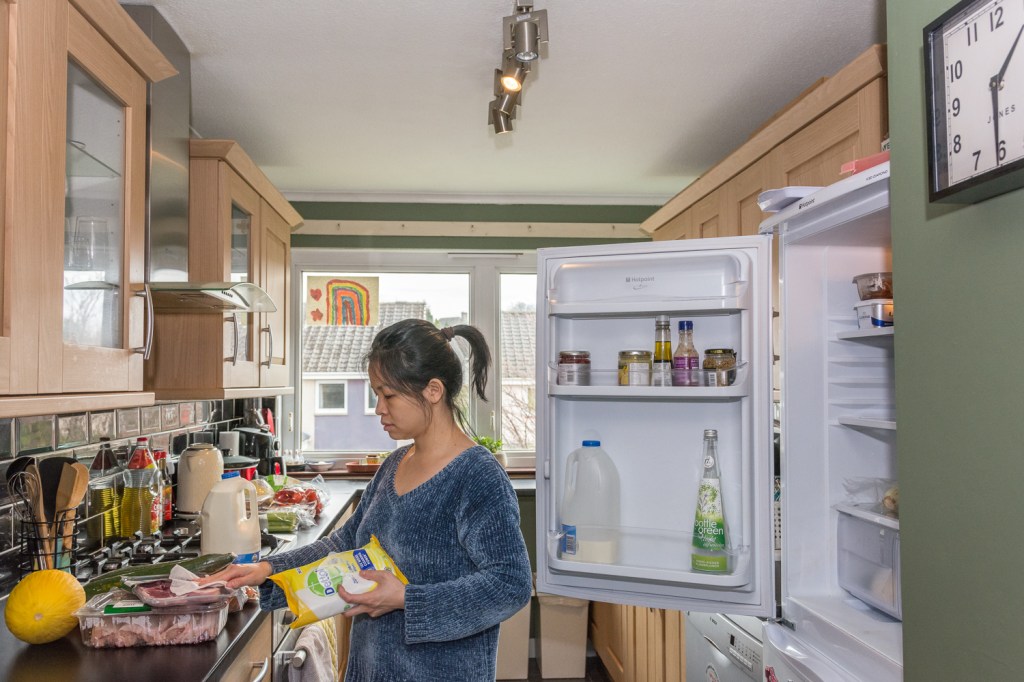
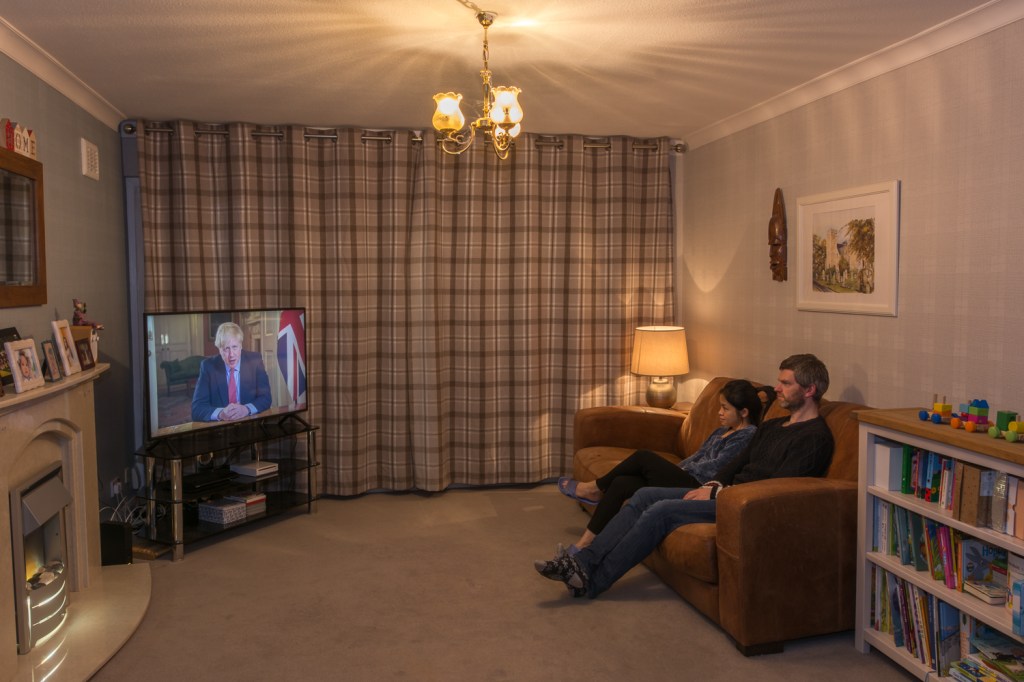
Before starting the photographic process, my confidence was extremely low, due to the fact that every idea I had prior, I was unable to carry out because of the public restrictions put in place by the government, as a direct result of the coronavirus. I knew being in lockdown would have its limitations in regards to creative ideas, and of course, who I could use as my subjects’ – after all, this is a portraiture assignment. However, once I rediscovered Jeff Wall’s work and studied it in greater depth, I found his creativity and imaginative mind set to be incredibly inspiring. His chosen process for creating his images is one I’ve not seen used by any other photographer, and as I really appreciate its originality, I wanted to adopt this method in to my workflow in order to create ‘Wall-esque’ images of my own. He has a natural ability to observe his surroundings for interesting moments that he will then recreate and photograph at a later time. And, after spending a week observing moments with my family that could be later translated into images, specifically related to my chosen theme that explores the coronavirus and being in ‘lockdown’ because of it, I witnessed some fantastic and more importantly, relevant events that I thought would be suitable for such a purpose.
There were three key elements which I needed to consider when creating each image – preparation, organisation and collaboration – in order to mirror Wall’s photographic philosophy and produce images’ similar to his own.
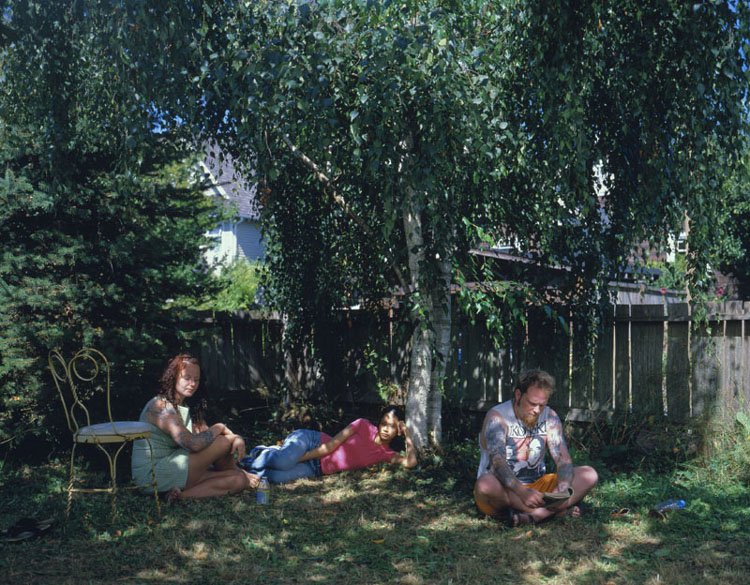
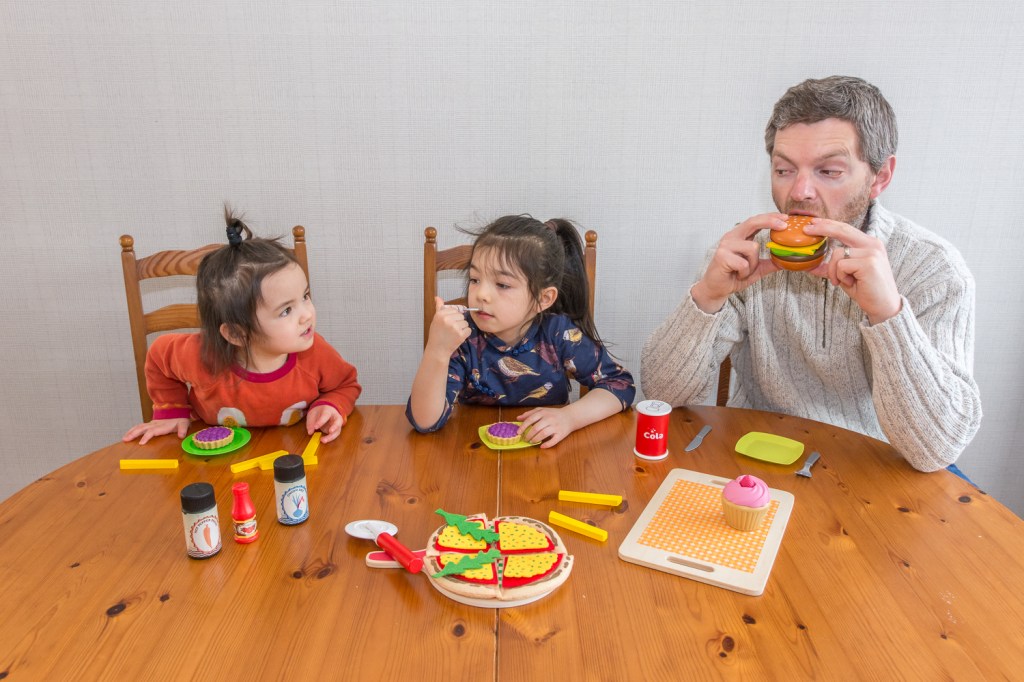
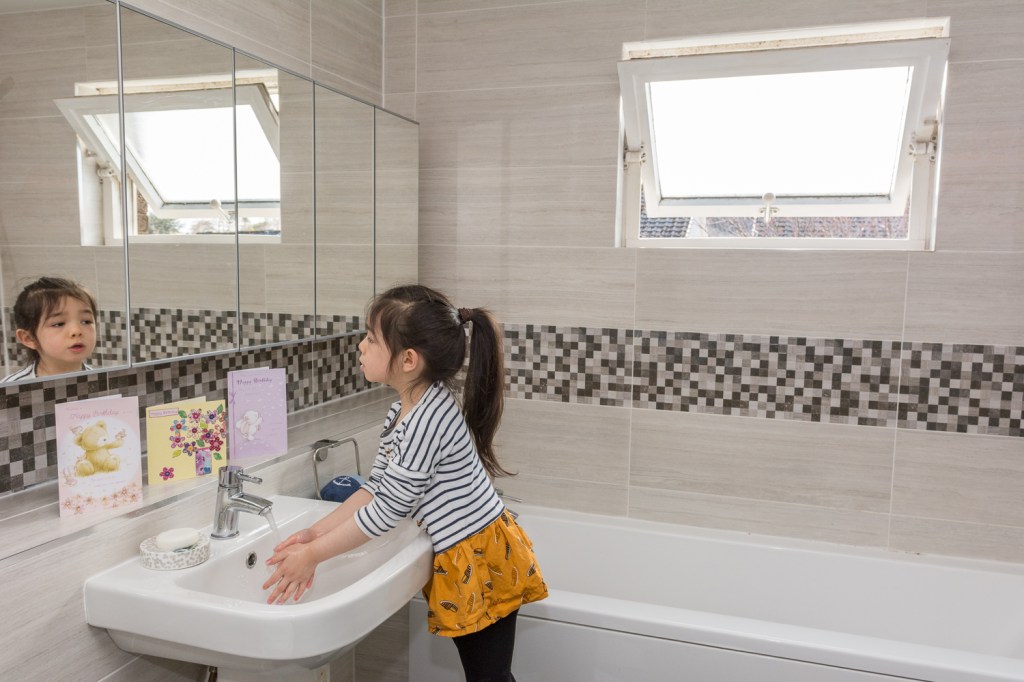
Wall is a perfectionist when it comes to composition, and I tried to echo that trait throughout the entire process. I wanted my compositions to be the same, if possible, relative to how I witnessed each of the memorable moments for the very first time. However, this couldn’t always be achieved, more so when I was part of the event, and therefore, a different composition was needed, irrelevant to my original perspective. Collaboration with my subjects’ started when selecting my compositions, and by having them set on their ‘marks’, effectively, I was able to construct the frame around them, choosing which objects and elements within the scene should be included, in order to achieve the best composition possible. Wall will often add or remove objects from the scene, if he feels it will affect the composition and overall image, either in a positive or negative manner, and again, this was a technique of his that I used, which I found to be incredibly useful, if not time consuming. Of course, I didn’t want to alter the scenes too much, and tried to keep them as true to when I first witnessed them, in regards to specific objects that were evident to me at the time. His photograph, ‘Tattoos and Shadows’ originally featured four individuals’, though he eliminated one, as he felt by using only three, the image appeared more ‘balanced’ and aesthetically pleasing. This is a concept I actually agree with, and have used on many occasions prior, so wanted to incorporate this notion again within my images where possible, for example, the three birthday cards in the bathroom scene. I found that because I was photographing indoors where space and movement was limited, a perhaps slightly wider field of view than I initially anticipated using, was in fact needed. I felt that using an 18mm focal length – equivalent to 27mm in full frame terms – worked best for depicting the key elements I wanted to feature within each frame, thus, helping to achieve the best composition possible.
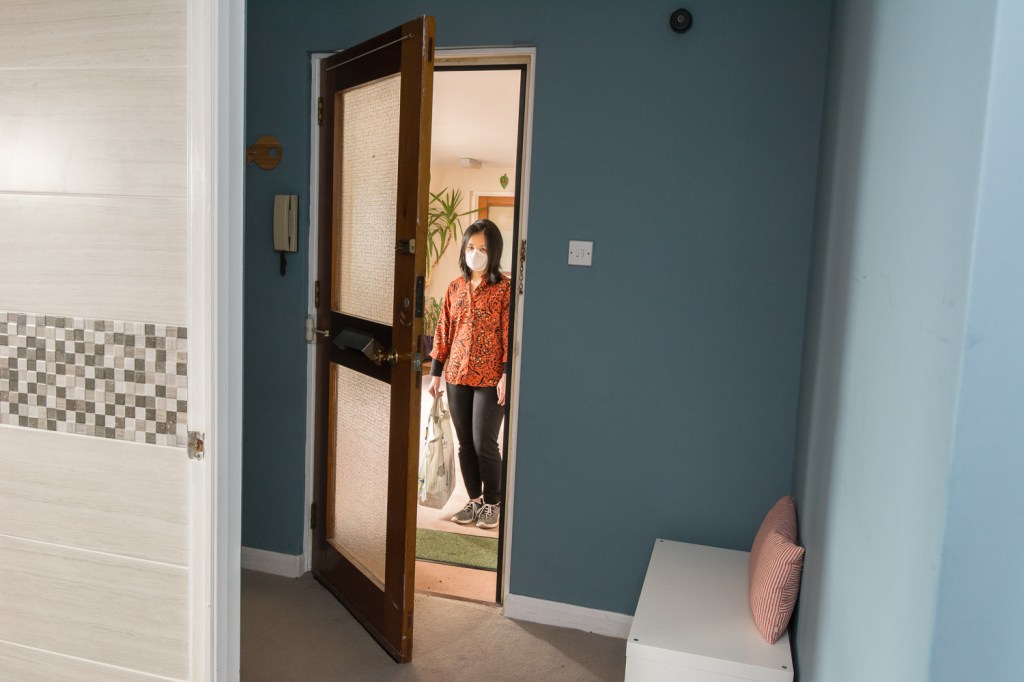
As my intention with each image was to achieve what Wall calls a ‘near documentary photograph’, I understood the importance I had, as the photographer, in collaborating with my subjects’ to ensure I didn’t end up with ‘snapshot’ style portraits. Of course, I understood that there would be an element of performance involved – unlike with Wall’s subjects’, where he considers them to be just ‘behaving’ – but this was understandable, simply because my family couldn’t become unfamiliar with the situation, in the short time we had during the photographic process. I requested that my subjects’ act naturally, like they usually would if doing the same activity in a ‘real life’ situation. Once I saw a suitable moment worth capturing, I simply fired off a shot, and continued to do so until I felt I had enough images for consideration. One of the biggest challenges I faced, as I was shooting indoors, was the lack of natural light available. Because of this, I had no option but to use an external flash, in order to properly illuminate the overall scene and achieve a more balanced exposure. I have used this technique only a handful of times before, so the process, certainly at the beginning, was trial and error, but still a fantastic learning experience in which I have gained a great deal of confidence from. Each image contains a signifier that has relevance to the coronavirus, and my family’s experience of living in ‘lockdown’, though some of these are more obvious than others. But, unlike Wall’s work, where each image sits as a standalone piece, my portraits’ are part of a series and will be shown in chronological order. I believe most viewers will be able to identify the true meaning behind my series, but, what I really hope to achieve, is that there will be at least one ‘moment’ that truly resonates with the viewer that will give my work some authenticity.
References
Tate. (2000). ‘Jeff Wall: room guide, room 12’ [Online] Available from: https://www.tate.org.uk/whats-on/tate-modern/exhibition/jeff-wall/jeff-wall-room-guide/jeff-wall-room-guide-room-12
WSJ Magazine. (2015). ‘Jeff Wall’s Unique Photographic Vision’ [Online] Available from: https://www.wsj.com/articles/jeff-walls-unique-photographic-vision-1441375796
Art Times. (2020). ‘Jeff Wall Interview: Pictures like poems’ [Online] Available from: https://arttimes.co.za/artflix-feature-jeff-wall-interview-pictures-like-poems/
YouTube. (2015). ‘Jeff Wall Interview: We are all Actors’ [Online] Available from: https://www.youtube.com/watch?v=B8P9S6FeAuU
YouTube. (2010). ‘Jeff Wall: “I begin by not photographing”’ [Online] Available from: https://www.youtube.com/watch?v=2yG2k4C4zrU
YouTube. (2014). ‘Jeff Wall: Tableaux Pictures Photographs 1996-2013’ [Online] Available from: https://www.youtube.com/watch?v=tNWWrKXNeBA
Pugay, Angela. (2016) ‘Image denotation and connotation’ [Online] Available from: http://students.smcm.edu/ampugay/denotation&connotation.html
Barthes, Roland. (1964). ‘Rhetoric of the image’ [Online] Available from: https://faculty.georgetown.edu/irvinem/theory/Barthes-Rhetoric-of-the-image-ex.pdf

 Iain Barbour - BA (Hons) Photography