Comparing Walker Evans and Martin Parr’s subway portrait’s, I find it interesting that though both photographer’s had the same desires of photographing the general public using this mode of transport, their methods, and ultimately their final portrait’s, are in total contrast to each other. Evans’s perhaps inappropriate way of photographing his subjects’, gives the impression that it is in fact us – the viewer – who is sat where he is, observing these peoples’ behaviours, totally unaware that they are being photographed. I particularly like how the subjects’ body language and expressions are consistent throughout, depicting a sense of boredom and realism to the fact that, everyone on the train is in the same position as them. He has managed to capture a variety of ‘gazes’, so to speak, which are so often seen when observing others’ whilst using the subway. The ‘adverted gaze’ is more commonly seen in Evans’s work, where his subjects’ are looking away from him and the camera, perhaps observing other people or an advertisement board. But, some of his portraits’, the ‘bystander’s gaze’ is evident, which I find more fascinating as it’s impossible to know if they have spotted Evans’s camera hidden inside his jacket, or if at that very moment, Evans was himself looking away and the subject was simply making an observation of him before being noticed.
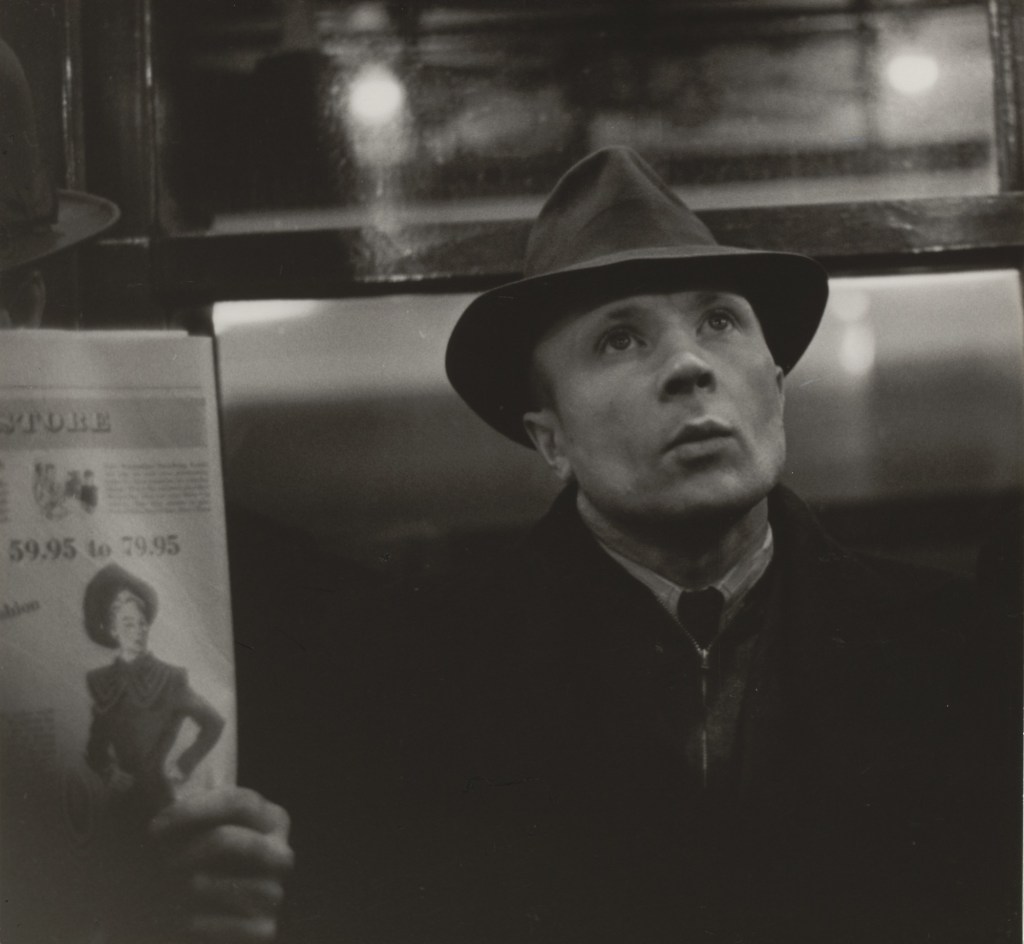
The Adverted Gaze
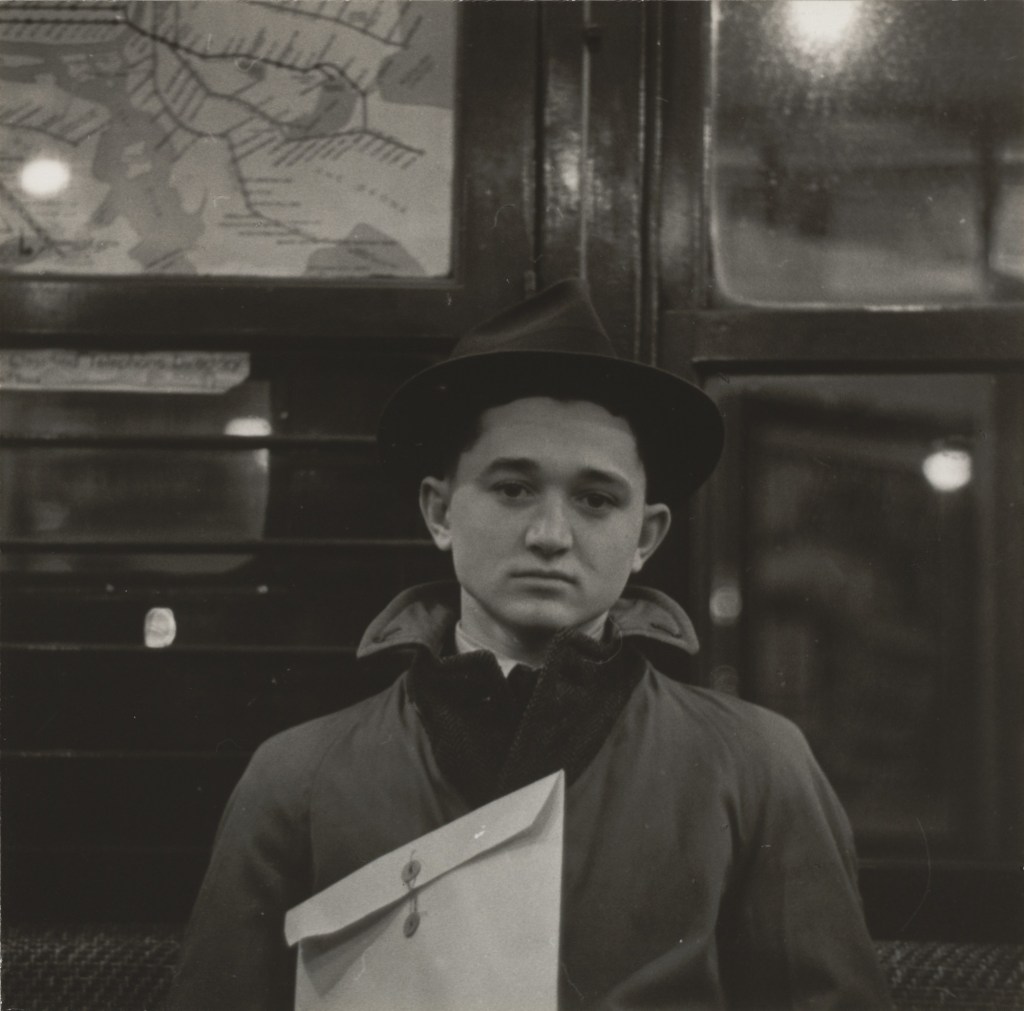
The Bystander’s Gaze
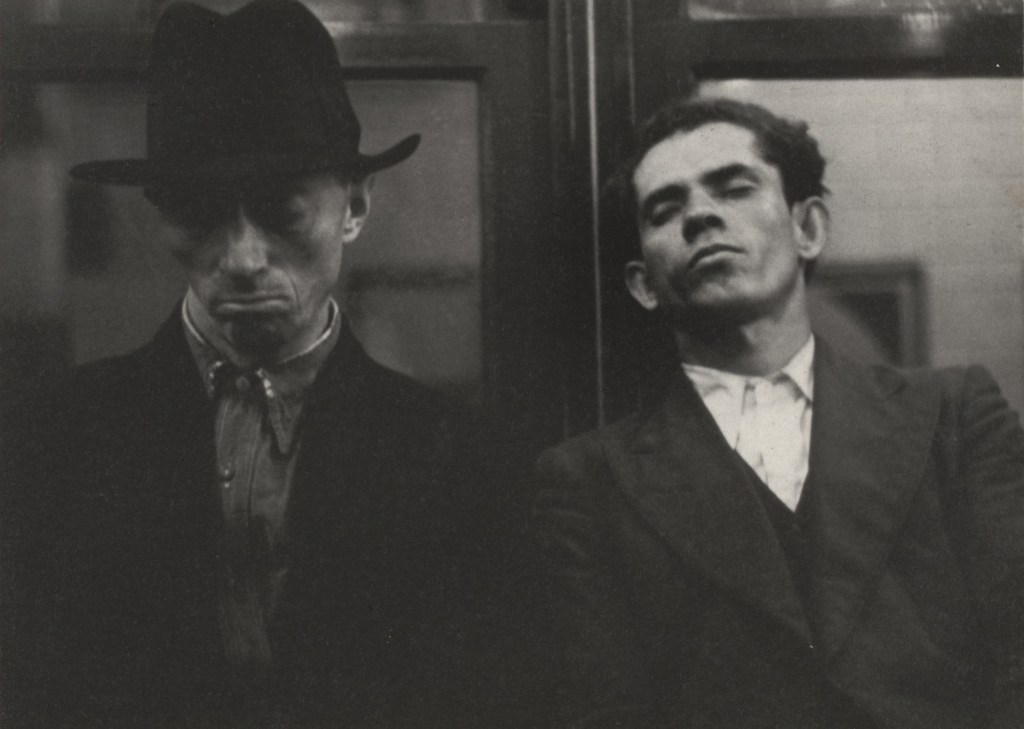
Like Parr, Evans has also captured images of his subjects’ sleeping. But, as the perspective is natural in the sense that we are used to this view when observing people, the viewer is able to obtain different information and can easily process that the individuals’ are in fact asleep. As Parr has chosen a different perspective when photographing his subjects’ – almost directly above them – it’s very hard to tell if they are asleep or awake, as only the top of the eye lids are visible. This may leave room for interpretation by the viewer, where they may have similar thoughts as I did, that these people are simply looking down at their phones, for example. Of course, if they understood prior to seeing the portraits’, when they were taken – 1999 – they would most likely form a conclusion that this wasn’t what they were doing. I found it incredibly difficult to determine when these images were taken, due to the perspective and tight framing he used. Visual information is minimal and to be honest, the hairstyles and clothing worn by the subjects’ could easily be seen on individuals in present day.
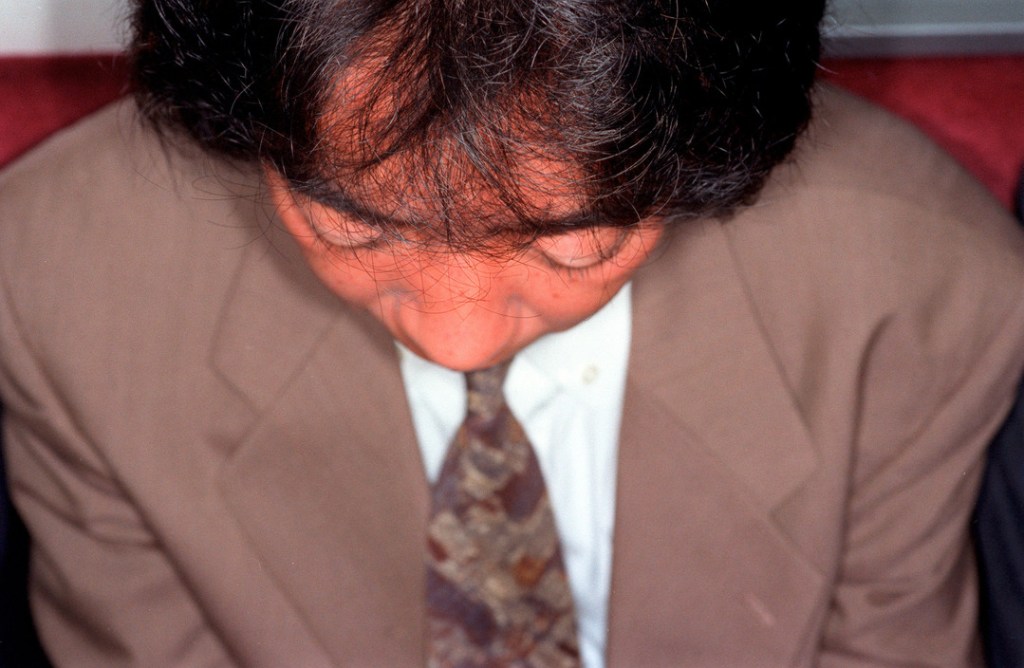
Commuter, Tokyo. 1998.
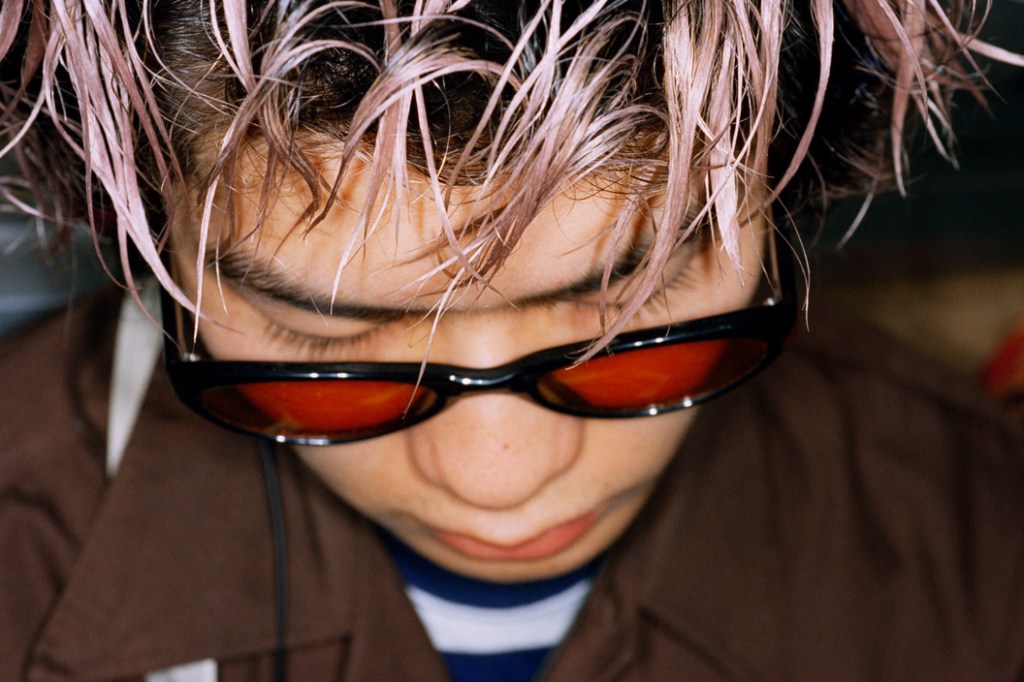
JAPAN. Tokyo. From ‘Japanese Commuters’. 1998.
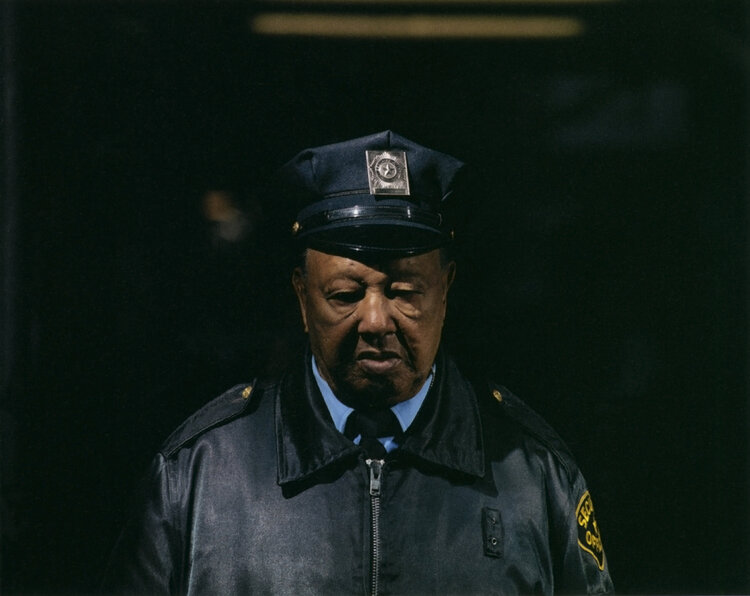
I find Philip-Lorca diCorcia’s portraits’ in his series ‘Heads’ absolutely stunning, with a sort of cinematography feel about them. He does so well to blur the lines between what’s fiction and real, and as a viewer you are unsure if his subjects’ are unaware of his actions or in fact a model involved in the photographic process. Due to the interesting technique adopted by diCorcia, where he uses strobe lighting – placed some distance away from his subject – to illuminate them, the background appears darker than normal. DiCorcia said himself that the “strobe light made full daylight into night time”. I find this fascinating, as on some of his images, the background seems so dark that it almost appears that he has used a black backdrop. I’m not sure if this was his intention, but I think this would be a great technique if trying to produce a project which demonstrated incorporating studio and location photography. As this is the premise for this part of the module, maybe this is something I could explore for my next assignment.
References
MoMA Learning. (2020). ‘Subway Portrait’ [Online] Available from: https://www.moma.org/learn/moma_learning/walker-evans-subway-portraits-1938-41/
Khan Academy. (2015). ‘Evans, Subway Passengers, New York City’ [Online] Available from: https://www.khanacademy.org/humanities/art-1010/art-between-wars/american-art-wwii/v/stare
MoMA. (2020). ‘Walker Evans Subway Portrait 1938-41’ [Online] Available from: https://www.moma.org/collection/works/53727
MoMA. (2020). ‘Walker Evans Subway Portrait 1938-41’ [Online] Available from: https://www.moma.org/collection/works/53751
MoMA. (2020). ‘Walker Evans Subway Portrait 1938-41’ [Online] Available from: https://www.moma.org/collection/works/53905
Magnum Photos. (2014). ‘Book – Japanese Endormis Martin Parr’ [Online] Available from: https://pro.magnumphotos.com/C.aspx?VP3=SearchResult&ALID=2K1HRGPQTYPW
Musee. (2011). ‘Philip Lorca diCorcia: Head On’ [Online] Available from: https://museemagazine.com/features/2019/9/23/impact-philip-lorca-dicorcia-head-on
YouTube. (2014). ‘Philip-Lorca diCorcia: Photographs 1975 – 2012’ [Online] Available from: https://www.youtube.com/watch?v=So_FK4qnz5Q



 Iain Barbour - BA (Hons) Photography