Assignment Two: Vice versa

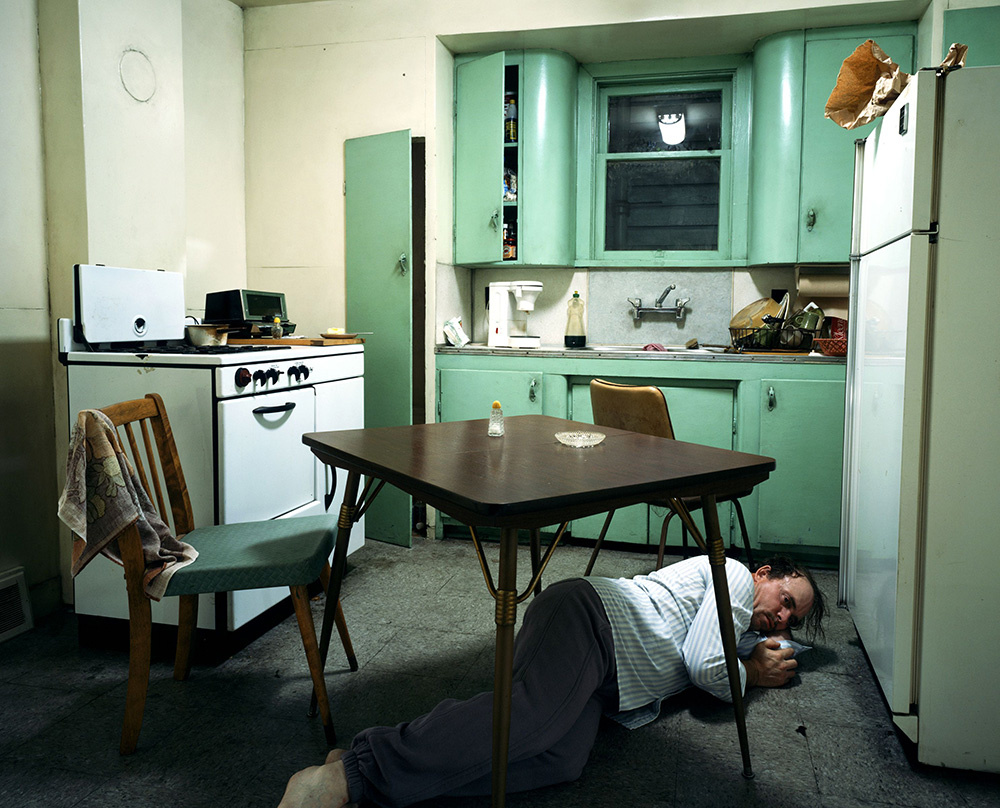
Before starting the photographic process, my confidence was extremely low, due to the fact that every idea I had prior, I was unable to carry out because of the public restrictions put in place by the government, as a direct result of the coronavirus. I knew being in lockdown would have its limitations in regards to creative ideas, and of course, who I could use as my subjects’ – after all, this is a portraiture assignment. However, once I rediscovered Jeff Wall’s work and studied it in greater depth, I found his creativity and imaginative mind set to be incredibly inspiring. His chosen process for creating his images is one I’ve not seen used by any other photographer, and as I really appreciate its originality, I wanted to adopt this method in to my workflow in order to create ‘Wall-esque’ images of my own. He has a natural ability to observe his surroundings for interesting moments that he will then recreate and photograph at a later time. And, after spending a week observing moments with my family that could be later translated into images, specifically related to my chosen theme that explores the coronavirus and being in ‘lockdown’ because of it, I witnessed some fantastic and more importantly, relevant events that I thought would be suitable for such a purpose.

There were three key elements which I needed to consider when creating each image – preparation, organisation and collaboration – in order to mirror Wall’s photographic philosophy and produce images’ similar to his own.

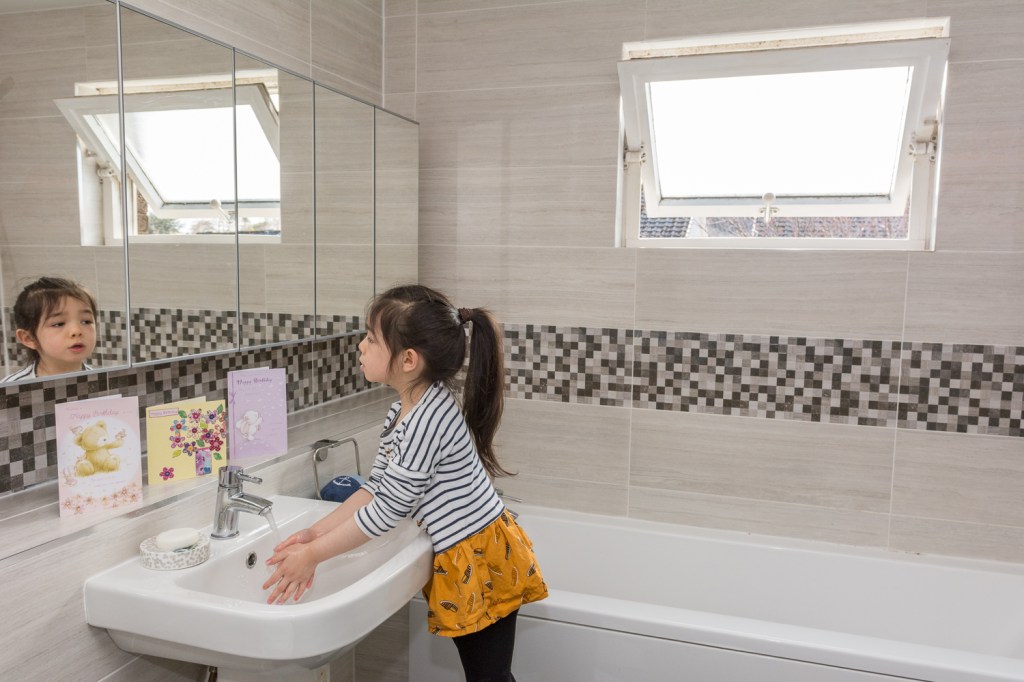
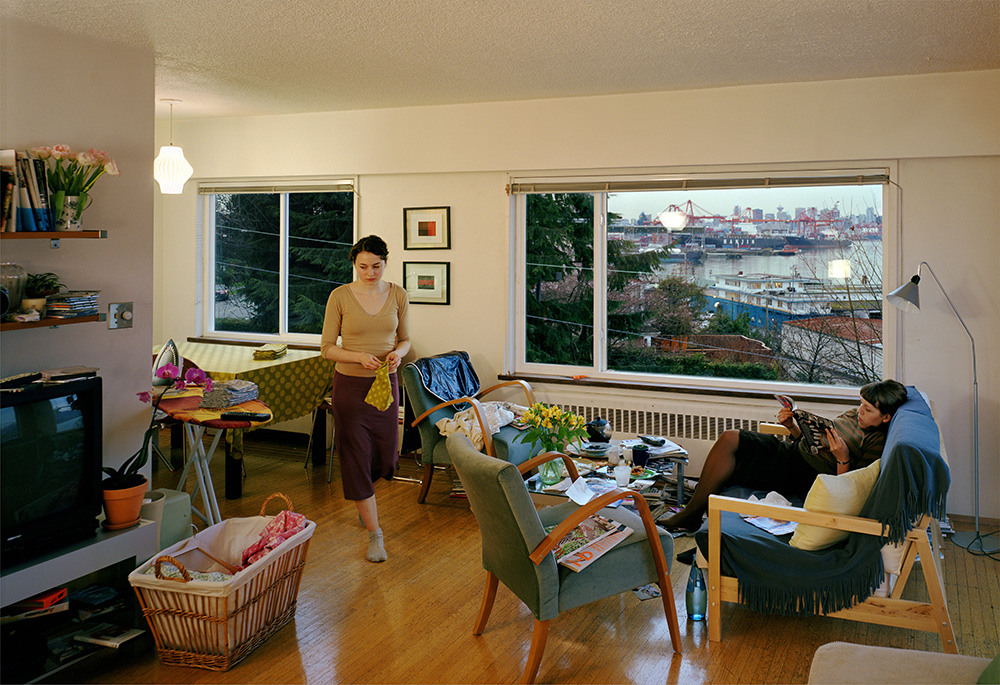
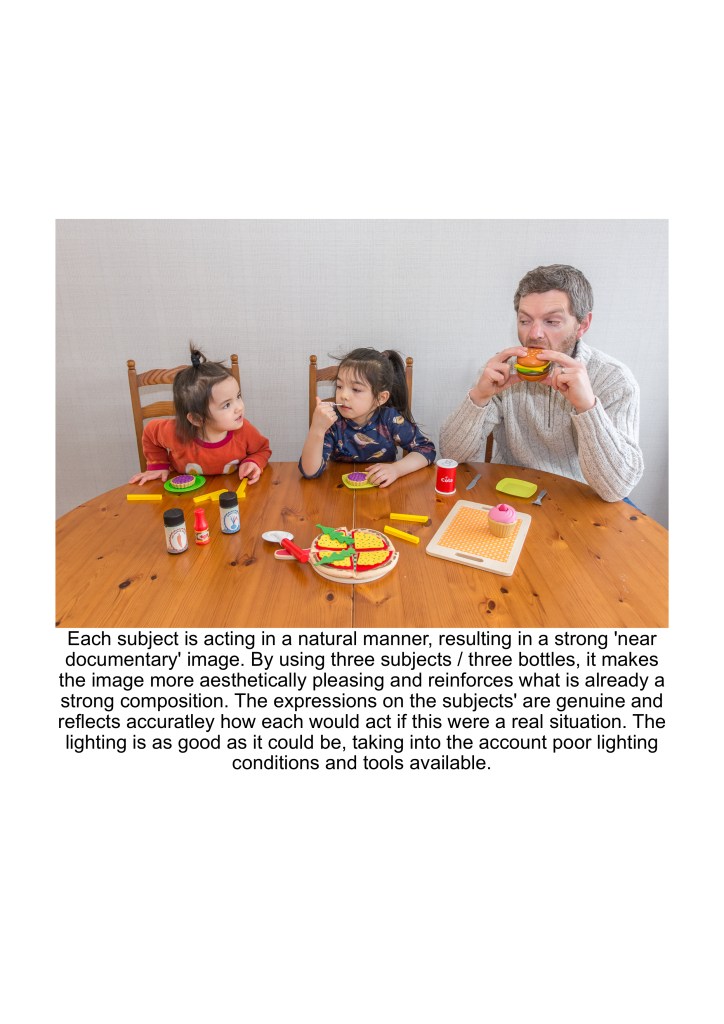
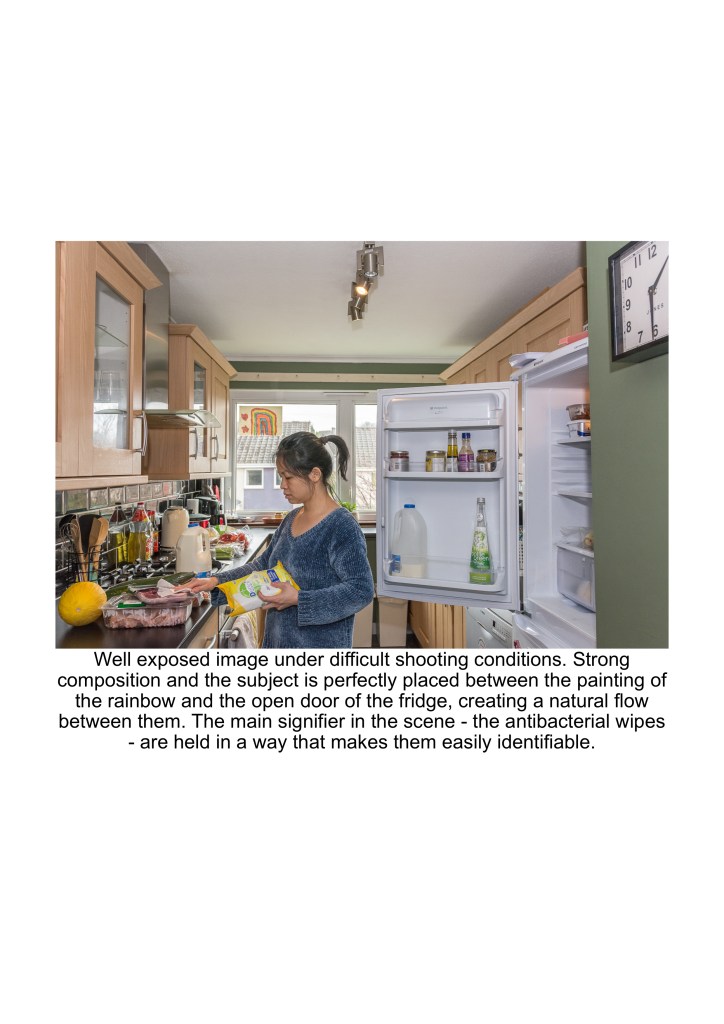
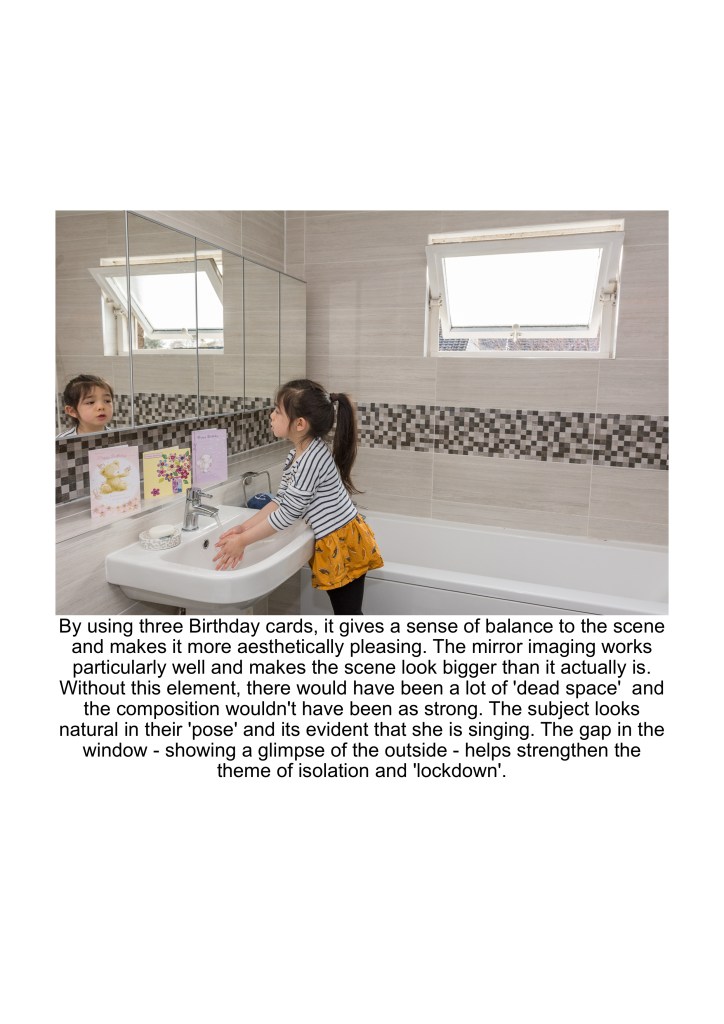
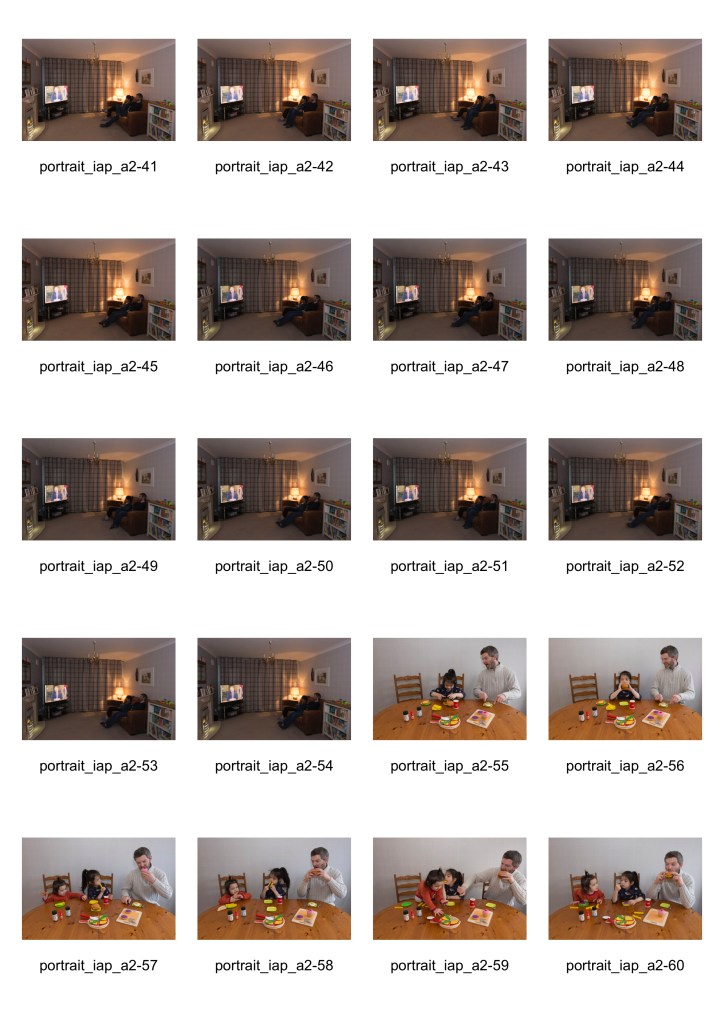
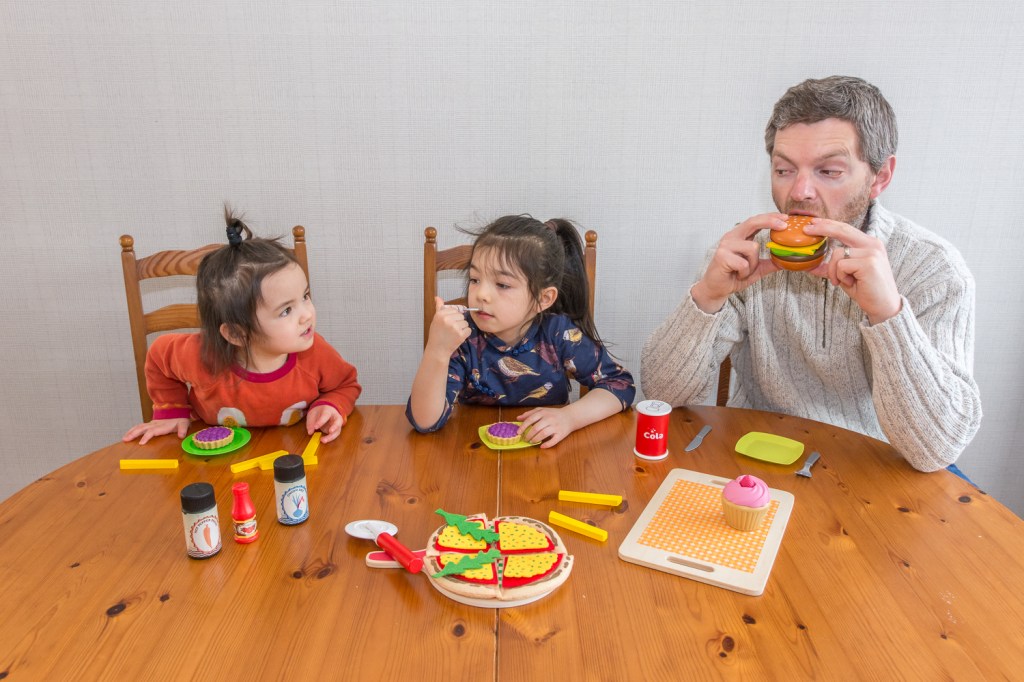
Wall is a perfectionist when it comes to composition, and I tried to echo that trait throughout the entire process. I wanted my compositions to be the same, if possible, relative to how I witnessed each of the memorable moments for the very first time. However, this couldn’t always be achieved, more so when I was part of the event, and therefore, a different composition was needed, irrelevant to my original perspective. Collaboration with my subjects’ started when selecting my compositions, and by having them set on their ‘marks’, effectively, I was able to construct the frame around them, choosing which objects and elements within the scene should be included, in order to achieve the best composition possible. Wall will often add or remove objects from the scene, if he feels it will affect the composition and overall image, either in a positive or negative manner, and again, this was a technique of his that I used, which I found to be incredibly useful, if not time consuming. Of course, I didn’t want to alter the scenes too much, and tried to keep them as true to when I first witnessed them, in regards to specific objects that were evident to me at the time. His photograph, ‘Tattoos and Shadows’ originally featured four individuals’, though he eliminated one, as he felt by using only three, the image appeared more ‘balanced’ and aesthetically pleasing. This is a concept I actually agree with, and have used on many occasions prior, so wanted to incorporate this notion again within my images where possible, for example, the three birthday cards in the bathroom scene. I found that because I was photographing indoors where space and movement was limited, a perhaps slightly wider field of view than I initially anticipated using, was in fact needed. I felt that using an 18mm focal length – equivalent to 27mm in full frame terms – worked best for depicting the key elements I wanted to feature within each frame, thus, helping to achieve the best composition possible.
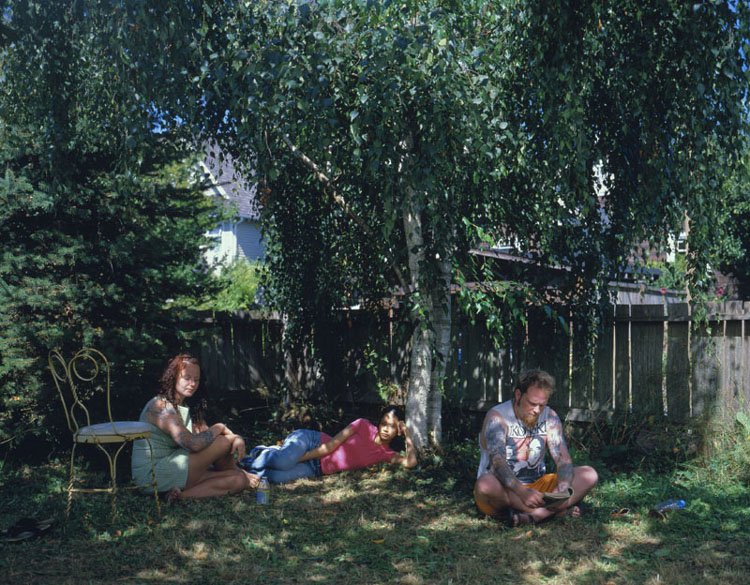
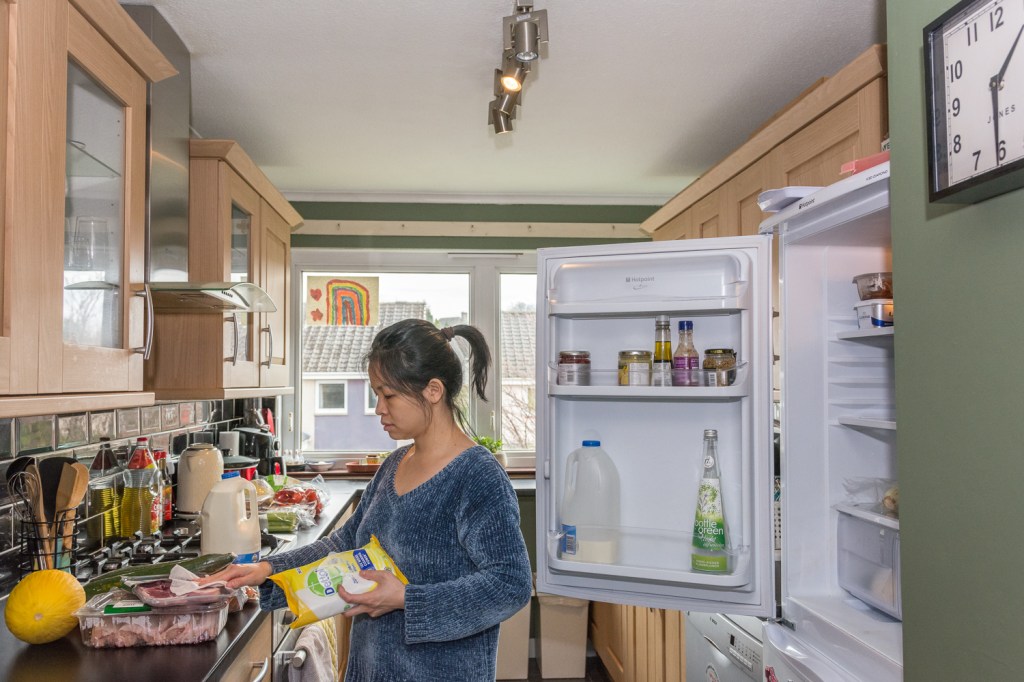
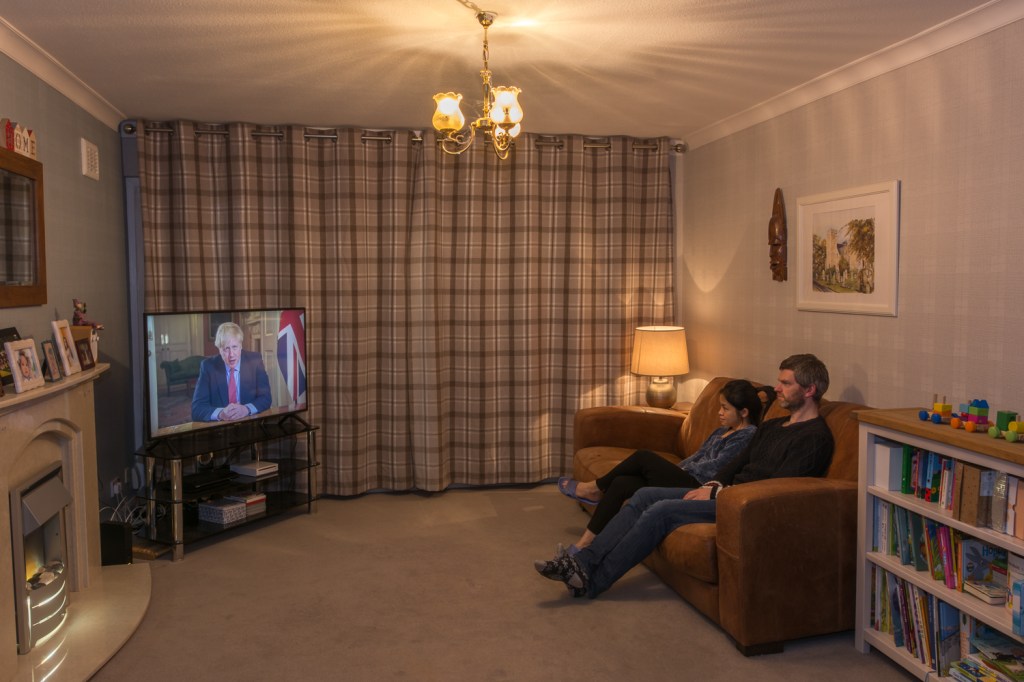
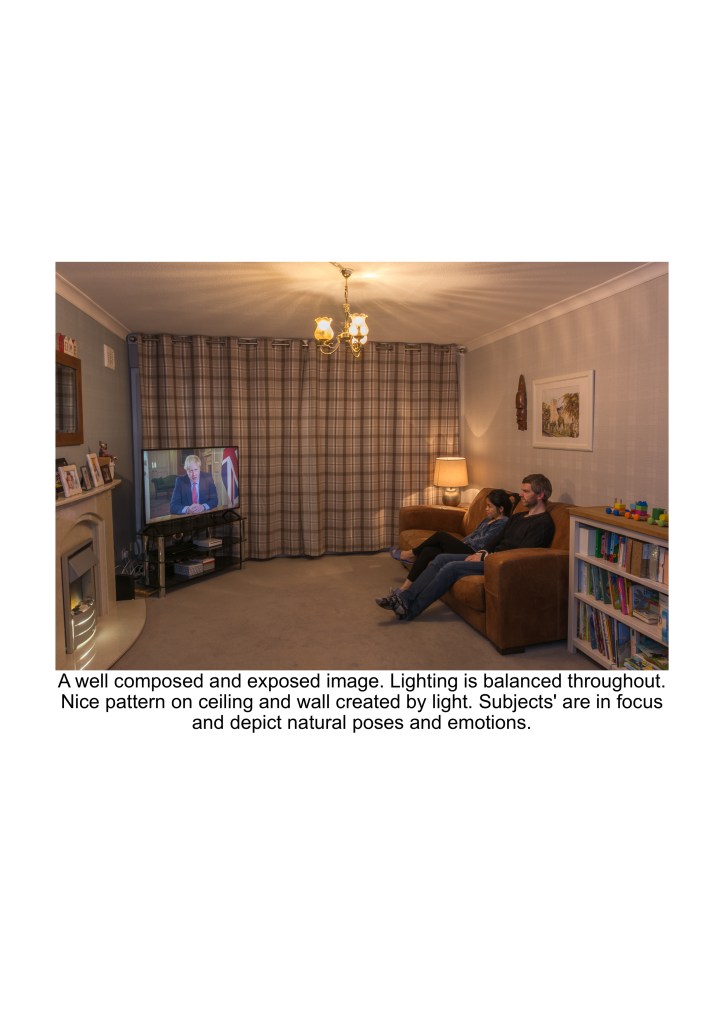
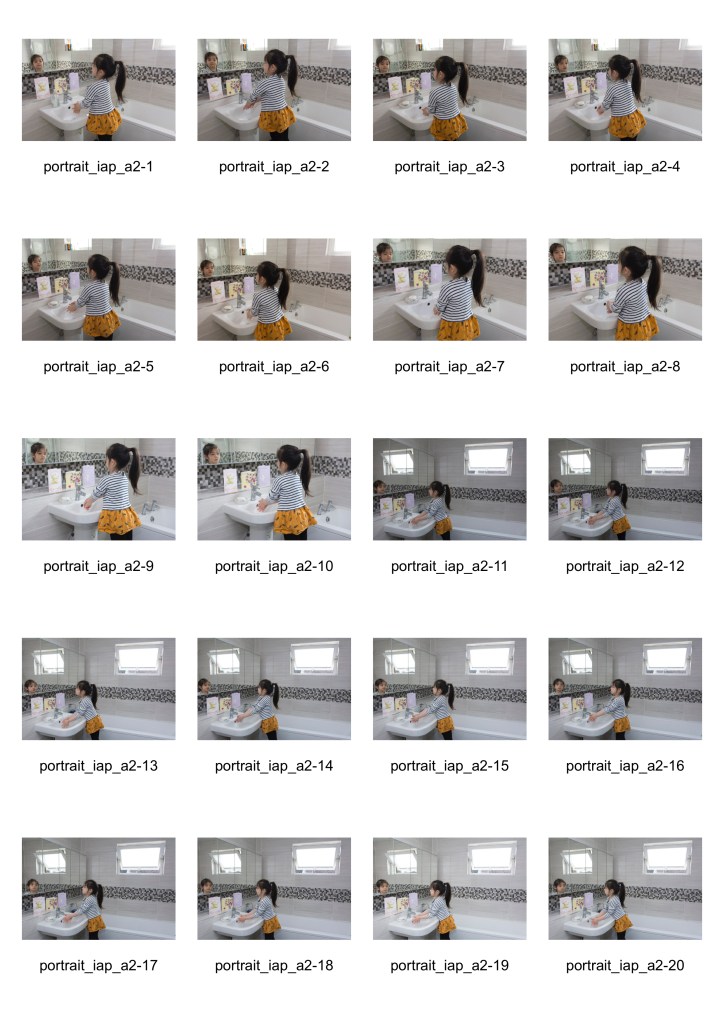
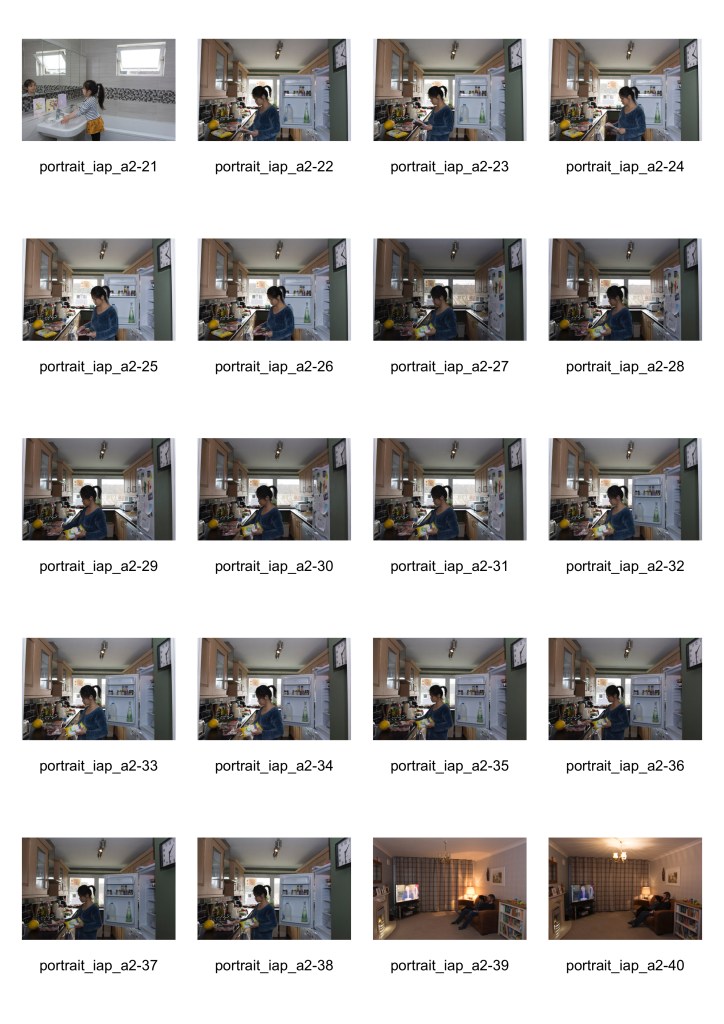
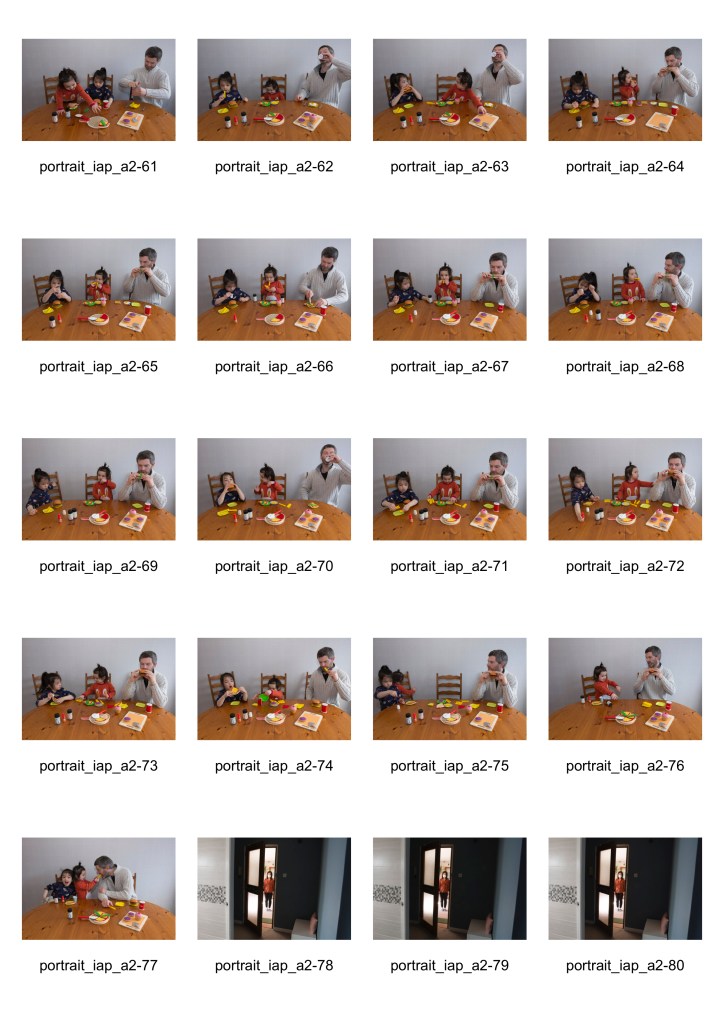
As my intention with each image was to achieve what Wall calls a ‘near documentary photograph’, I understood the importance I had, as the photographer, in collaborating with my subjects’ to ensure I didn’t end up with ‘snapshot’ style portraits. Of course, I understood that there would be an element of performance involved – unlike with Wall’s subjects’, where he considers them to be just ‘behaving’ – but this was understandable, simply because my family couldn’t become unfamiliar with the situation, in the short time we had during the photographic process. I requested that my subjects’ act naturally, like they usually would if doing the same activity in a ‘real life’ situation. Once I saw a suitable moment worth capturing, I simply fired off a shot, and continued to do so until I felt I had enough images for consideration. One of the biggest challenges I faced, as I was shooting indoors, was the lack of natural light available. Because of this, I had no option but to use an external flash, in order to properly illuminate the overall scene and achieve a more balanced exposure. I have used this technique only a handful of times before, so the process, certainly at the beginning, was trial and error, but still a fantastic learning experience in which I have gained a great deal of confidence from. Each image contains a signifier that has relevance to the coronavirus, and my family’s experience of living in ‘lockdown’, though some of these are more obvious than others. But, unlike Wall’s work, where each image sits as a standalone piece, my portraits’ are part of a series and will be shown in chronological order. I believe most viewers will be able to identify the true meaning behind my series, but, what I really hope to achieve, is that there will be at least one ‘moment’ that truly resonates with the viewer that will give my work some authenticity.
References

Tate. (2000). ‘Jeff Wall: room guide, room 12’ [Online] Available from: https://www.tate.org.uk/whats-on/tate-modern/exhibition/jeff-wall/jeff-wall-room-guide/jeff-wall-room-guide-room-12

WSJ Magazine. (2015). ‘Jeff Wall’s Unique Photographic Vision’ [Online] Available from: https://www.wsj.com/articles/jeff-walls-unique-photographic-vision-1441375796

Art Times. (2020). ‘Jeff Wall Interview: Pictures like poems’ [Online] Available from: https://arttimes.co.za/artflix-feature-jeff-wall-interview-pictures-like-poems/

YouTube. (2015). ‘Jeff Wall Interview: We are all Actors’ [Online] Available from: https://www.youtube.com/watch?v=B8P9S6FeAuU

YouTube. (2010). ‘Jeff Wall: “I begin by not photographing”’ [Online] Available from: https://www.youtube.com/watch?v=2yG2k4C4zrU

YouTube. (2014). ‘Jeff Wall: Tableaux Pictures Photographs 1996-2013’ [Online] Available from: https://www.youtube.com/watch?v=tNWWrKXNeBA

Pugay, Angela. (2016) ‘Image denotation and connotation’ [Online] Available from: http://students.smcm.edu/ampugay/denotation&connotation.html

Barthes, Roland. (1964). ‘Rhetoric of the image’ [Online] Available from: https://faculty.georgetown.edu/irvinem/theory/Barthes-Rhetoric-of-the-image-ex.pdf
Assignment Two: Vice versa – Jeff Wall (how his work has inspired mine)

Due to the change in circumstances, I’m now only able to take photographs from inside my home. This means I’m limited in regards to ideas, and of course, subjects’, and in this instance, will have to rely on my family for participation. The theme will remain the same – Coronavirus – but instead of documenting how this has affected other people, my images will depict specific moments and events, during my family’s time in isolation. I have made the conscious decision not to take candid style portraits, as I feel most of our activities that are undertaken throughout the day, aren’t worth documenting, and as a result, the final images wouldn’t work together as a series. Instead, I’ve chosen to approach this similar to that of assignment three, from the ‘Context and Narrative’ module, where each image was fundamentally staged. From carrying out research into photographers’ who use this method in their photographic process, I have rediscovered Canadian photographer, Jeff Wall. As a result, I have been inspired to adopt his chosen practices and techniques for this assignment, which I feel will not only lead to a more, well-constructed piece of work, but show evidence of my photographic development and learning.

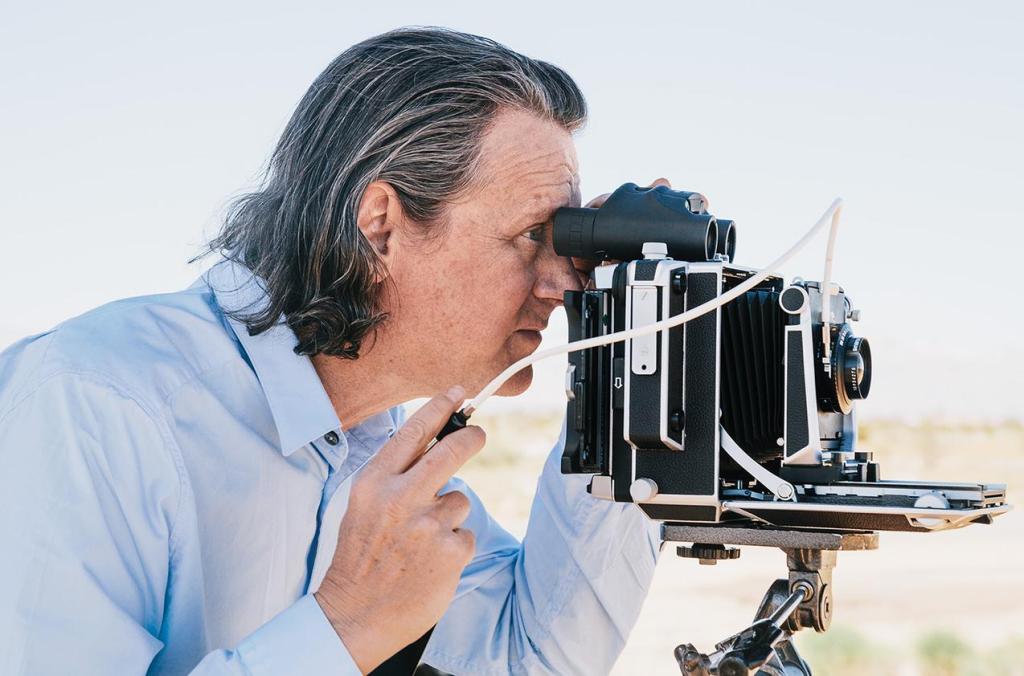
Describing his work as near documentary”, in that his images aren’t ‘snapshots’, but rather “contemplations of its characteristics”, Wall’s approach to his photography is different to many others, in that he remembers a memorable scene or moment, and photographs it at a later time. In an interview with the ‘Louisiana Channel’, Wall says one of his best attributes is his ability to observe things naturally, and his experiences – which ultimately are produced into photographs – come around by being observant. Using this method, I will spend a week observing situations involving myself and my family – what Wall calls an ‘occurrence’ when people are involved – and make a mental note of memorable moments that I think will be worth photographing later. A big part of Wall’s process, is ensuring that the composition is perfect. And, though he doesn’t like the term ‘staged photography’ to be associated with his work, he will in fact add and subtract objects within the frame, to help achieve the composition he feels is best, ultimately resulting in a finer photograph – in his eyes anyway. Again, this is a technique of his that I will adopt, however, will ensure that any objects purposely added or removed, are done so for the greater good of the composition and won’t affect the underlying message surrounding each image. I will try to work having a similar mind-set to that of Wall, where he will always consider three key elements within his process – preparation, organisation and collaboration – reinforcing the fact that his images are not ‘snapshots’, even though they have ‘candid’ qualities. In a talk, aptly named ‘We are all actors’, Wall debates if individuals that feature in his work are “performing” or “behaving”. He goes on to say that after some time – as he usually works with his subjects for many days – people stop ‘performing’ and their behaviours become more natural. I’m well aware that this occurrence won’t happen when photographing my subjects’, and appreciate there will be an element of ‘acting’ involved that I’m hoping won’t lead to a lack of authenticity surrounding my images. However, Wall beautifully describes his photographs as not being representations of his memories alone, but memories of many others. He believes that if his work “feels true to your own experiences then it has to have some authenticity to it”. Ultimately, with the theme I have chosen and the way I would like to create my images, I hope to achieve authenticity by forming a personal connection with the viewer, surrounding the events taking place within the photograph.

References

WSJ Magazine. (2015). ‘Jeff Wall’s Unique Photographic Vision’ [Online] Available from: https://www.wsj.com/articles/jeff-walls-unique-photographic-vision-1441375796

Art Times. (2020). ‘Jeff Wall Interview: Pictures like poems’ [Online] Available from: https://arttimes.co.za/artflix-feature-jeff-wall-interview-pictures-like-poems/

YouTube. (2015). ‘Jeff Wall Interview: We are all Actors’ [Online] Available from: https://www.youtube.com/watch?v=B8P9S6FeAuU

YouTube. (2010). ‘Jeff Wall: “I begin by not photographing”’ [Online] Available from: https://www.youtube.com/watch?v=2yG2k4C4zrU

YouTube. (2014). ‘Jeff Wall: Tableaux Pictures Photographs 1996-2013’ [Online] Available from: https://www.youtube.com/watch?v=tNWWrKXNeBA

Dream Idea Machine. (2020). ‘PHOTO: Jeff Wall-Appearance’ [Online] Available from: http://www.dreamideamachine.com/en/?p=36808

Assignment Two: Vice versa – Initial thoughts, ideas and preparation

To say this assignment has come at the wrong time is a massive understatement. The pandemic affecting the whole world currently – Covid19 – means all of my initial ideas are no longer possible, and I’ve had to rethink my approach in order to keep not only myself safe, but others too. I understand that taking portraits of people at this present time – other than my family – might not be sensible, or possible, and I’m finding it incredibly challenging to think of a theme that is both interesting and creative that I can do from the confinements of my own home.

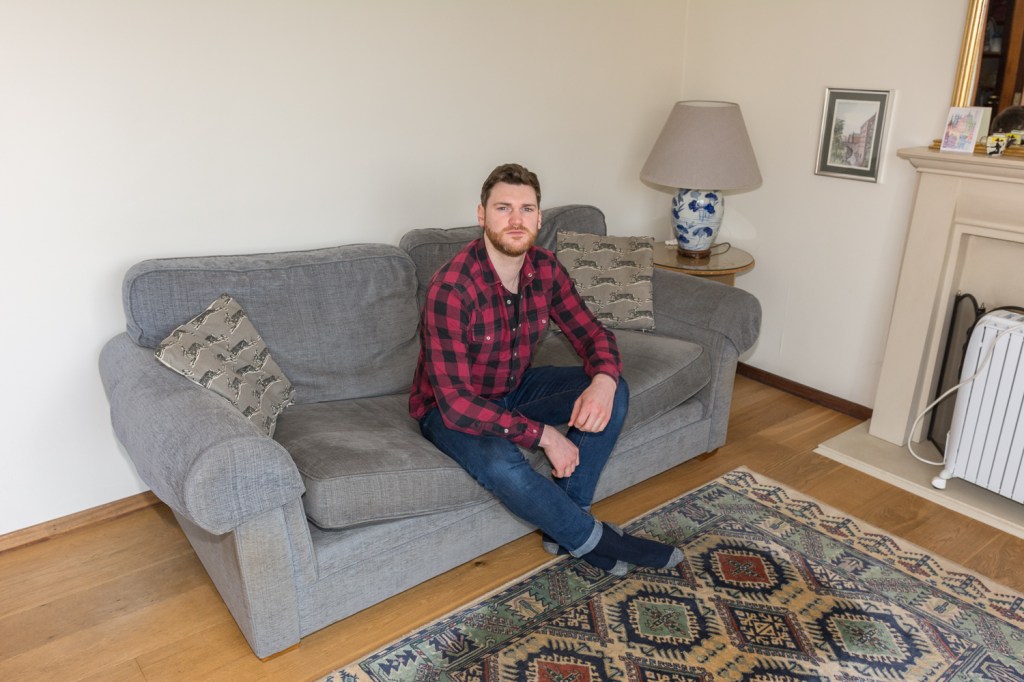
During my feedback session with my tutor regarding assignment one, we discussed briefly the topic of environmental photography – the process of taking portraits of individuals’, usually in their working environment. After doing some additional research, I thought this would be a theme I could consider for this assignment. My idea would see me steer away from what a traditional environmental portrait would depict, and instead, I would photograph my subjects’ in a home studio setting, which would consist of a white backdrop and studio lighting. I understood that this method wouldn’t have met the brief I was trying to achieve, and knew I needed an additional element to support the portraits’. I had an idea of recording a sound bite from each of the subjects’ places of work, where the viewer would have to be reliant on the sounds to form a conclusion on where that individual worked, for example, a restaurant. I still think this idea is interesting and one I hope to undertake in the near future when normality resumes. Until considering this theme, I believed that I had never done an environmental portrait before – but this isn’t true. Scrolling through my personal archive, I have in fact done many. Below are some examples of my environmental portraits.

Before the government tightened their policies, which effectively saw the country go into lockdown, I had a few ideas that specifically focussed on the effects the coronavirus has had on other individuals. I hoped to use some of the photographic methods I had learnt in ‘Part Two’, as well as incorporating some of the rules and regulations enforced by the government within my work.

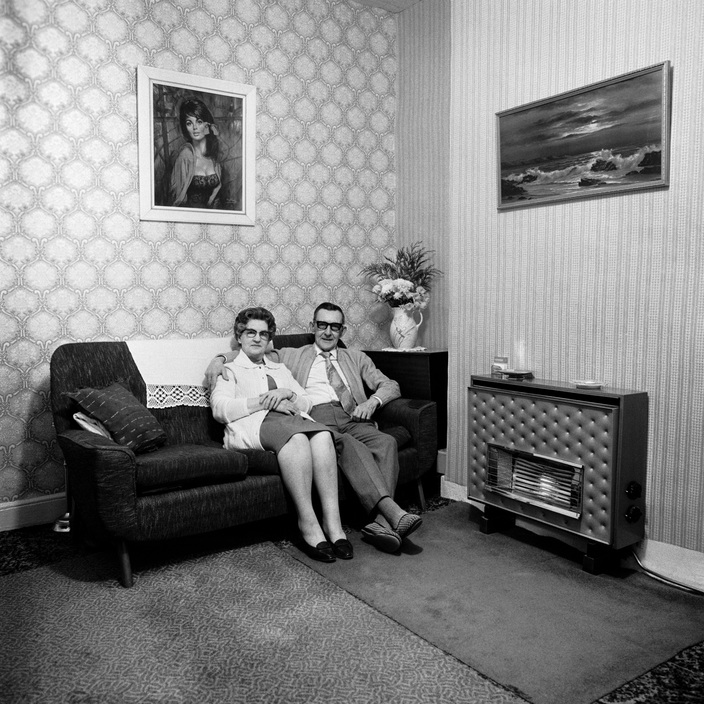
Inspired by ‘Residents of June Street’, by Daniel Meadows and Martin Parr, I liked the idea of photographing subjects’ in their homes to reinforce the notion of ‘self-isolation’. I planned to produce five portraits’, depicting different sitting rooms belonging to individuals of the same family – specifically mine – who have taken it upon themselves to self-isolate. Each image would’ve been supported by text stating how many days they have been in isolation and the reasons why. I did takes some images – more for test purposes – but felt the whole process wasn’t working for me and ultimately, I wasn’t happy with the results I was producing. At the time, I didn’t give up on the idea entirely, but understood something would need to be changed if I were to proceed with this theme.

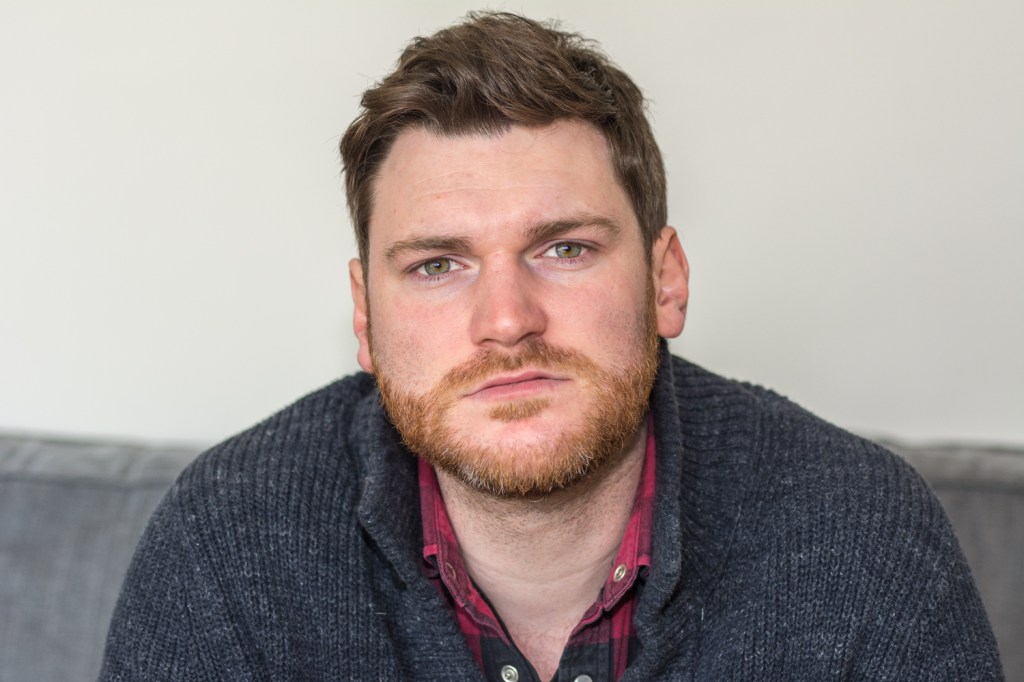
Another idea was to take portraits’ of those who have unfortunately lost their jobs because of the Coronavirus. I actually know at least five people who are now jobless as a result of the pandemic and thought this would have been a good way of highlighting this specific issue that has affected so many across the country. The portraits’ would have effectively been tight head shots, as I wanted the viewer to purposely see the emotions on the subjects’ faces. To help generate their true emotions at the exact moment the shutter was pressed, I planned to ask each subject the same a question, “Without telling me, how do you feel?” I also wanted to apply the 2 metre social distancing rule, which at that point had just been issued, but perhaps wasn’t being fully respected. Taking the image from exactly 2 metres away from each subject, whilst using my 60mm macro lens, would offer an interesting dynamic to the series as all the portraits’ would have the same perspective and help me achieve the ‘tight head shot’. But on further consideration, and again, after a few test shots, I felt this wouldn’t work either ethically, or logistically, and had to abolish the idea.

References

Magnum Photos. (2014). ‘Martin Parr – GB. ENGLAND. June Street. 1972’ [Online] Available from: https://pro.magnumphotos.com/Catalogue/Martin-Parr/1972/GB-ENGLAND-June-Street-1972-NN162445.html

Assignment Two: Vice versa- Reflections

This was by the far the most stressed I’ve been whilst working on an assignment. Not just because of the environment I had to do it in, but, also because I was struggling to think of suitable ideas, after so many failed attempts. However, I quickly had to succumb to the fact that this was the situation I was in – like so many other OCA students’ – and effectively, I had to get on with it to the best of my abilities. I have always understood the importance of research before carrying out an assignment, but even more so in this instance. I truly feel the success of the entire process, and ultimately, the quality of my portraits’, was due to the thorough research I did into Jeff Wall, which resulted in me gaining a huge amount of inspiration and confidence, giving me the drive and determination I needed to carry on in difficult circumstances and produce the best work possible.

As I very rarely shoot indoors and am not used to photographing subjects’ where the natural light is limited, I had to quickly learn the art of low-light photography. Working the manual controls on my camera to choose the correct settings wasn’t an issue, however, using an external flash and understanding how to use it properly, and effectively, took some time. But, the more test shots I did before introducing the subjects’ into the scene, proved to be beneficial, and my confidence in my abilities grew as the process went on, and I think this is evident in my final images. Getting the compositions right was vitally important to me, so working in confined spaces proved to be difficult at times, and more often than not, my camera was attached to my tripod in some precarious positions. But, instead of choosing the easiest, but, perhaps not the best compositions, I took my time and persevered to get those I thought would work best with that particular image. I felt I have utilised some of the compositional ‘rules’ effectively, such as the rules of thirds, foreground interested and depth, framing and elements of symmetry.

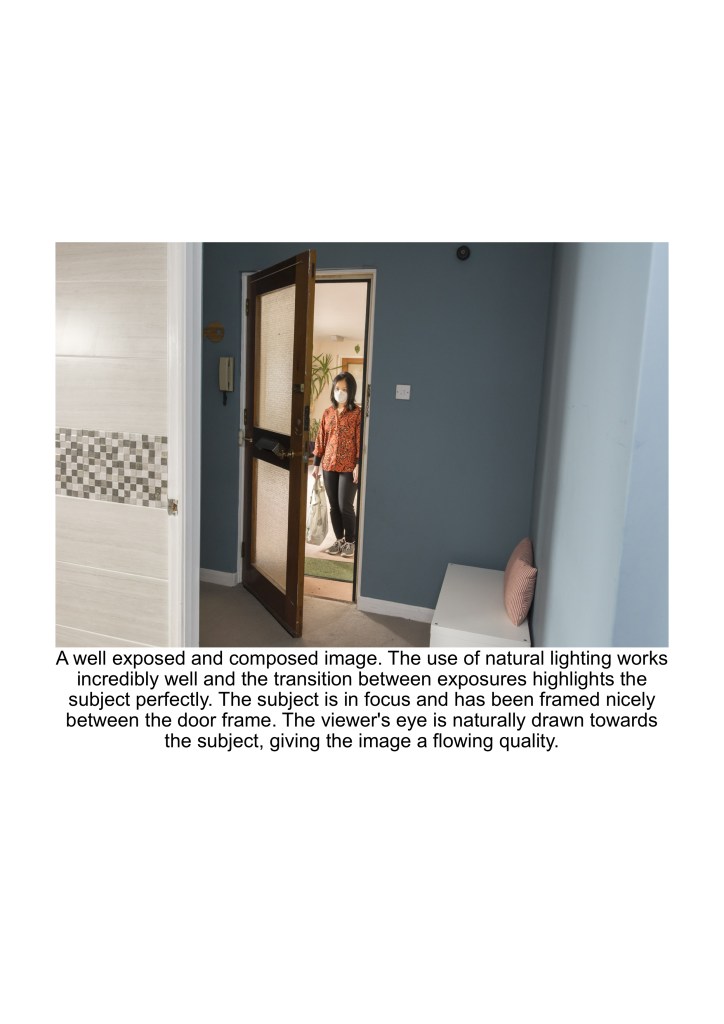
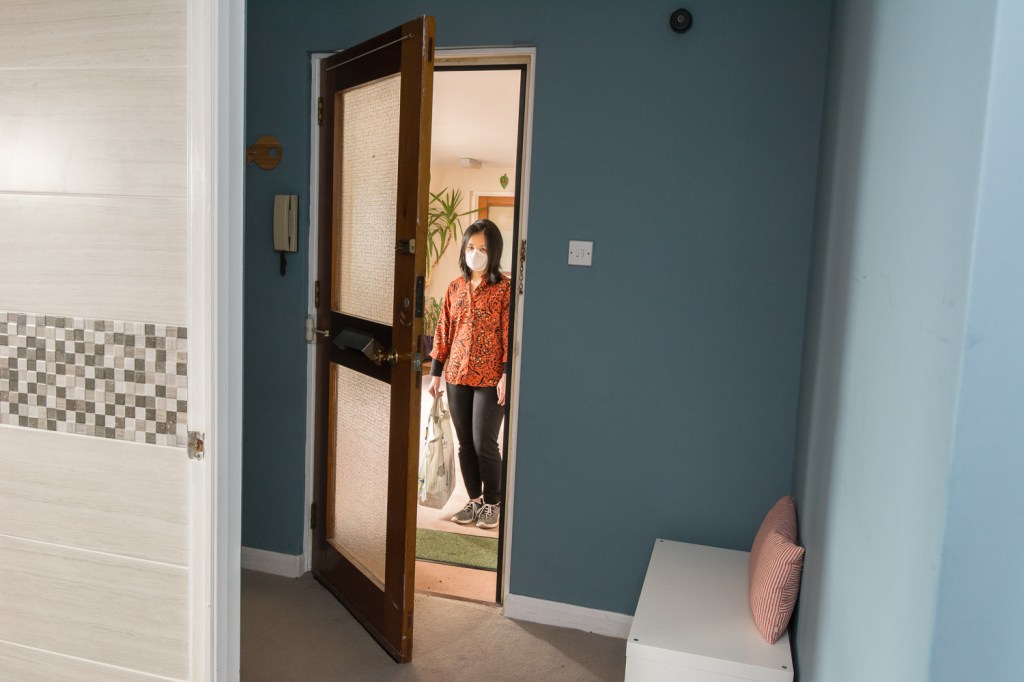
This assignment allowed me to be creative, in that I was able to use props in my images. Obviously, the props I used were objects that were already an integral part of the ‘moments’ that I witnessed, so they weren’t randomly added into the scenes, per say. I feel that when using props correctly, and if they are relevant to the theme, like mine were, they can be a powerful tool to help promote the message the photographer is trying to deliver. One of the best points to come out of my research was how an image can appear more balanced and aesthetically pleasing if only three objects are evident within part of the scene. I tried to use this concept as frequently as I could, and the first real opportunity I had to do so was with the Birthday cards. Not only do I feel it works incredibly well as concepts go, but it also emphasises the point I was trying to make regarding the singing of Happy Birthday when washing your hands. Though I was using an external flash, there were opportunities to use natural light to help illuminate the scene or my subject. I think the best example of this is the image depicting my wife wearing a mask. There was natural light coming from the bathroom and hallway windows, and because the area in between was darker, a lovely ambience has been created and my wife is beautifully lit.

Perhaps, in the past, I have concentrated more on either the quality of images, or, the narrative, but have sometimes failed to combine both. However, in this instance, I really do feel I have created images that are both visually and creatively strong, whilst being part of a broader series where the narrative is relevant throughout. I certainly feel I have achieved what I set out to do, and under difficult circumstances, I’m very proud of that.

Assignment Two: Vice versa – Tutor Feedback

Overall, I’m happy with the feedback that I received, and feel the issues that were raised – specifically around the presentation of my images – will benefit me greatly now that I have a better understanding of why that particular element didn’t work. Of course, my tutor took into account the limitations I had surrounding this assignment, and for him to describe my work as “critically interesting” and “appropriate under the circumstances” was certainly reassuring that I had in fact stuck to the brief to the best of my abilities and produced strong images that were a current record of the times – which was ultimately what I hoped to achieve.

My tutor’s main concern wasn’t at all to do with the images themselves, and though he felt each portrait had a place within the final series, he wasn’t sure the sequencing that they were presented in necessarily worked. We discussed further the potential issues of ‘narrative’ within photography, and more so, when as photographers, we want to present our images in chronological order. His thoughts were that producing a narrative in this manner could be problematic, as gaps in the timeline are more evident – unlike in film, for example – and therefore, the sequencing may not be as fluent as one intended it to be. I must admit, it took me a while to get my head around this concept. But, when reviewing my images again, I understood my tutor’s mind-set. I feel that the sequencing between images one and two, and four and five, shows evidence of gaps within the timeline, and though this makes sense to me, for the viewer, it may be confusing. My thinking now is that does the narrative need to be literal in terms of its timeline, or, should I just present my portraits as standalone images that are all relatable to a common theme. After some consideration, I will change the way I present my images for assessment. As I know many others will have felt the experiences that I documented, I feel it’s not necessary to present them in chorological order, which I believe will help with the overall narrative.

We also discussed what the role of the captions was and how I could make them more personal towards the individuals mentioned. This was similar to what was brought up for my last assignment, so I should have really applied that notion here. My tutor said I could adopt a more photojournalistic approach, where they usually consider who, what, why and when (dates). Again, this is something I shall change for assessment.  

Lastly, we talked about future assignments and how the situation – in regards to taking images in my home due to the lockdown – will most likely be the same. My tutor had a great idea that each assignment hear after should tie into one another, meaning that I’m creating a large body of work all related to my time in isolation with my family. He suggested that I take more group photographs of my family, though that may depend on the brief of the assignment.  

Design a site like this with WordPress.com
Get started