Today (12/09/20) I attended a student online discussion, aptly named ‘Keeping up the momentum’, which saw three current students – all at different stages in their respective degree pathways – give some insight into how they prepare for assessment. We were also joined by Edward Smith, who is the current Academic Development Officer for the OCA. Edward kindly answered many of the student’s questions during the Q&A session at the end of the presentations.
Beverley Duckworth (BA Hons Painting)
Beverley was the most senior student, in terms of what stage she is currently in the degree pathway, and is currently preparing for her final assessment. She discussed how the OCA has developed over the years, predominantly with such inclusions as forums and general student interaction. I thought about how important these aspects have been for my own learning and development, and how I’ve also seen improvements in these areas since starting my first module four years ago.
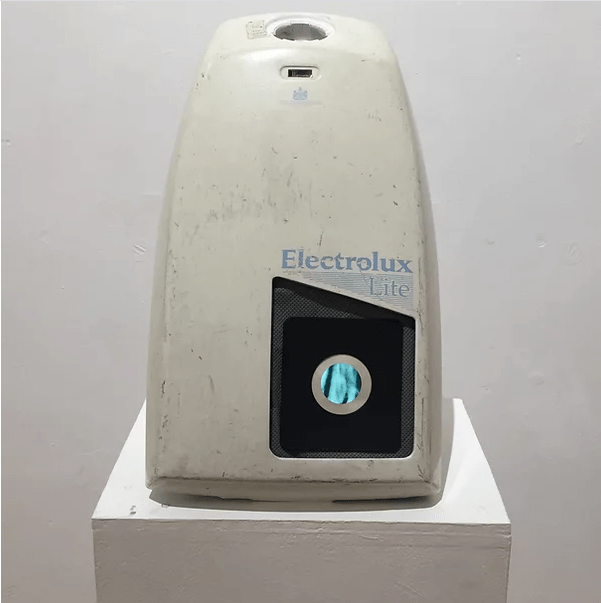
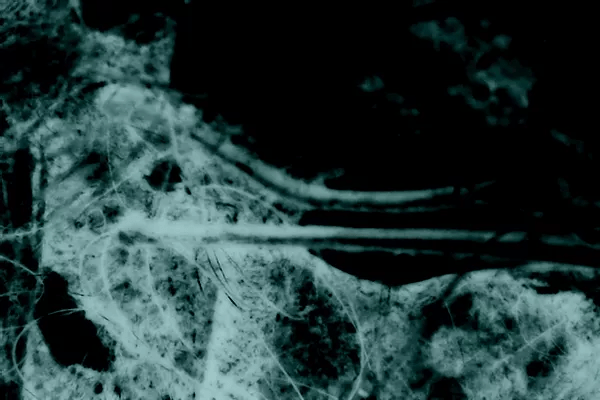
Beverley shared a project she had previously worked on called Capsula, which saw her investigate and document her own skin cells found inside her hoover, in the way of an endoscopy. I felt this was an ingenious idea, and made even more relevant, as the project was created from a personal experience. At this point, I was slightly confused as to what relevance this has to painting. However, as Beverley went on to explain, at that time, she had no desire to continue with that medium, and wanted to experiment with other art forms to create her work. This led onto a discussion about the importance of experimentation, and why as students, we may want to explore other mediums, if we can justify the reasons why. I feel I’ll have opportunities to do this within Digital Self and Other, which is the first module I’m considering taking for level two.
In regards to preparing for assessment, Beverley offered some valuable advice, which is as follows:
- Make use of your tutor – As of yet, I haven’t felt I’ve needed to receive advice from my tutor regarding assessment. During our last feedback session for assignment five, we discussed in length the assessment process, though the guidelines for this have changed slightly since then.
- Show your best work – This may seem obvious, but there could be a tendency to submit everything, including work which may be deemed unsatisfactory for assessment purposes. However, I believe I know which is my best work, and most relevant for each learning outcome.
- Signposting – This is something I’m trying to incorporate into my assessment preparation, not only to help direct my tutor – also the assessor – to relevant work, but also to instruct how the work needs to be viewed.
- Learning log up to date – Again, this may seem obvious, but something that may be overlooked. For example, I still have one exercise to complete. We also discussed referencing, and the importance of doing this as you go, rather than during assessment preparations, due to its time consuming nature.
Kate Aston (BA Hons Photography)
Kate has recently completed Understanding Visual Culture, which I believe is an optional module one can do instead of Identity and Place. She received a mark of 82% in her assessment, which shows she has a good level of understanding of the assessment process.
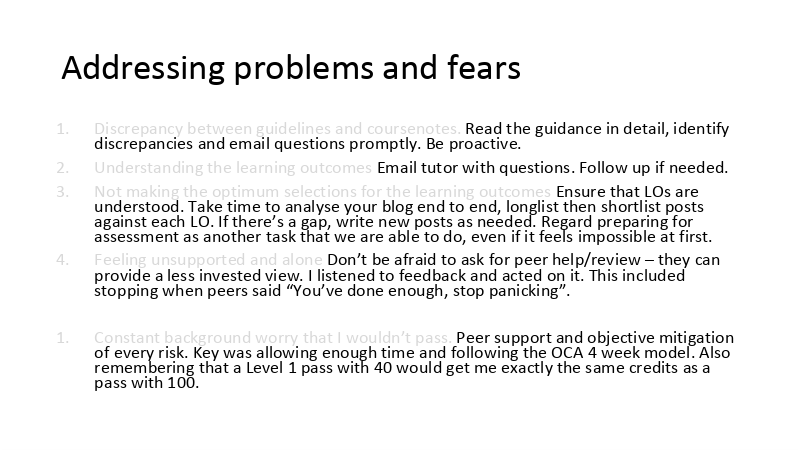
Kate, quite openly, shared the concerns or “fears”, as she described them, about assessment, but also how she addresses them before submitting her work. I found this information to be incredibly useful, as every student will have different problems associated with assessment, and ultimately, will deal with them in ways other’s might not. As a small exercise, I thought I’d note down how I have dealt with the concerns Kate face, where applicable.
- Discrepancy between guidelines and course notes – This is not something I’ve experienced.
- Understanding the learning outcomes – This was something I initially had trouble with, probably because the assessment process is new, and it has thrown me off guard slightly. However, by reading each LO separately and thoroughly, then highlighting the key points stated, my understanding has gradually improved.
- Not making the optimum selections for the learning outcomes – I reviewed all of the work I submitted onto my blog – making sure it was up to date – and selected the best pieces, most applicable to that LO.
- Feeling unsupported and alone – This is not something I’ve experienced.
- Constant background worry that I wouldn’t pass – To be honest, I’ve never felt I wouldn’t pass an assessment, because I’ve always believed the work I’ve submitted has been good enough to do so. However, I understand, as the course progresses, the work, and probably the assessment, will be more challenging. I don’t worry too much about the % I receive, and as long as I pass, I’m satisfied.
Some other considerations for assessment that Kate shared with us were:
- Careful essay structure and writing
- Thorough referencing
- Be clear about word count
- Use tags or categories to allocate blog posts to learning outcomes as you go
Kate then went on to mention platforms she uses for resource purposes, and as I hadn’t heard of many any of these, I was truly appreciative – another reason why student interaction is vitally important. These are as follows:
- Abebooks and Alibris for cheap, used textbooks
- Scribd subscription service that provides books, pdf’s and audiobooks
Alan Fletcher (BA Hons Photography)
It was an absolute joy to listen to Alan. He gave us a very personal insight into his OCA journey, and shared couple of his projects, which I found to be incredibly motivational. It made me realise how important courses like these are to individuals’, and that one’s motivations for starting a degree vary completely.
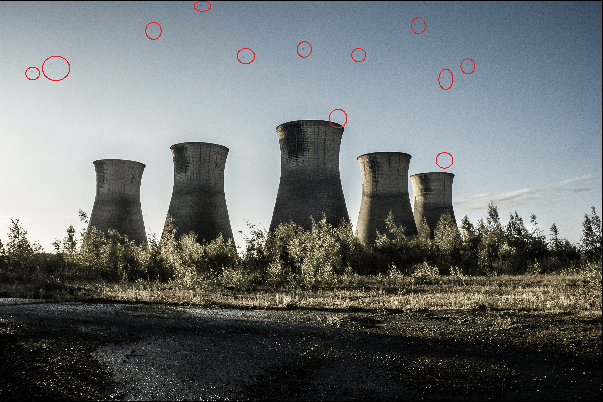
A particular point Alan raised, relates to checking your final images’ for any discrepancies. He showed us an image he took of cooling towers, plagued by dust spots, which went undetected until post production. He explained that instead of cloning these out in Lightroom, for example, he chose to leave them present within the image, but explained his reasons why for doing so. Personally, this isn’t something I would do. Thanks to Alan’s recommendation, I’m currently in the process of reviewing the images’ I plan to put forward for assessment, and have found some discrepancies that I may have missed otherwise.
Another interesting point Alan made, was on why, as photography students in particular, we shouldn’t delete images’ we are considering of disregarding, as he believes they might find a place in work we do in the future. This was the same advice someone gave me last year, and since then, I’ve been trying hard not to delete unwanted images’. This discussion then led on to creating projects, outwith the modules exercises / assignments, for the purpose of practice and enjoyment. This is something I’ve never done, which I actually think is shameful on my part, but will try to do once I start level 2.
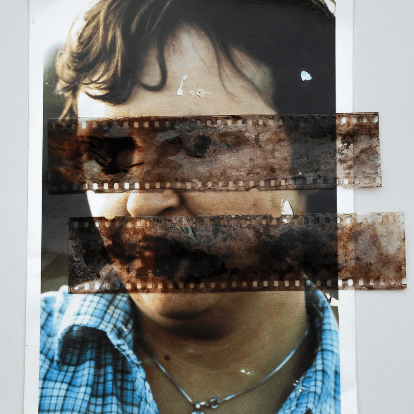
Lynda Kuit (BA Hons Photography)
Lynda unfortunately could take part in the student discussion. However, she kindly made some notes on how she prepared for assessment.
Lynda Kuit – Documentary assessment – notes for Momentum: Student Stories session
● Make sure blog is easy to navigate. Have links on page that open in new tab.
● Assessment: Summarised links to learning outcome posts (just make a linked list)
● You get the following folders: Selection of Learning Logs (this is for the Learning Outcomes);
Selection of Creative Work; Written element – Essay (if your module has this assignment);
Reflective presentation or evaluation (I just did a written evaluation); Tutor reports.
I created a Word document in a 2 column table format, listing the learning outcomes
down the left, and links to my chosen items down the right. I provided a brief
explanatory text on some of the items, but not all as some were self-explanatory. This
document was then uploaded to the Learning Outcomes folder. I also created a
duplicate posting on my blog under an “Assessment” tab.
For the selection of creative work folder (see attached screenshot) I created a Word
document, again in two column table format, with thumbnails of the photos I was
presenting and in the right hand column the caption and file name. Above the table I
had a notice – see example:
My Assignment 1 – Sorrento Village Farmers’ Market is online at:
https://lyndakuitphotographydocumentary.wordpress.com/category/assignments/assignment-
1-local-communities/assignment-1-original-submission/
The following images are uploaded to the G-drive:
Two of my creative pieces were in the form of a book and a video. I provided a link to
my Blurb book via the link on my blog, and a link to Vimeo (which I sent the assessors to
in the applicable Word document. However, I also uploaded a PDF version of the book
and an MPEG version of the video to the G Drive as you can see on the attached
screenshot, as backup. I made sure to mention in the Word document that these were
there as backup in case the links became defective. Take the belt & braces approach!
● If there are many blog posts you want to reference to show progression of an idea, create a
separate blog post and cut and paste relevant sections in sequential date order (again with links
to posts if they want to check them). I linked to 11 different posts from the one I created.
Assessor has option to follow link if he feels the need to, otherwise all the information is on one
page for him. https://lyndakuitphotographydocumentary.wordpress.com/2020/05/27/learning-
outcome-3-blog-extracts-in-support-of-a5/
● Engage in student hangouts – very important! The more – the better. They want to see this
engagement. Its highlighted in the learning outcomes.
● Attend as many online artist talks/workshops/discussions as you can. The immersion helps
cement your ideas and the creativity just kicks in.
● Engage with your blog – have lots of reflections – do a weekly post.
● Try and identify the learning outcomes as you proceed through the course. You can create a tag
on your blog and that way when it comes to prepping for assessment you can just search for
each one and select the best ones.
References
Duckworth, Beverley. (2018). ‘Capsula, 2018’ [Online] Available from: https://www.beverleyduckworth.com/capsula
Google Drive. (2020). ‘Keeping up momentum. Student stories September 2020’ [Online] Available from: https://drive.google.com/drive/folders/1RhLYkR3iCN5Jl6FuoFHoKkMNI24fU1Pw
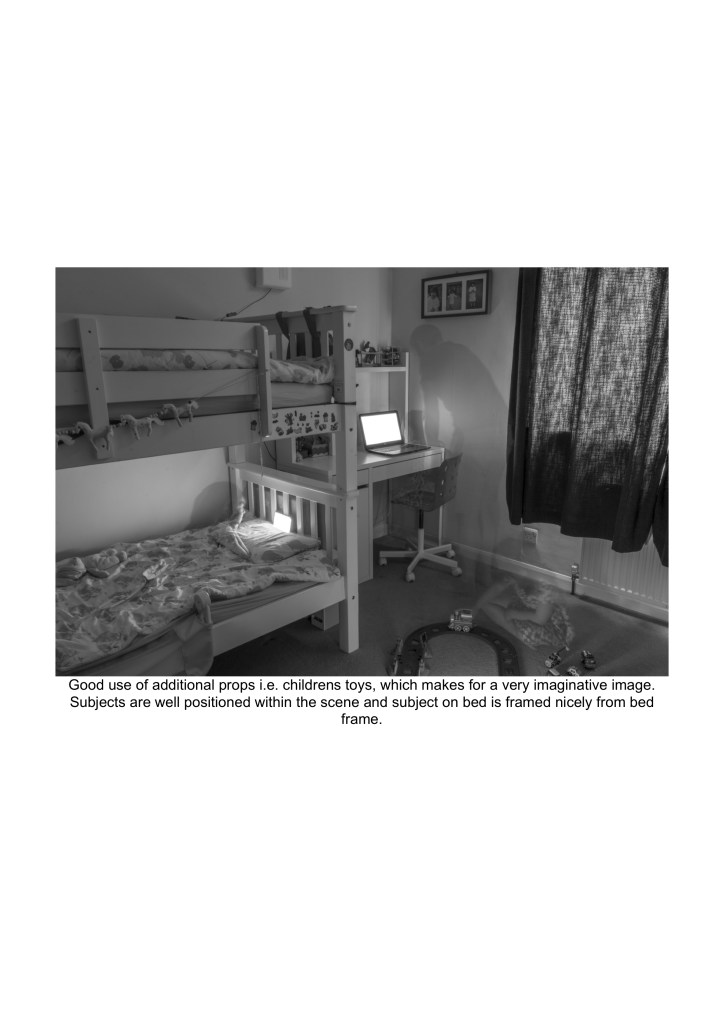
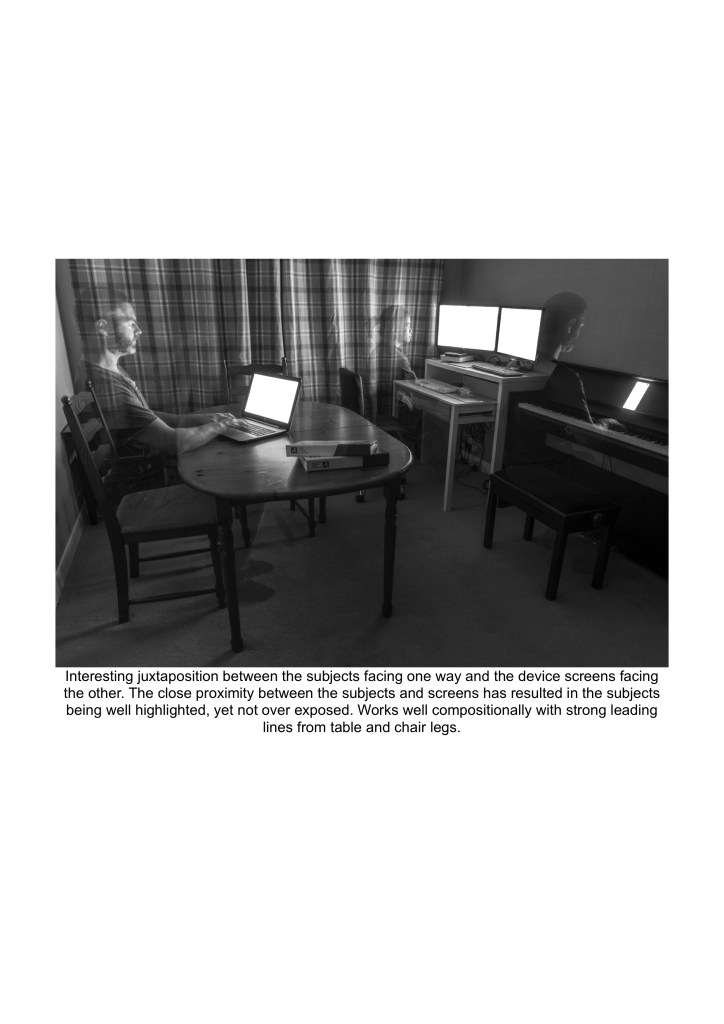
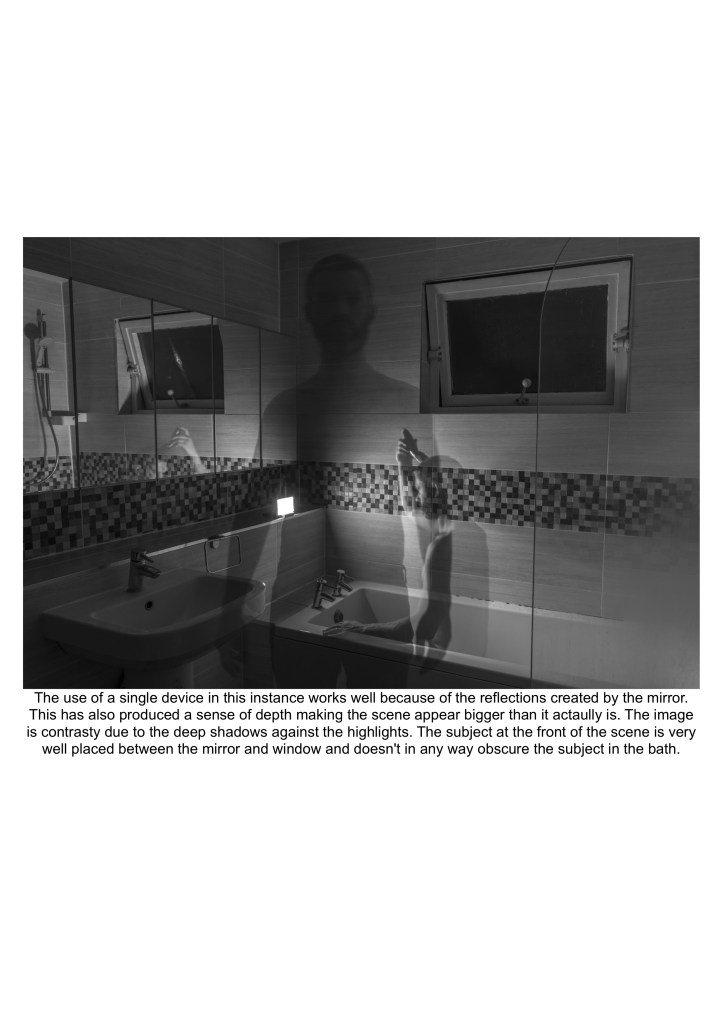
 Iain Barbour - BA (Hons) Photography