Exercise 2: Background as context – Portrait

Growing up I always thought my father knew everything. To me, he always seemed to have the correct answers to the most difficult of questions. Of course, now that I’m older, I understand that my father doesn’t know everything but his general knowledge is still exceptional. Recently, I had a conversation with him regarding dementia. I appreciate this isn’t the most cheerful of conversations to have, but, one thing my father firmly believes is by keeping the brain active, more so in your senior years, you reduce the chances of developing a progressive neurological disorder. How true this is I don’t know, but, when I asked him how he does this, his response was “I read…..a lot”. I knew my father was an avid reader but once we had delved into the discussion further, I then realised how much of a ‘bibliophile’ he actually was. It was then I realised why my father knew so much. The books weren’t only keeping his brain active, but, constantly feeding it with information.

As I wanted the theme of ‘literature’ to be evident within the image and ultimately have this relate to the sitter in question – my father – I thought the simplest way to portray this would be to have him stand in front of a bookshelf. When considering the composition, I felt a portrait showing the full length of the body wouldn’t be suitable as there were too many distractions on either side. These distractions, I believed, would perhaps lead to misinterpretation by the viewer. Instead, I opted for a ‘tighter’ composition that meant I had to carefully consider the placement of the subject. As I wanted as many of the books in the background to be visible, I had to place my father to the side of the frame. When first viewing the image, my eyes are immediately drawn to the books on the left. However, I found that each row acts as a leading line to the main subject which, I must admit, was unintentional but I think works well. Though, I wanted to allow the viewer to have some insight into some of the genres my father is interested in, I purposely chose a wide aperture to blur out some of the written information on the books. By doing so, I think I have left some ambiguity as to what relation this man has with these books. For example, is he an author of one of them?

At the time of shooting, the lighting in the room was particularly bad. As I didn’t have an external flash, I needed to use a table lamp to illuminate my father’s face. Though, it did help increase the highlights, it was far too harsh and produced heavy shadows on both his face and neck and on the bookshelf itself. I were to take this portrait again, I would most certainly use an external flash with the bounce card to create a more even and less harsh effect.
Exercise 2: Background as context – August Sander

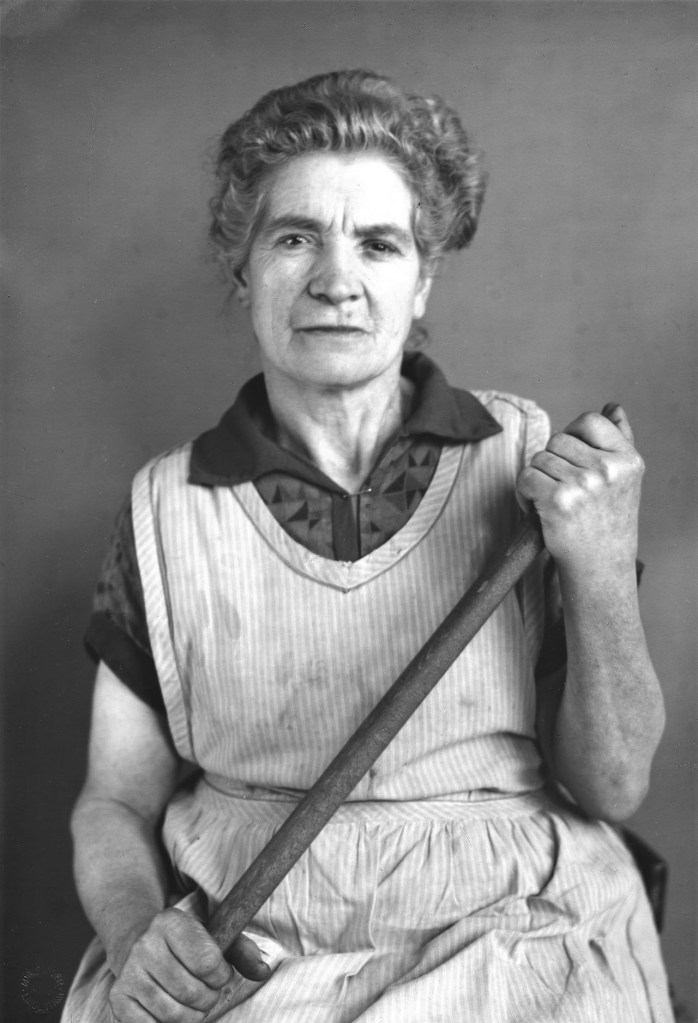
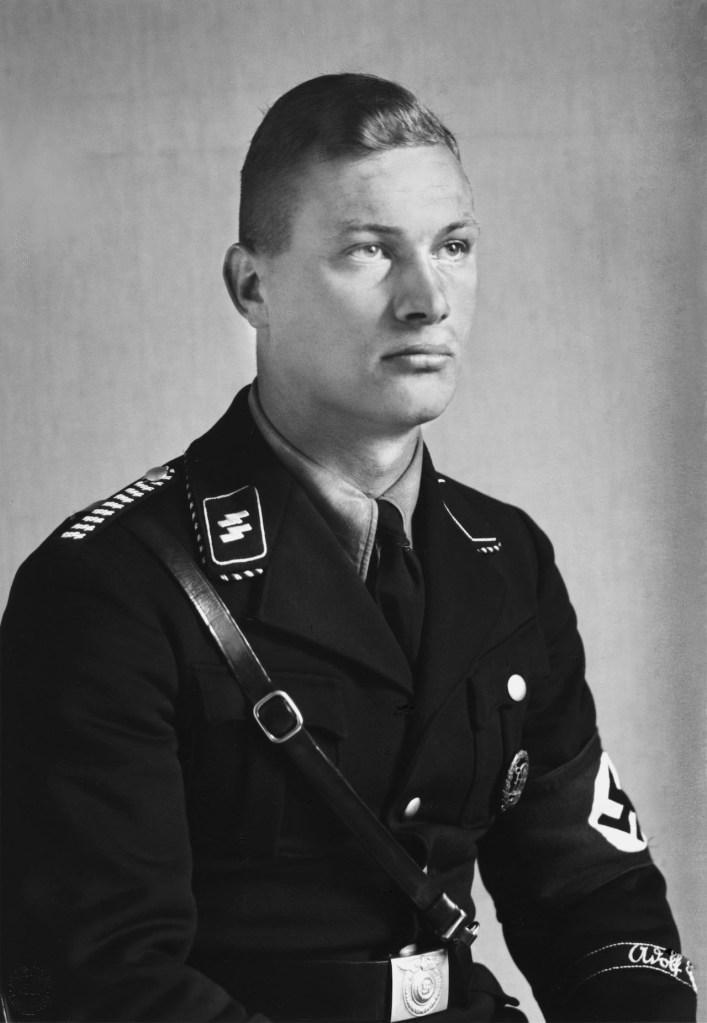
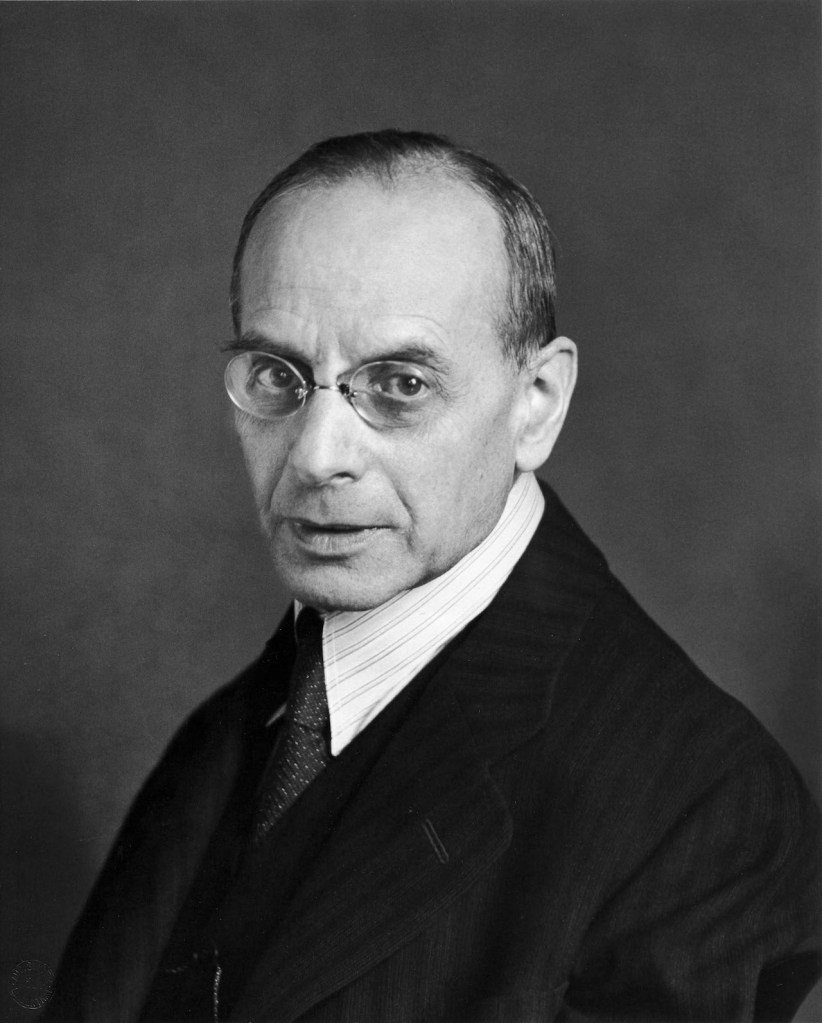
The first thing I noticed when studying Sander’s images from his series ‘People of the 20th Century’ is the position his subjects are sitting in regards to their ‘type’ that Sander’s considered them to be in. Of course, the term ‘type’ is perhaps a kinder way of saying what class these individuals sat within the social ladder. The subjects that some might say to have a less respected profession or way of living, for example, the ‘Cleaning women’ or ‘Political Prisoners’, are sat or stood straight on towards the camera. Whereas, those on the opposite end of the social spectrum, for example, the Schutzstaffel member, are turned side on. I believe the reason behind this relates to each individuals political outlook, which, at that time in Germany, was obviously extremely diverse. Through research, I discovered there were seven parties in Germany during the time Sander’s was creating this particular series. Depending on whether the party the subjects’ supported were left or right wing, or, somewhere in the middle like the ‘Catholic Centre Party,’ reflected what side, if any, the individual faced.

The images suggest that Sander’s liked to photograph his subjects wearing their work attire and where necessary, reinforce their professions to the viewer by including props, specifically items they need and use to work successfully. This however leaves little room for self-interpretation by the viewer as all the information they need to know about the individual is presented to them. That is why I particularly find interesting the portrait of the ‘Cleaning women’ as the ‘prop’ is visible but not entirely obvious. Even with the clothes she is wearing, her profession still remains uncertain. The viewer is forced to look at other elements within the photograph to gain further information and by doing so, I was immediately drawn to her arms and hands. They appear big and strong, indicating she uses them frequently, for example, when mopping a floor. It is this image I have chosen to describe further using David Bate’s ‘five element model’.

The Face

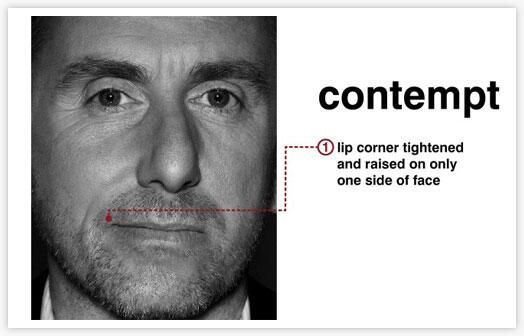
Whilst working on ‘Expressing Your Vision’ and more specifically for Assignment three ‘The decisive moment’ (https://iainbarbourocablog.wordpress.com/category/assignment-3/) I researched facial expressions and their meanings. From what I learnt then, I can tell that this women has a feeling of contempt, meaning, she feels worthless or beneath consideration. This can be identified by the corner of the lip being tightened and raised slightly on only one side of the face. Also, this expression is unilateral, meaning, the face is not symmetrical. We can clearly see that the right side of her face looks different from the left side.

The Pose and Prop

I feel her pose denotes a negative one and reaffirms to me that she does in fact feel a sense of insecurity about herself and the role she has within society. Some may argue that her body is ‘open’ suggesting a sense of strength and positivity. However, I feel she is hiding behind her mop, metaphorically speaking, and is holding it in a way which resembles how a soldier would hold their rifle, which they usually carry for protection and due to a feeling of insecurity.

The Clothing

As mentioned previously, it’s hard to give a definitive answer to what profession this women has just by looking at her clothing. However, I think it would be fair to say that she is a labourer of some sort and wouldn’t be recognisable as someone within a well-paid job or from a higher social class. Looking closing at her apron, stains are clearly visible, suggesting she works around filth and grime regularly.  

References

British Journal of Photography. (2019). ‘Persecuted / Persecutors: People of the 20th Century by August Sander’ [Online] Available from: https://www.bjp-online.com/2019/01/sander-people-20th-century/

Facing History and Ourselves. (2019). ‘Weimar Political Parties’ [Online] Available from: https://www.facinghistory.org/weimar-republic-fragility-democracy/readings/weimar-political-parties

The Guardian. (2015). ‘Gun demanding: the psychology of why people want firearms’ [Online] Available from: https://www.theguardian.com/science/brain-flapping/2015/oct/07/gun-demanding-control-firearms-psychology

Aletheia International. (2018). ‘Facial Expressions’ [Online] Available from: https://www.aletheia-international.com/facial-expressions

Design a site like this with WordPress.com
Get started