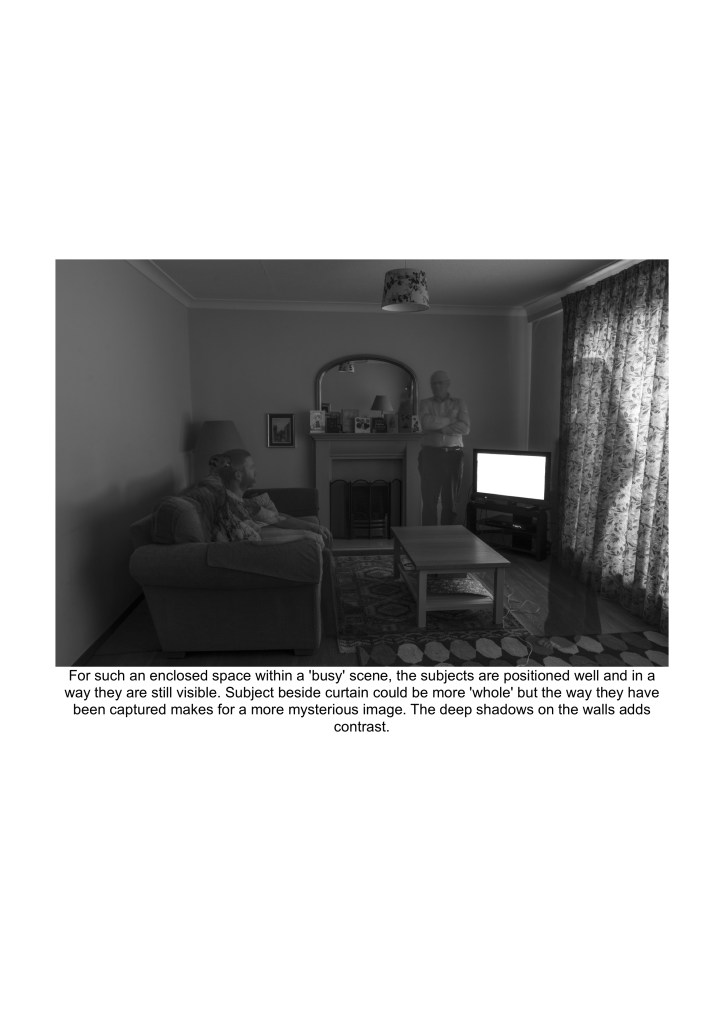
Life’s journey is something we all experience, and at times, it may feel like we are sharing the same journey with others. However, each person’s journey is completely unique to them, and can’t be fully replicated by anyone else. Even when a global pandemic, like the Coronavirus occurs, the sense of ‘we are in this together’ certainly exists, fuelled by the months of endless news coverage that took over our newspapers and television sets. This isn’t true of course, however, one event that I believe did resonate with most, was the experience of lockdown. In March, over 20% of the world’s population were unable to leave their own homes – expect in special circumstances – and this will have considerably grown as the disease spread overtime. What I find particularly fascinating, is that even though billions of people have shared such a unique occurrence, each person’s experience of lockdown will be different from the next. This became evident to me, during my last assignment, after hearing a number of lockdown stories from other individuals. I now want to take this opportunity to share my story, and reflect on the journey I encountered from the beginning of lockdown, to now, through a combination of image and text, specifically, the spoken word. Inspired by the works of Hiroshi Sugimoto, and in particular, his series Theatres, I explored the notion of ‘time’, relatable to my lockdown journey. Sugimoto expressed this idea, by photographing movie theatre screens in a single exposure, for the duration of the film. This resulted in each individual frame to essentially amalgamate, producing a bright, white screen. In order to demonstrate my personal journey, and reflect on the passing of time, from the beginning of lockdown, until present day, I used such devices as televisions, computers and mobile phones – anything with a screen that could produce a moving image like that seen in a movie theatre. The exposure times were of course considerably less than what Sugimoto had used, however, the results were the same. Again, unlike seen in Sugimoto’s images’, there is evidence of people – more specifically, myself and my family – within the scenes, to help emphasise my experiences with them throughout my journey. However, taking advantage of the long exposure times, we are depicted merely as ghostly apparitions, which was done purposely to strengthen the concept of time passing. In all of the images’, some of the individuals’ represented, respecting the corresponding spoken text related specifically to that photograph, have been captured multiple times within the same scene, which again helps solidify the concept of time, and takes into consideration the multiple memories, and ever changing experiences I encountered. As my lockdown journey continues – like many others – I’m fascinated, yet, a little apprehensive in how it will end.
Category: Assignment 5
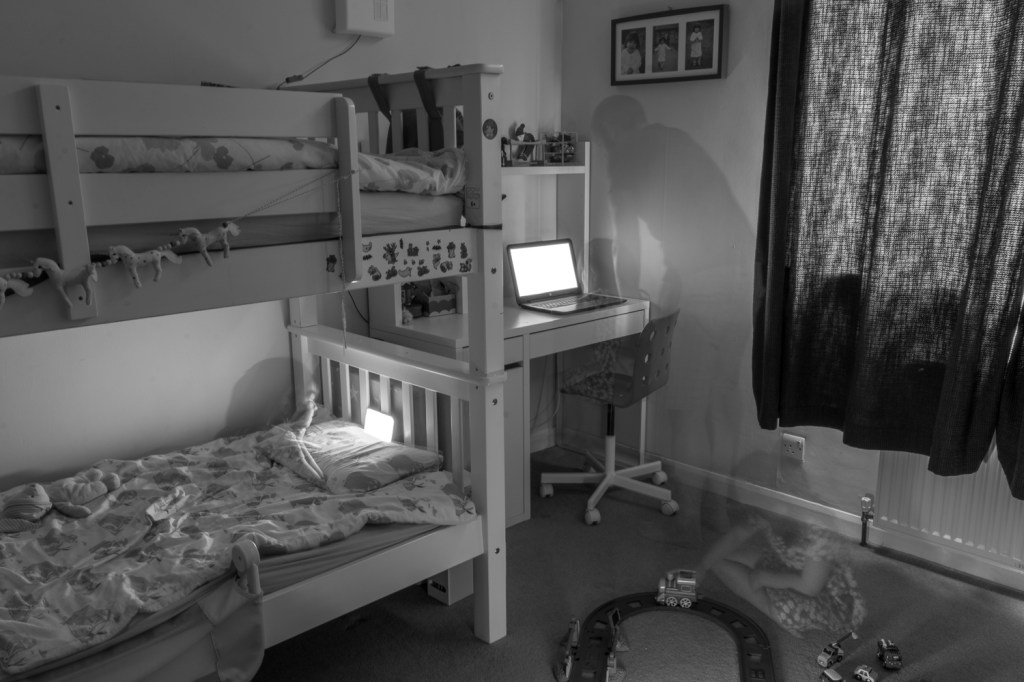
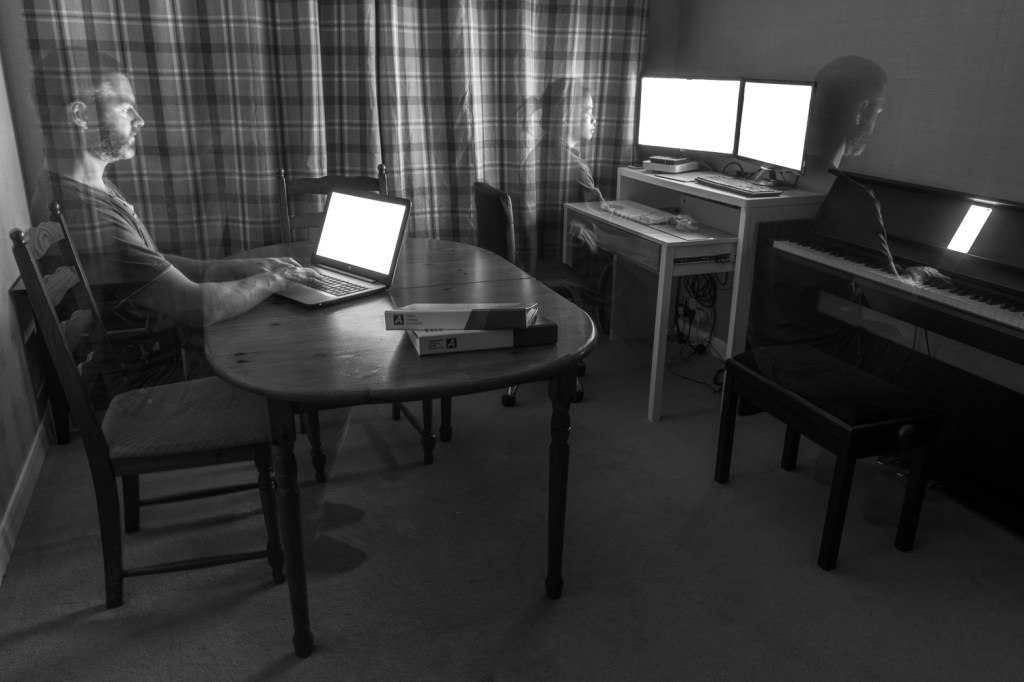
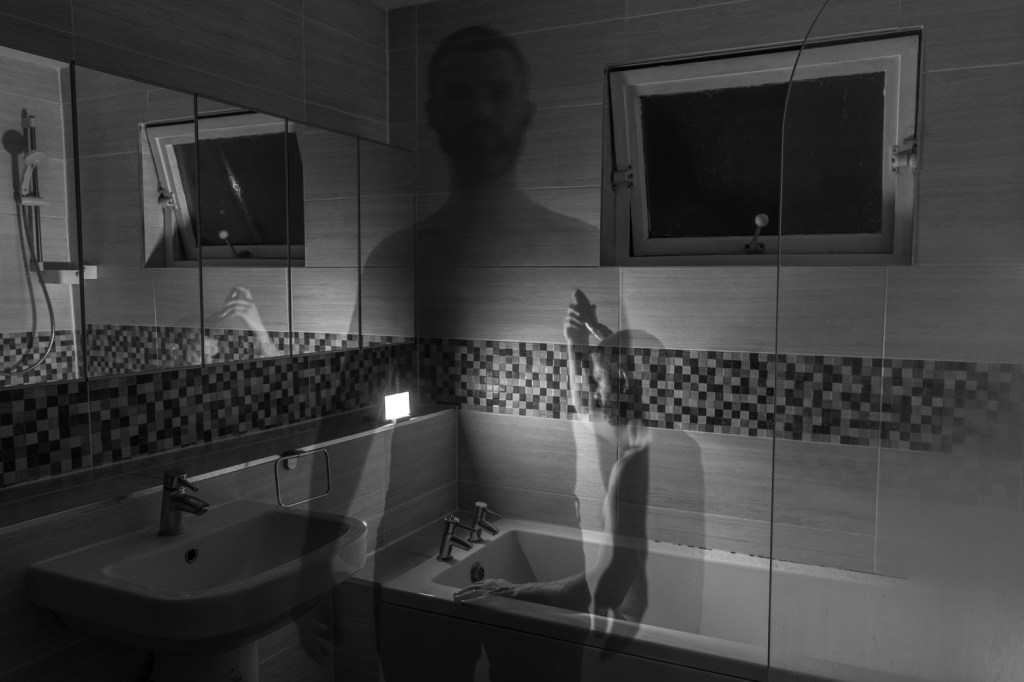
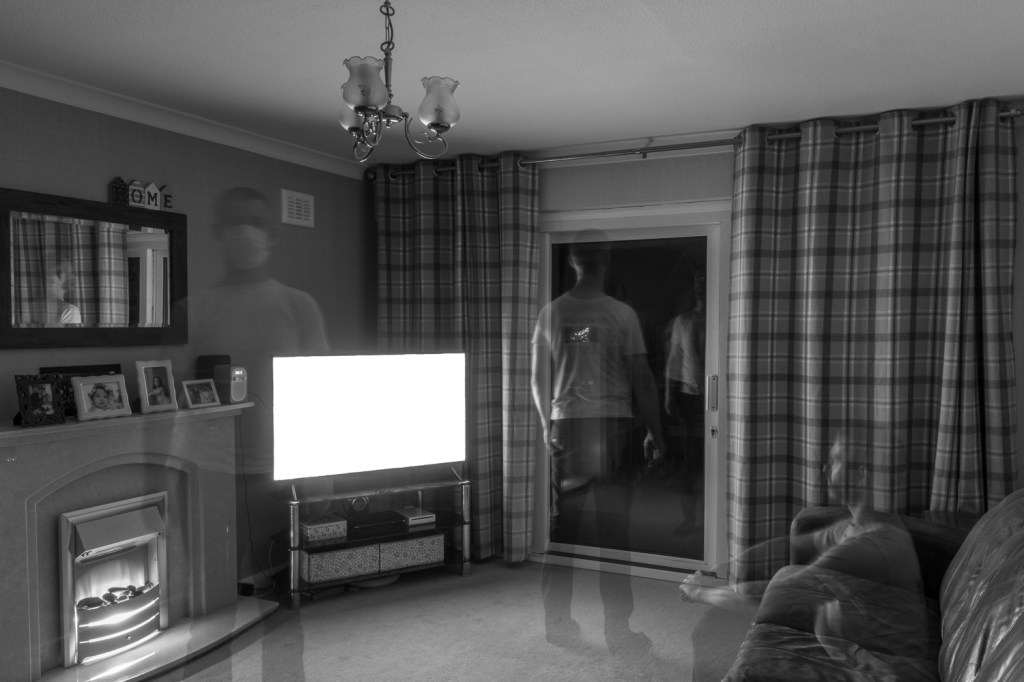
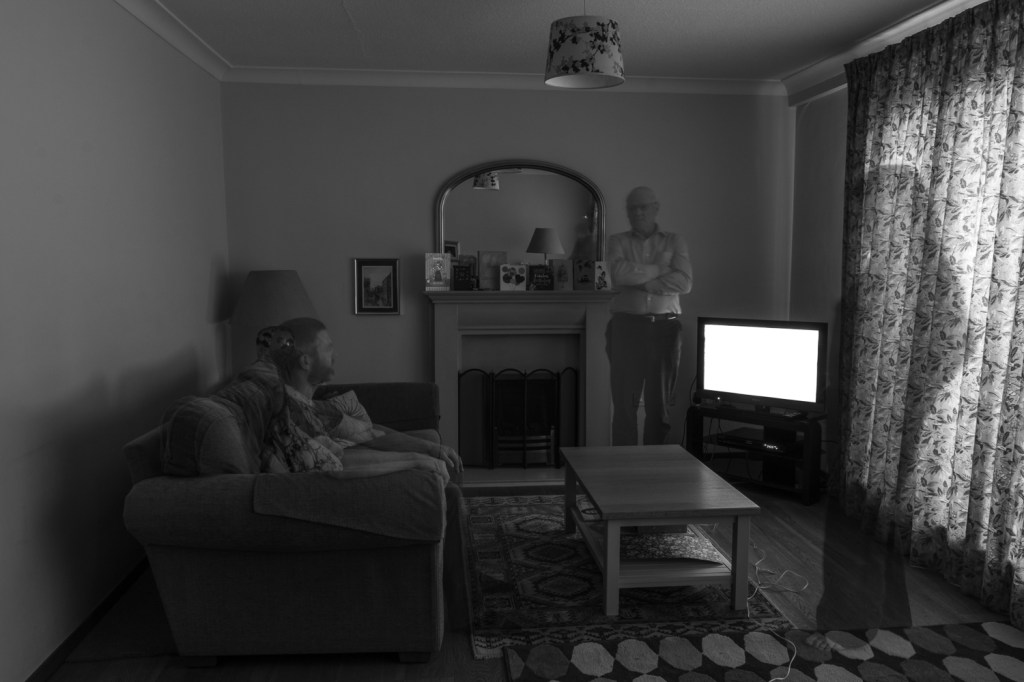
Assignment Five: Your Inspiration – Prints
As suggested by my tutor, I’ve created prints of my photographs seen in assignment five, in order to decide whether or not, the series works best when viewed as standalone images’, or, through the multimedia format of video, as I had originally created. Though, my lockdown story was of course an important element within the assignment, it was felt that the overall narrative was hindered slightly, due to the length of each verbal description that supported that specific image, possibly leading to missed opportunities to include additional photographs within that period of reflective commentary.
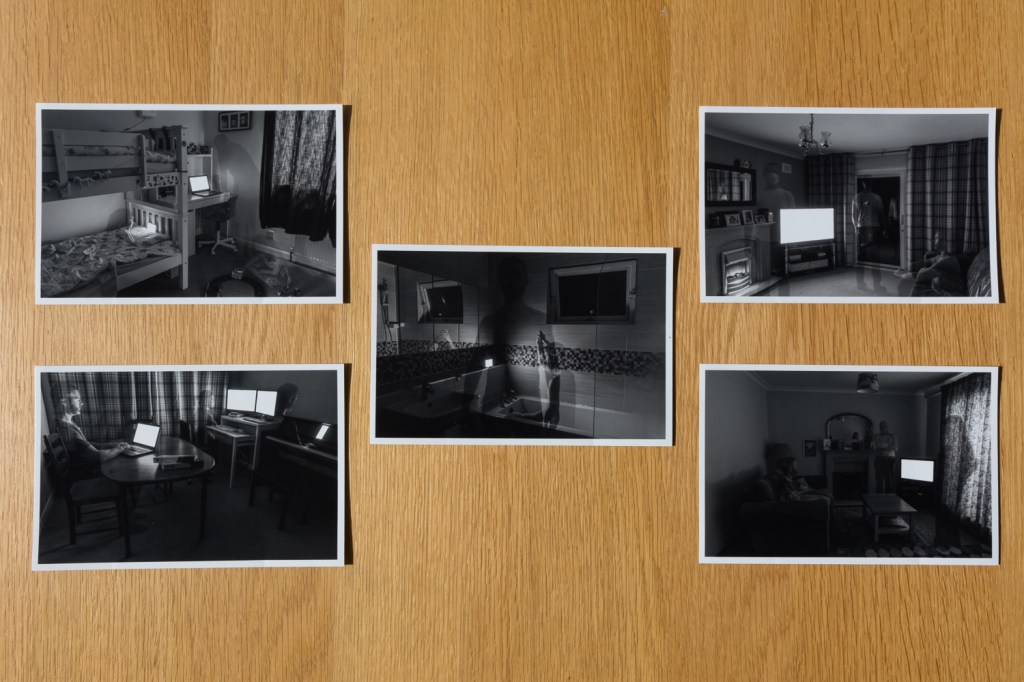
I chose to order 9 x 5 prints, as I felt these would be large enough to examine satisfactorily, but would also help keep the printing costs down – after all, this is more for research purposes than anything else. Unfortunately, the images’ appeared much darker in print form, than when viewed on my computer, and in a lot of instances, details – more so in the shadows – have been lost completely, resulting in less ‘attractive’ photographs. After some additional research into why this may have occurred, it’s most probable that my computer screen hasn’t been calibrated correctly, if at all. Though, I consider this to be an annoyance, I must remember that this is one reason why I carried out this exercise – to analyse, find potential flaws, and understand how to resolve them when printing in the future. Another issue, more so seen in images 2 and 5, relates to the screens and the noticeable black fringing, most likely caused by the exposure times not being long enough. I now understand the importance of creating test prints, in order to make amendments where necessary, prior to displaying your photographs in an exhibition, or submitting them for assessment, for example.
In conclusion, I feel my photographs – once amended – are visually strong enough to be presented as standalone images’. I don’t believe that without the supporting narration of my lockdown story, the series is too obscure, or difficult to interpret. There are certainly visual elements depicted, to suggest the underlying theme is relevant to ‘lockdown’, and if the viewer is familiar with Hiroshi Sugimoto’s work, they should understand the relevance to the overexposed screens and how they represent the passing of time. That’s not to say I wouldn’t use spoken text – my lockdown story – to support my images’. However, this would be highly dependent on how, and where I was presenting my work. I can imagine this use of multimedia working well in an exhibition, for example, where my story could be played over a sound system, whilst the public leisurely viewed my photographs. This would give additional content and further meaning to the series, without solidifying a specific part of my ‘story’, to a particular image.
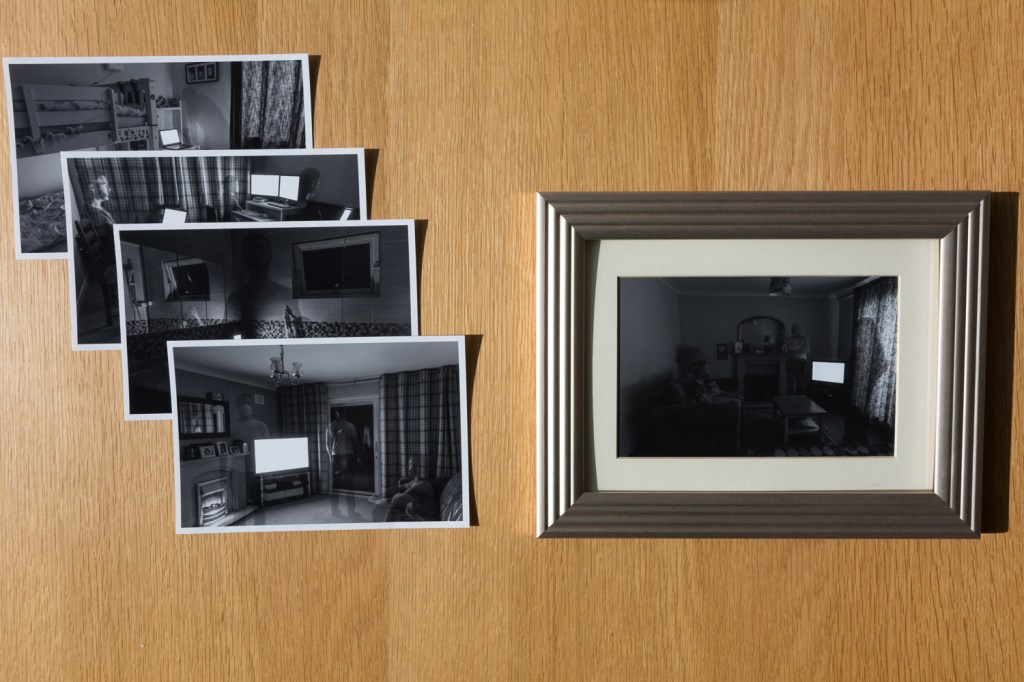
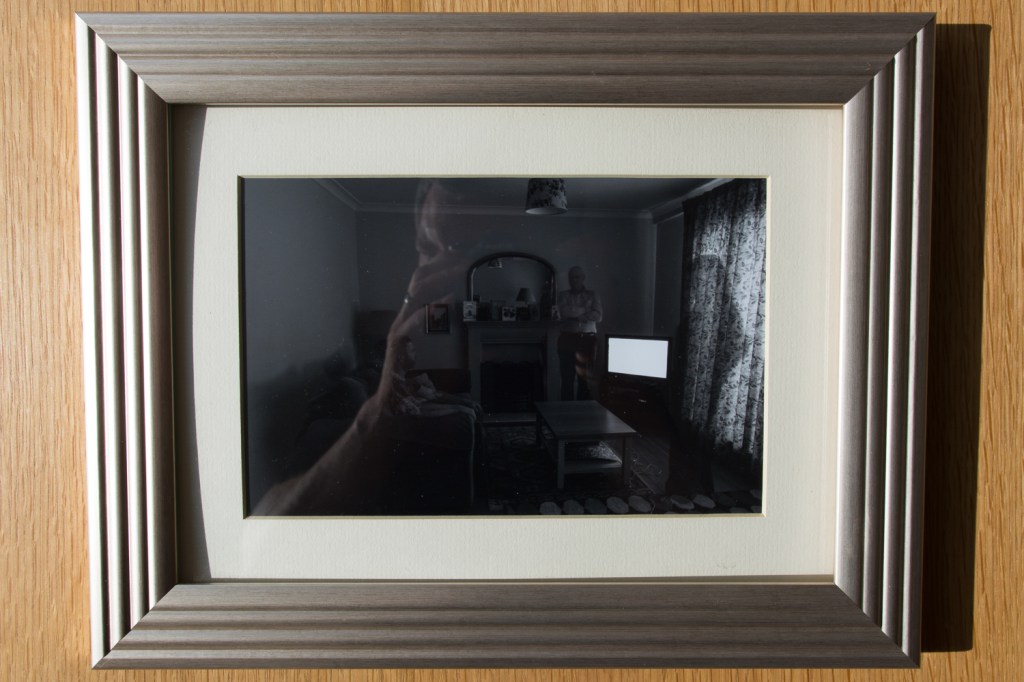
To show evidence of creating prints, I photographed them displayed on a table. These photographs have been unedited, as I wanted the prints to be represented in their truest form. I also framed one of the prints, to highlight how it may look if on display in an exhibition, for example, though I appreciate that the print size would be much larger. I also tried to photograph the framed print parallel to the camera, but as is evident, the reflections captured on the glass, negatively affect the visual appearance.
Assignment Five: Your Inspiration – Hiroshi Sugimoto (how his work has inspired mine)
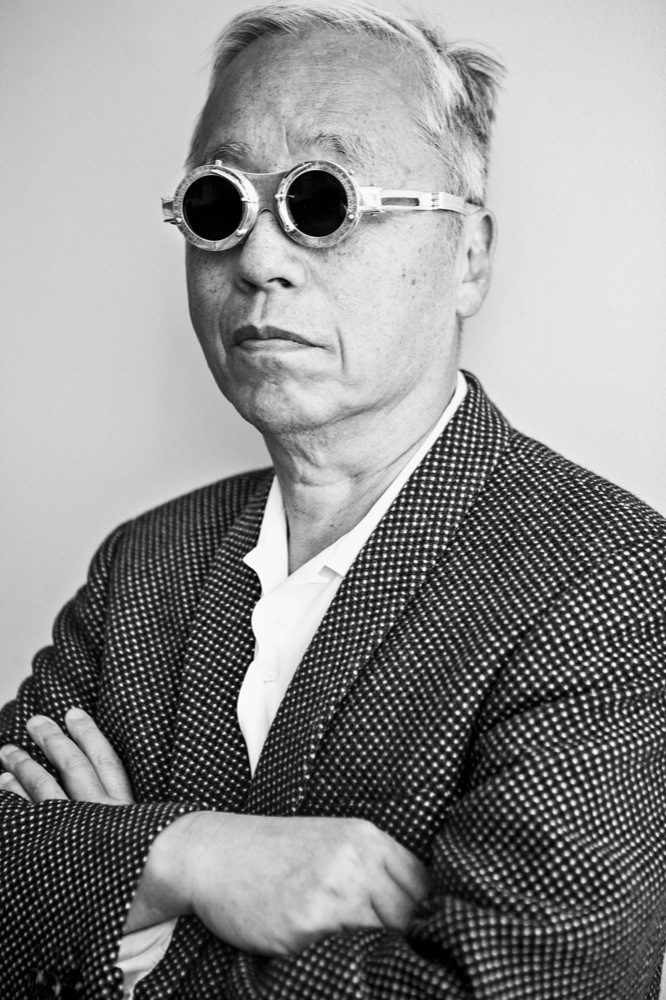
Since the initial planning phase, I’ve discovered Japanese photographer, Hiroshi Sugimoto, whilst researching Todd Hido for a previous exercise. In a short clip, Hido was reflecting on his early photographs’, and produced an image that depicted an overly exposed television screen. He went onto explain that he took this image in homage of Sugimoto. Interested in its visual qualities, and curious on how such a photograph is created, I began to look into Sugimoto’s work for myself.
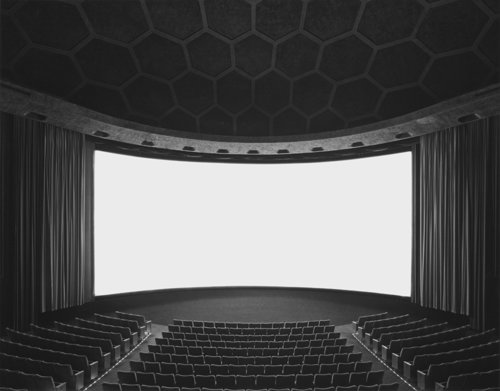
250, 1/5/00, 3:14 PM, 8G, 4725×6300 (300+400), 87%, Normal 8, 1/30, R328, G274, B620,
The photograph in question, was inspired by Sugimoto’s most famous project, Theatres. This saw Sugimoto enter movie theatres built in the 1930’s – with his large format camera – and photograph the entire film with a single exposure. This resulted in each of the still images to amalgamate into one, essentially creating an overexposed screen. Sugimoto himself said “My dream was to capture 170,000 photographs on a single frame of film. The image I had inside my brain was of a gleaming white screen inside a dark movie theatre”. What makes these images’ particularly beautiful, is the architectural detail that has been captured, and softly highlighted from the bright, white screen. Due to the length of the exposure, other movie goers have been erased from the scene, creating an eerie atmosphere, and making it appear that Sugimoto is alone.
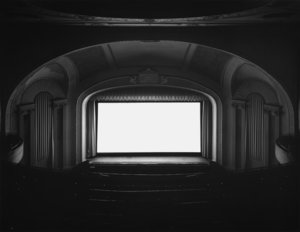
212, 1/10/00, 9:19 AM, 8G, 4593×6125 (375+500), 87%, Normal 8, 1/30, R328, G274, B620,
The concept of ‘time’ surrounds a lot of Sugimoto’s work, and Theatres is no exception. Done so in an abstract way, the past, as well as the present, has being documented, and at no point during that single exposure, has ‘time’ – relatable to the moving image – been lost. As a viewer, we question our own existence, whilst reflecting on where we’ve been, and contemplating on where we might go.
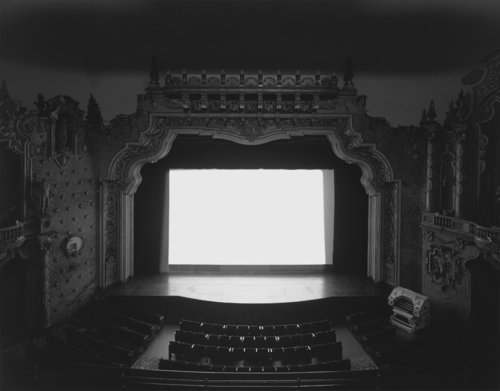
254, 12/15/99, 1:39 PM, 8G, 4331×5775 (525+700), 87%, Normal 8, 1/25, R328, G274, B620,
My idea now is to attempt to incorporate Sugimoto’s methods of taking images’, as seen in Theatres, into my work, whilst thinking about the relationship between the subtheme of ‘journeys’, and ‘time’. I feel this is the perfect opportunity to naturally conclude the recurring theme of Coronavirus and lockdown, and believe it would be most appropriate, if the assignment was based on my personal thoughts and experiences surrounding the pandemic. With that said, I will reflect on – through spoken text – my journey from the beginning of lockdown, to now, and plan for my images’ to depict important moments I discuss, which will be recorded prior to starting the photographic process. I’ve made the decision to include myself and others in the photographs’ – unlike Sugimoto – as I feel in this instance, the exclusion of people would negatively impact on the intended narrative. And, even with my verbal reflection, the images’ would be incredibly difficult to interpret. I’m also aware of the challenges I could encounter, by choosing to incorporate people into the scene, whilst taking long exposures. However, I feel I could use this to my advantage, and create an effect that will actually help strengthen the notion of ‘time’. One other thing I must consider, is how I will demonstrate the ‘bright light’. In theory, any device with a screen that can produce a moving image will work, and though this will obviously take a bit of experimentation, I’m looking forward to the process.
References
Hiroshi Sugimoto. (2020). ‘Hiroshi Sugimoto’ [Online] Available at: https://www.sugimotohiroshi.com/new-page-7
Interview Magazine. (2016). ‘Hiroshi Sugimoto’s Future’ [Online] Available at: https://www.interviewmagazine.com/art/hiroshi-sugimoto-sea-of-buddha-pace
Public Delivery. (2016). ‘What is Hiroshi Sugimoto’s Theaters photography project all about?’ [Online] Available from: https://publicdelivery.org/hiroshi-sugimoto-theaters/
YouTube. (2009). ‘Contacts: Hiroshi Sugimoto 2’ [Online] Available from: https://www.youtube.com/watch?v=rY3nGoZqw9U
Assignment Five: Your Inspiration – Initial thoughts, ideas and preparation
I’m now nearing the end of Identity and Place, and feel this would be a great opportunity to finish the module with an assignment that is again themed around Coronavirus and lockdown, but that will ultimately conclude my covid-19 ‘journey’ – the subtheme to this assignment (Journeys). Looking back on the module, I’ve truly been inspired by it all, and believe I’ve managed to produce some of my best work to date. However, I need to think of the most appropriate way to finalise the ongoing theme of Coronavirus and lockdown, and careful consideration is needed, when deciding which areas of this module are the most appropriate to achieve this
Image and Text was a new concept to me, and creating photographs’ based on what had already been written or spoken about, was a practice I had no prior experience in. However, this unfamiliarity, allowed me to explore and develop my skills within a new area of photography, which helped me gain a better understanding on the relationship between an image and its intended interpretation, based on the supporting text. I believe I made some progress in this regard – from Exercise 5 to Assignment Four – and this has given me the confidence, and inspiration, to explore the notion of ‘image and text’ further. For my last assignment, I collated sound clips from individuals’ – based on their experiences of lockdown – prior to taking any photographs’. This was something my tutor appreciated, as he believed it made the series more personal. Taking that into consideration, I intend to apply the same method once again, but rather reach out to others, I will provide the spoken text. Of course, this means that my final images’ will need to be presented through video – a process that is time consuming, but enjoyable.
Also, and quite surprisingly, I thoroughly enjoyed Removing the Figure. Having the opportunity to photograph objects and scenes with the exclusion of ‘people’, was incredibly refreshing, and a lot easier than previous ‘parts’ found in the module for obvious reasons. Absence and signs of life, was of particular interest, and developing a better understanding into why photographers, such as William Eggleston, choose to document subjects’ that may be considered banal to most, was an incredibly important learning point for myself, and changed my viewpoint drastically on this particular style and practice of photography. My initial idea, is to photograph objects, associated with the present phase of the pandemic, whilst taking into consideration Eggleston’s ethos of capturing “life today”. I like the idea of creating a typology series, documenting the 2m social distancing boxes / lines found on the floors in supermarket isles, and think it’s an appropriate subject that’s relatable to ‘journeys’. Another idea I have, is photographing people standing in queues at various locations – restaurants, hairdressers, supermarkets etc. – however, removing them from the scene entirely – through Photoshop – but keeping their personal belongs evident, in particular their masks. I think visually, this is an interesting concept, but ultimately, my hope is that as a viewer, you should be able to form a better understanding of the type person ‘standing’ in line, based just on their belongings.
References
YouTube. (2013). ‘Imagine’ The colourful Mr Eggleston’ [Online] Available from: https://www.youtibe.com/watch?v=3JZ_HkaTXh8
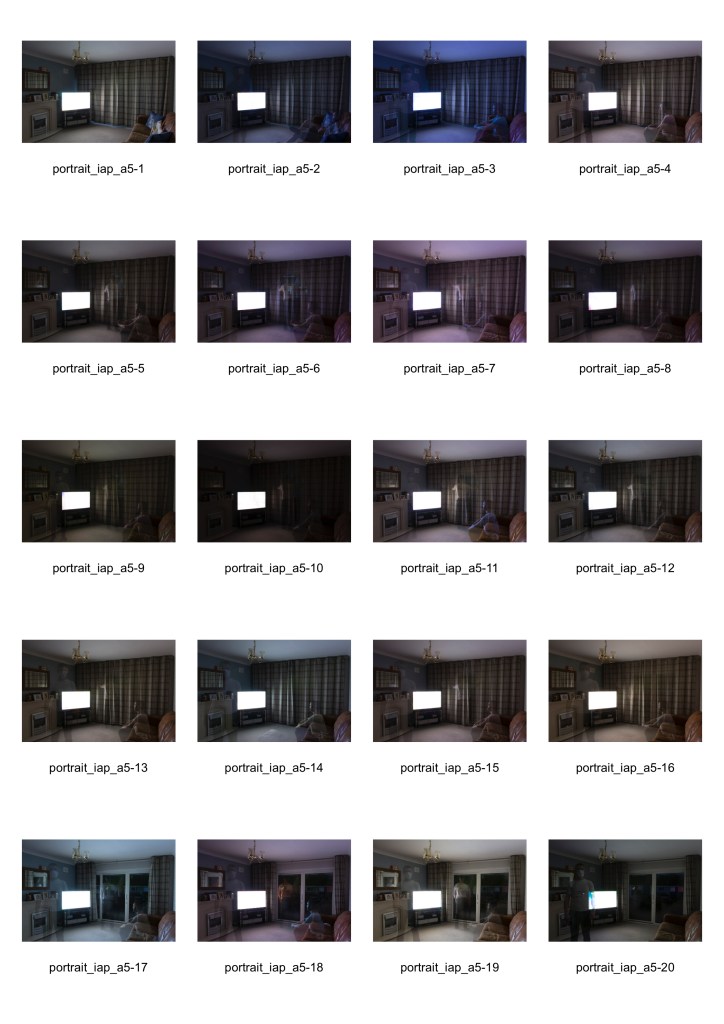
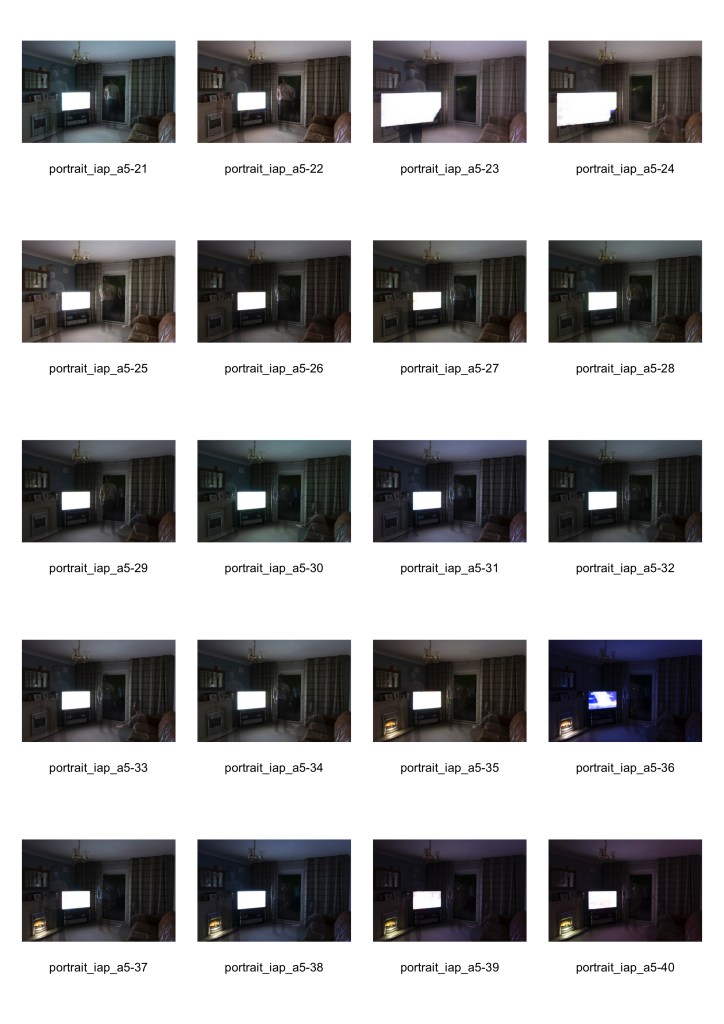
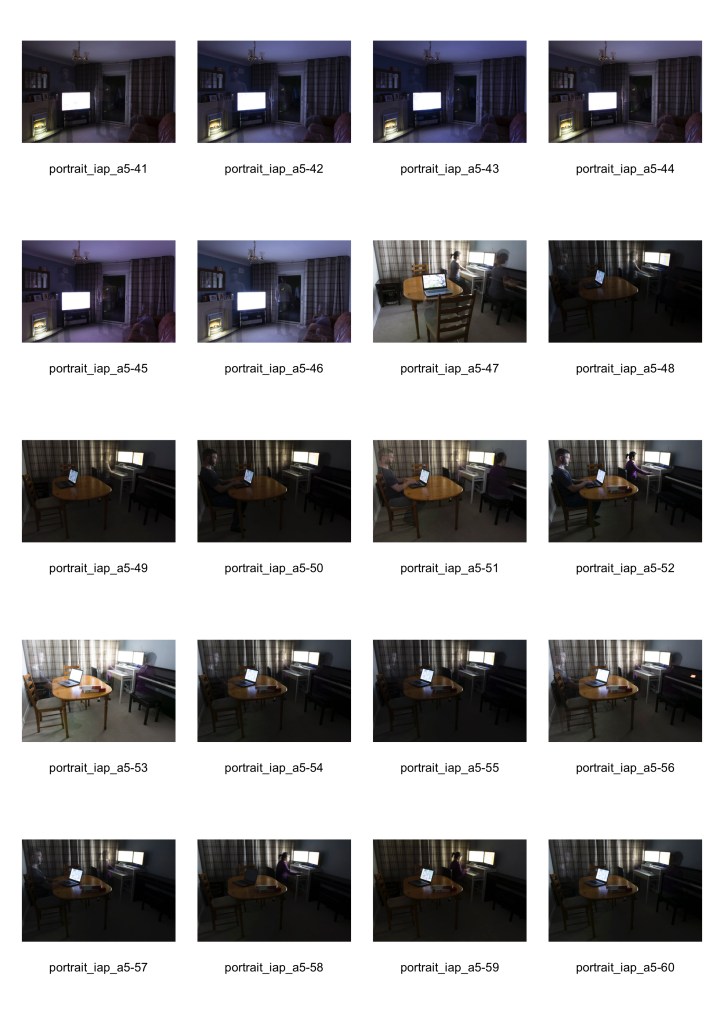
Assignment Five: Your Inspiration – Image selection and contact sheets
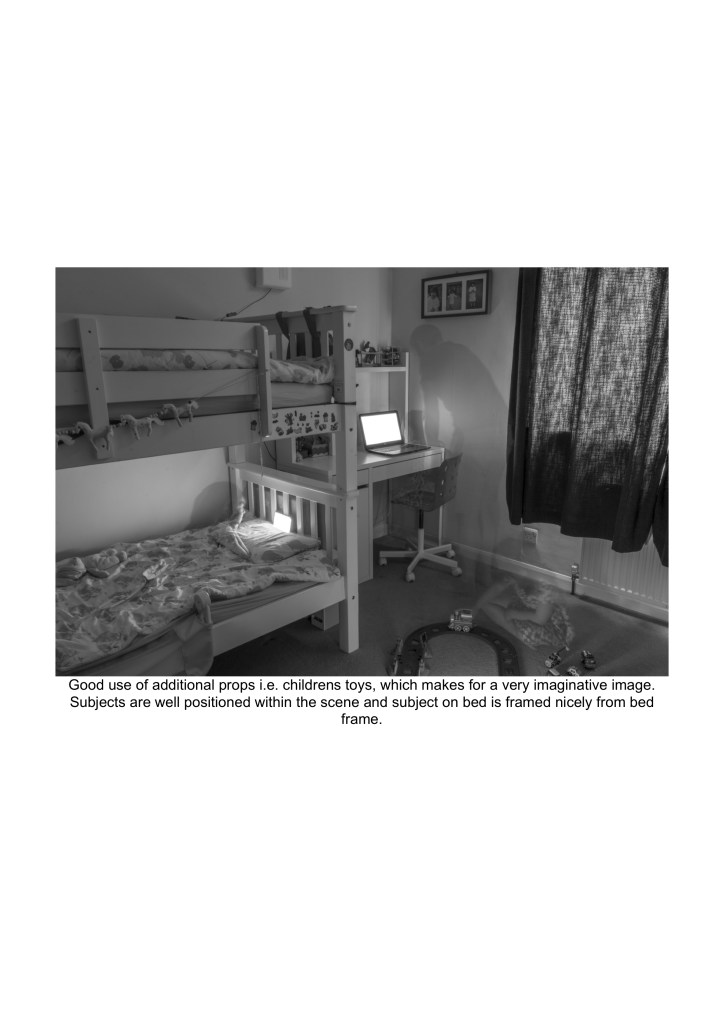
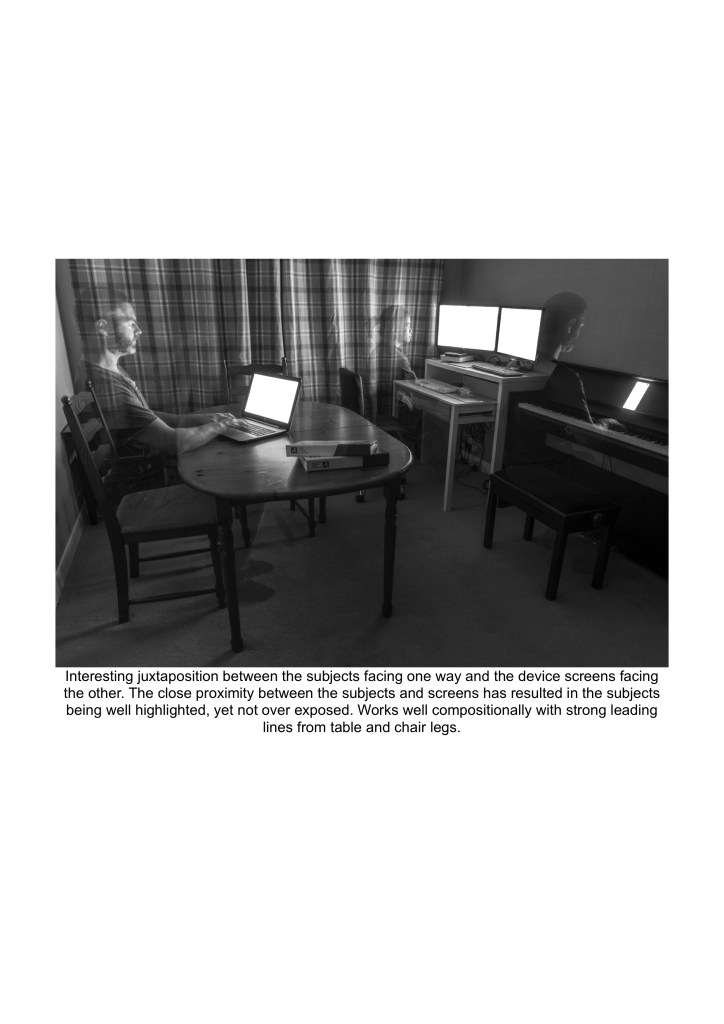
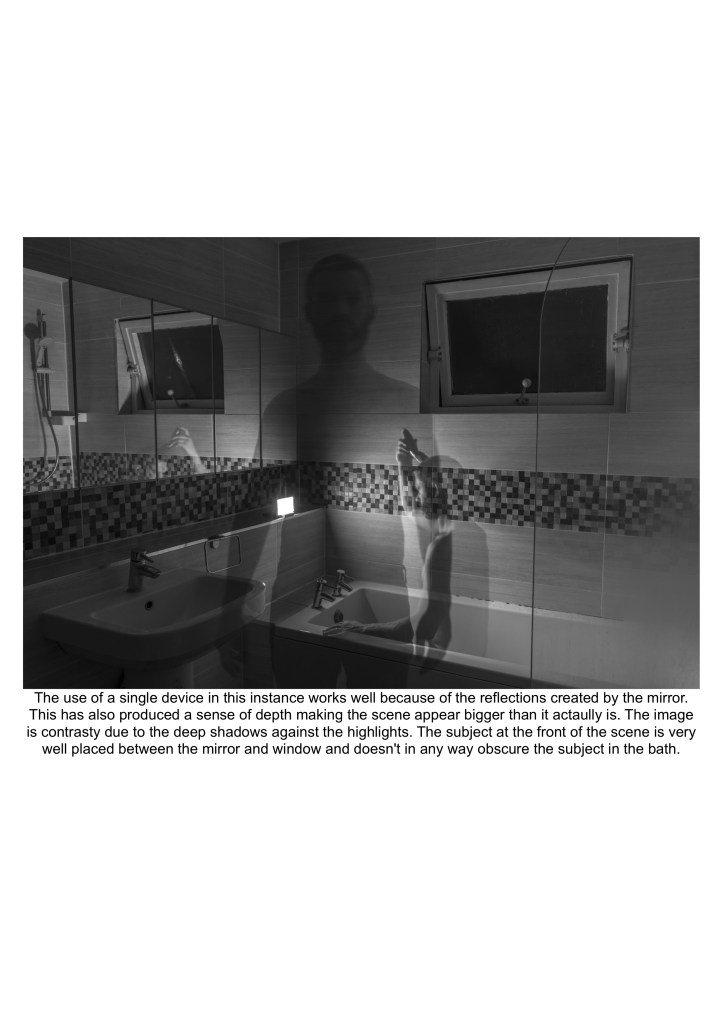
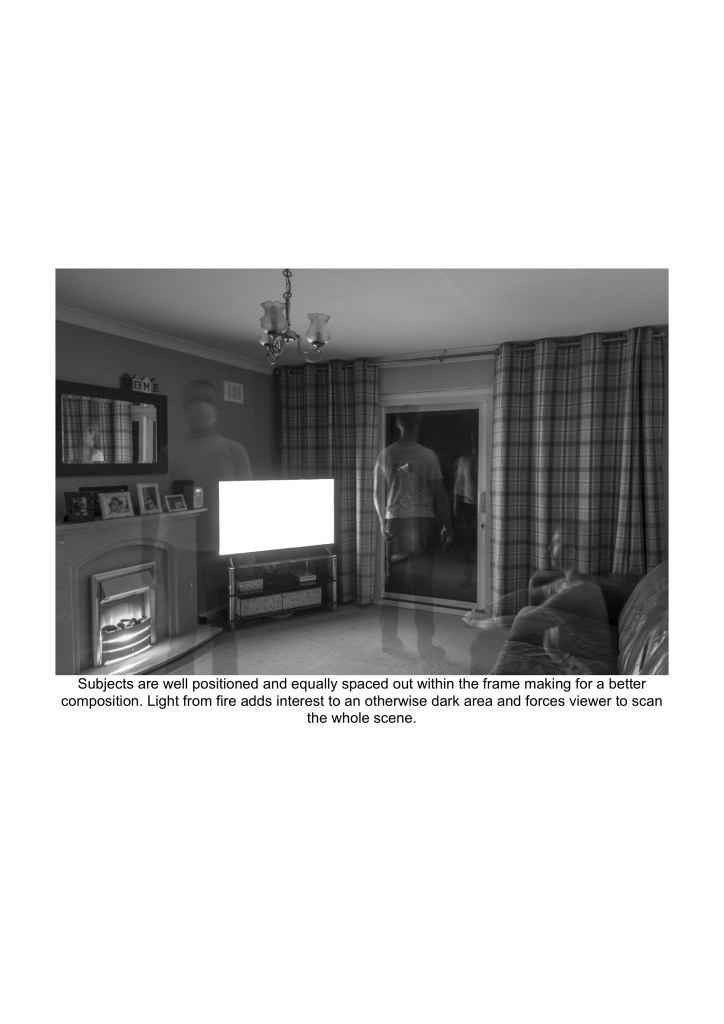
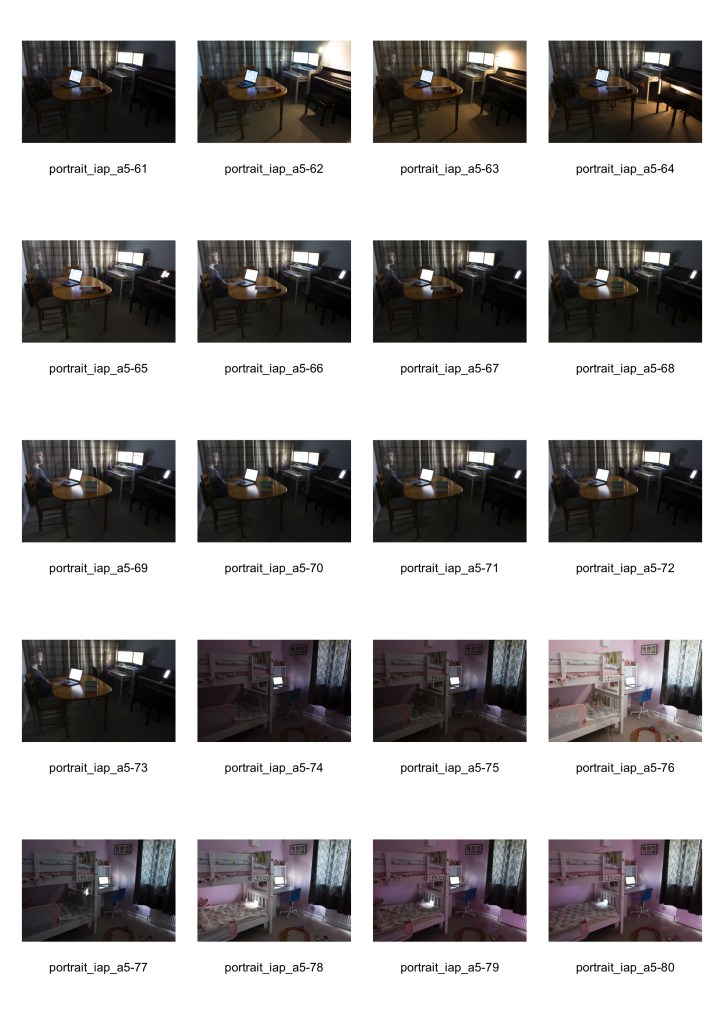
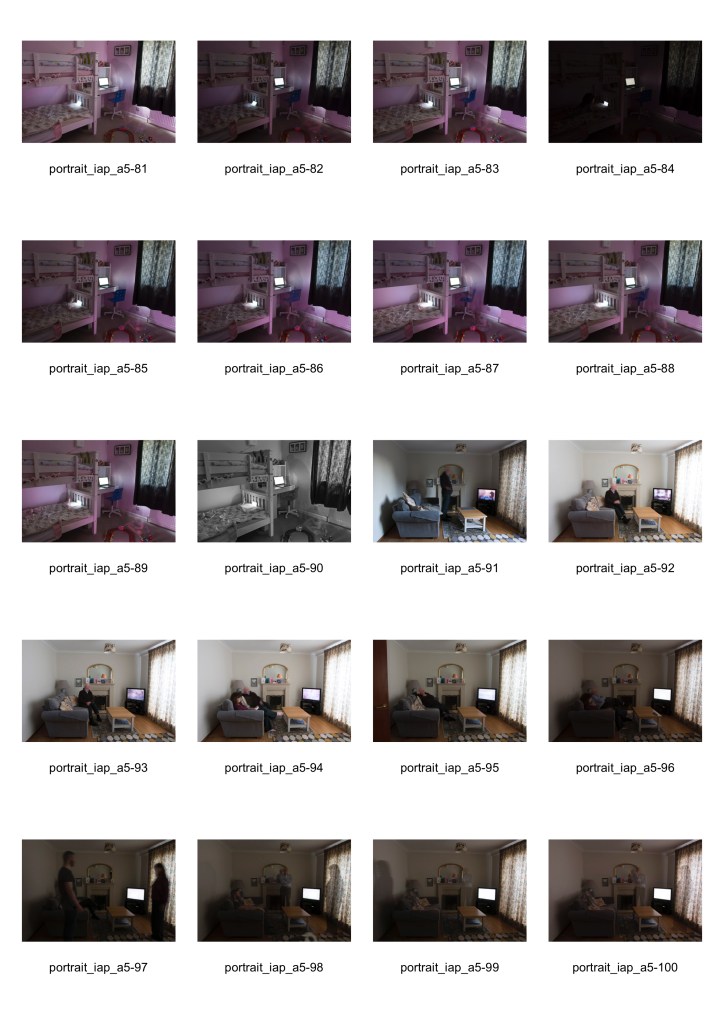
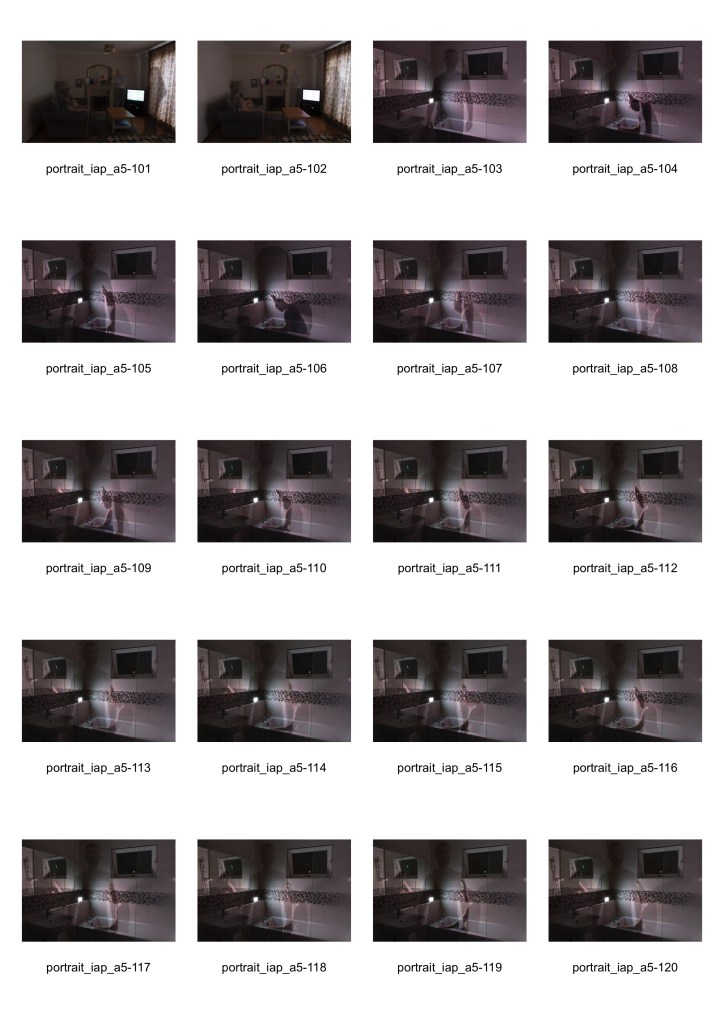
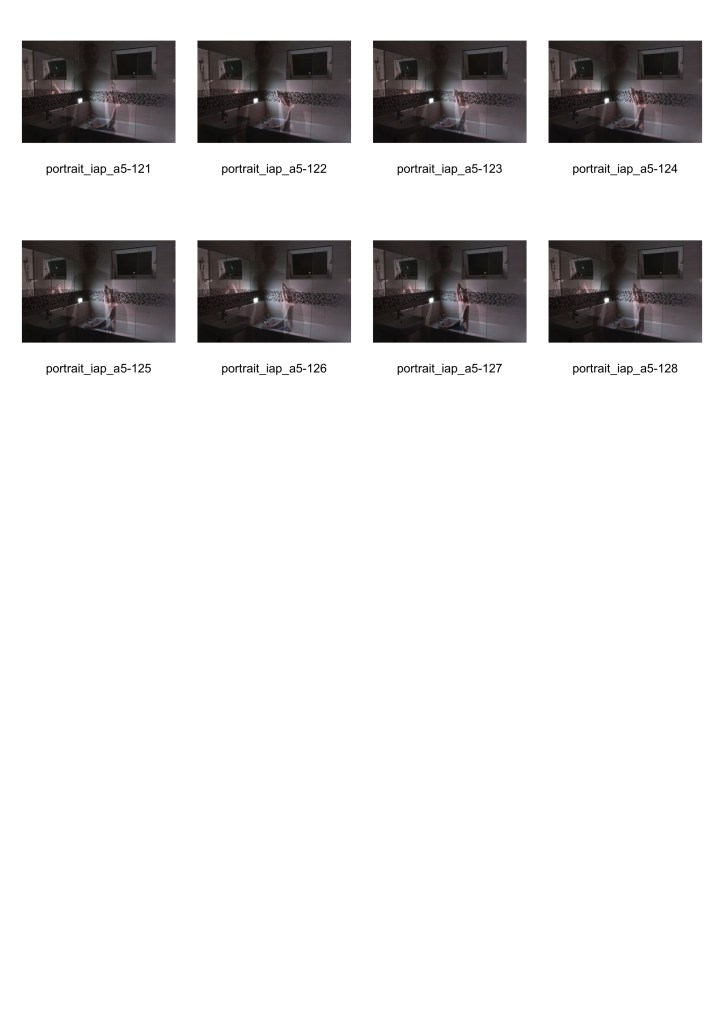
Assignment Five: Your Inspiration – Reflections
The hardest part throughout the entire process, was trying to think of an idea that would be worthy of an end assignment, and ultimately, the final piece to a larger body of work that concentrated on the Coronavirus and lockdown. I knew the importance of making this project a self-reflective piece, rather than documenting other individuals’ experiences, which I’ve done numerous times in previous assignments. I certainly feel from the ideas I had during the planning stage, this was the most appropriate to end my Identity and Place journey, and reflecting on my work, I’m incredibly pleased with what I managed to achieve. I believe this assignment demonstrates my progressive learning throughout the module, and I hope shows evidence of the improvements I’ve made, to the areas of my photography that needed to be addressed.
Producing images’ with the correct exposure, I found to be rather challenging, and made the entire photographic process incredibly time consuming. I found that trial and error worked best in this instance, and only moderate knowledge of the exposure triangle was required. When possible, I photographed at night, in order to get the exposure times I needed, and also because the bright, white screens from the devices were more noticeable in the final image. Obviously, a tripod was required, because of the length of the exposures, and the use of a shutter release with locking device, enabled me to have my camera set in bulb mode, which certainly gave me more flexibility during the shooting process. I decided to present my photographs in black and white, as I wanted to be true to Hiroshi Sugimoto’s work as much as possible. I also felt that when viewing the images in monochrome, they became more reminiscent to ones memories, which certainly strengthens the intended narrative. Though, compositional techniques are always an important factor to consider, I found I was quite limited in how I could use the elements effectively, and I was more concerned about the placement of the ‘people’, and where the devices should be located.
There was always going to be a level of creativity surrounding this assignment, due to the nature of the photographic process. However, in terms of the props used to create the ‘bright light’, I found myself quite limited in this regard, and often found myself using the same device multiple times to create the desired effect. Though, I felt these were justified, on one occasion, in particular the bathroom scene, the device did seem out of place. However, on reflection, I really don’t know what else could have been used as a substitute. I think the most creative aspect of the series, is demonstrated in how the people within the scene are depicted. I took full advantage of the long exposure times, to create these ghostly apparitions, which were done intentionally to help strengthen the notion of ‘time’. Because of the long exposures, I understood that we – the people in the photograph – would only be ‘captured’ once motionless, which allowed us to move to different locations within the scene without being detected, so to speak. This took a bit of direction, but once we had practiced it a few times, and got a better understanding on how long we should be still at each ‘location’, the results started to improve.
One thing I considered was, if at all, how did the spoken text strengthen the overall narrative. When we look at Sugimoto’s work, it’s obviously visually stunning, but, most viewers’ should be able to see past the beauty, and interpret the intended meaning correctly. I would hope my images’ generate the same response, and my verbal story acts more as a supportive element, rather than solidifying the narrative altogether. In regards to the voice recording, I’m very happy with the end result, as I had a few issues with my video in my last assignment, but feel this one is much improved. Identity and Place has been a relatively short journey for myself, however, I’m now looking forward to starting level 2.
Assignment Five: Your Inspiration – Tutor Feedback
In relation to the assignment, my tutor felt I had “pushed boundaries” and appreciated that I pursued to present my work in the way of video and spoken text. And, though for level one, the way it was compiled was deemed satisfactory, the multimedia concept may not have been the best way to showcase my work on this occasion. Though, the ‘story’ element is an important factor within the project, I do feel the video is perhaps too long, and as a result of the spoken text carrying on for almost five minutes, the connection between the viewer and images’ may ultimately be lost. My tutor believes that the series may be best presented in the form of stand alone images’ for assessment purposes, and has suggested I make prints of the images’ beforehand to help form judgment. Even, if I decide not to present this assignment differently, the process of investigating which way I feel works best, will help when writing my reflective piece. As suggested, I will research the multimedia section on the world press and press photographer of the year websites, for inspiration on potential changes that could be made before assessment. A multimedia project by Mark Powers named Shipping Forecast was also discussed, which may also give me some ideas, as essentially, Powers’ subject matter was always the same, yet presented in different ways.
 Iain Barbour - BA (Hons) Photography