This was a very difficult exercise for me to undertake – in relation to the brief – because of lockdown, and the social distancing restrictions put in place. Ideally, I would have liked to photograph strangers, in front of a background, which I had a connection with. However, as I knew from the offset that this would not be possible, I never thought about what that background might actually be.
Instead, I was limited, though incredibly fortunate, to have my family take part in this exercise. The biggest challenge I faced, was how I make the work interesting and relevant to ‘us’. As I knew the likelihood that all of my exercises / assignments from this point forward, and for the foreseeable future, would be associated to Coronavirus / lockdown in some way, I thought this would be the perfect time to start.
I must admit that I was finding it rather challenging to find a suitable background in my flat, and as frustrations slowly crept in, I found that this exercise was put on the back burner for a few weeks, perhaps hoping that by then, lockdown would have ended, or at least eased slightly. Unfortunately, that wasn’t the case. However, I received a message from a fellow gardener at the allotment, who said they had been there recently and saw that our vegetables were looking “a bit worse for wear”. As the allotment was slightly outside the five mile travel limit, we were unable to go there to attend our plants. As this was something I had been doing with my children for some time, it did make the situation rather difficult. However, I saw this as an opportunity to incorporate this misfortune into the exercise – as it had relevance to my family and lockdown – with the most obvious background being the allotment itself. But, as I didn’t feel comfortable taking my children there, I came up with an idea – I’ll bring the allotment to them! The next morning I left early, which felt like a covert operation to bring my vegetables back home safely. The plan was to pot up those I felt could be ‘saved’. Unfortunately, most had perished, with the exception of only a few.
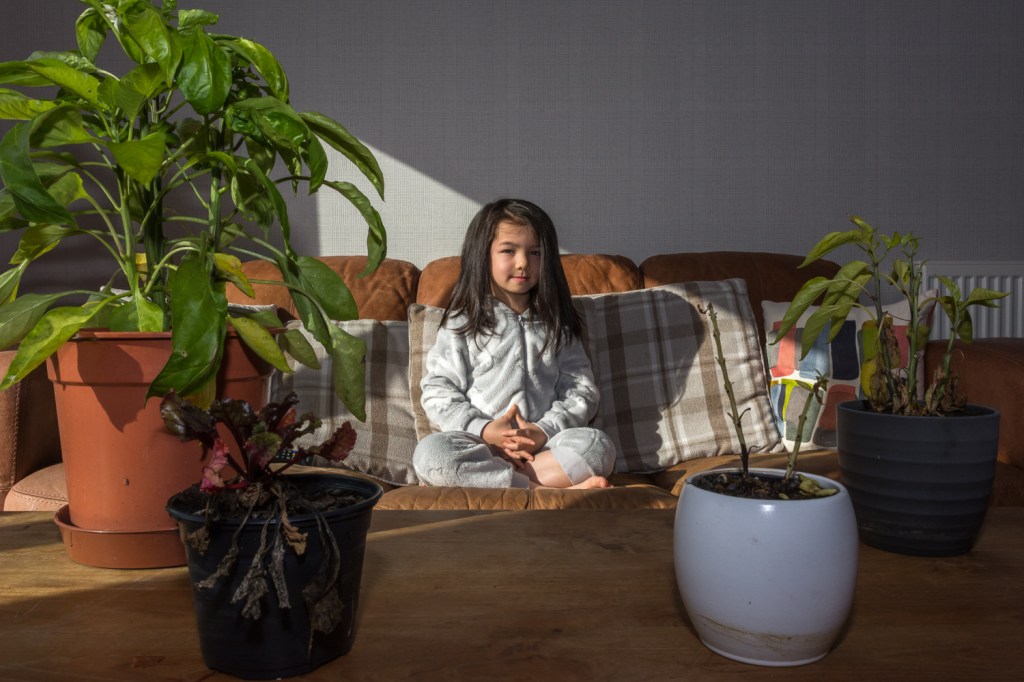
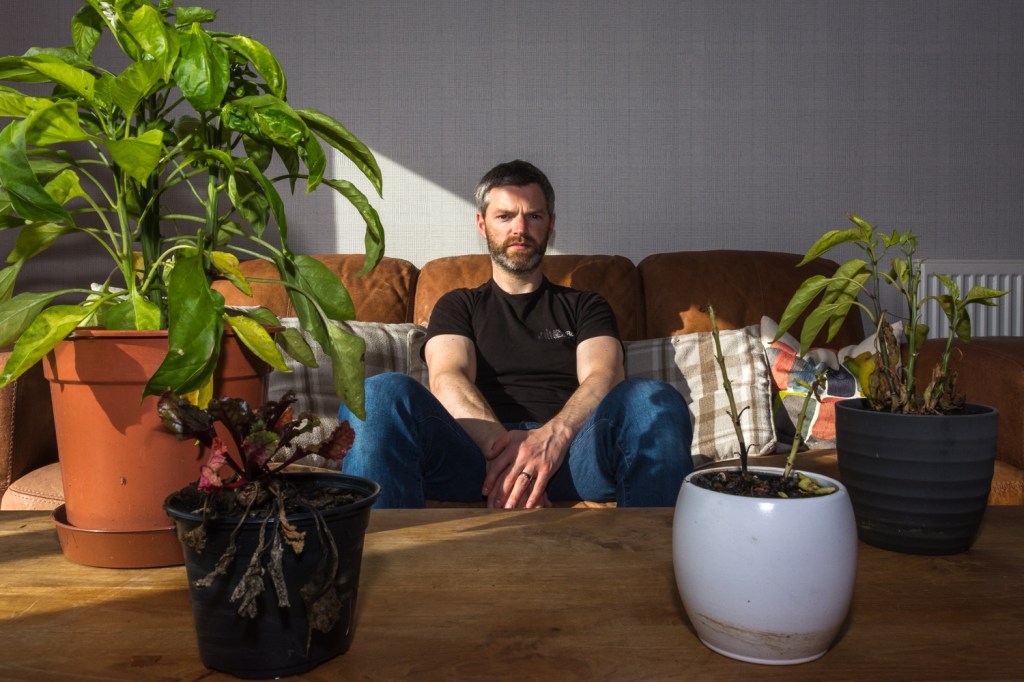
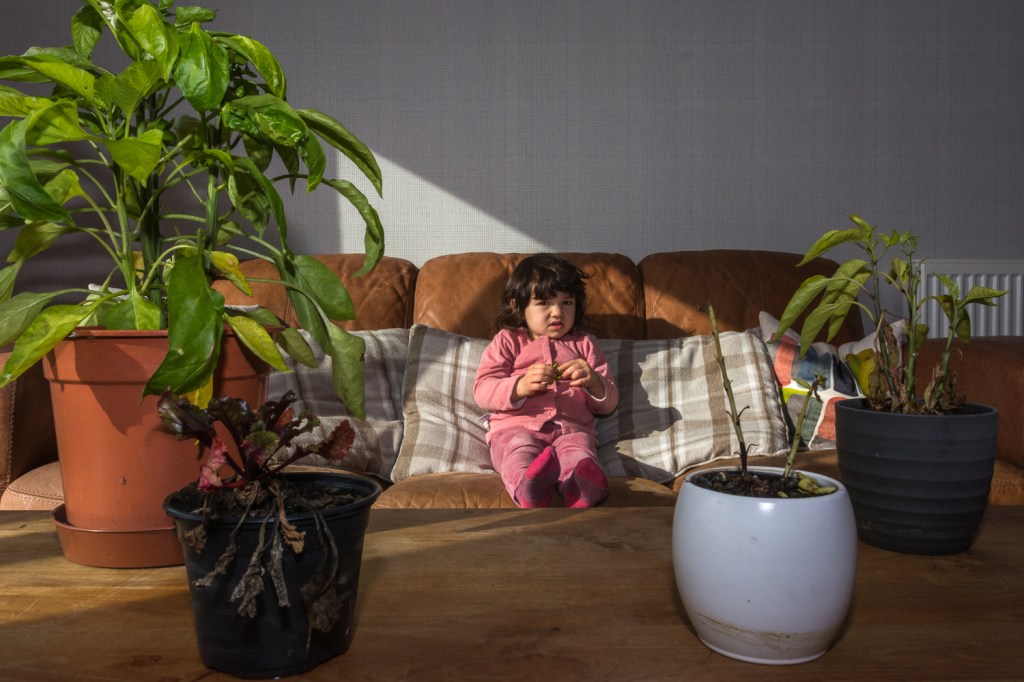
My final images’ represent a family activity, which was affected, and ultimately ended by lockdown. I think the dying plants symbolise how some people are coping mentally, and physically, at present, and reconfirms the importance of carers in people’s lives. I understand the background is rather uninspiring, and that the interest within each image, lies in the foreground. However, this was done intentionally, as the plants wouldn’t have been as noticeable if situated behind the subject, and because they help frame the subjects incredibly well.
 Iain Barbour - BA (Hons) Photography