Exercise 3: Reflecting

For centuries there has been prejudices made towards individuals or groups, who are considered by those making those judgements, to be insignificant to them. As long as there are people on this planet and class systems present, this will never change. Though this attitude cannot be justified, I do think for the majority, the way they think or act towards these individuals is a direct result of their upbringing, lack of education and of course, the social group they belong to.

The reasons why these individuals’ or groups have been portrayed badly, or, unhelpfully, has of course changed over the years. But, could it be more difficult for these people in today’s society? I think it could be. I believe the media is a contributing factor and, we are seeing ever-increasing ways to portray these people – fairly or not – to those who may not fully understand the situation, or their circumstances and, who have the ability to make their feelings known to all at a click of a button. Its one thing seeing this negative and cruel attitude within the general public, but when “world leaders” such as Donald Trump are targeting these people quite openly, you have to think what hope do we have in eliminating this? What social group we belong to can of course help fuel this prejudice even further. The biggest challenge here I feel are the influences other’s within the same group could have on someone who doesn’t necessarily share their views – whatever they may be. I think it’s very common for these views to rub off on people, so to speak, the more you associate with them, and the cycle continues.
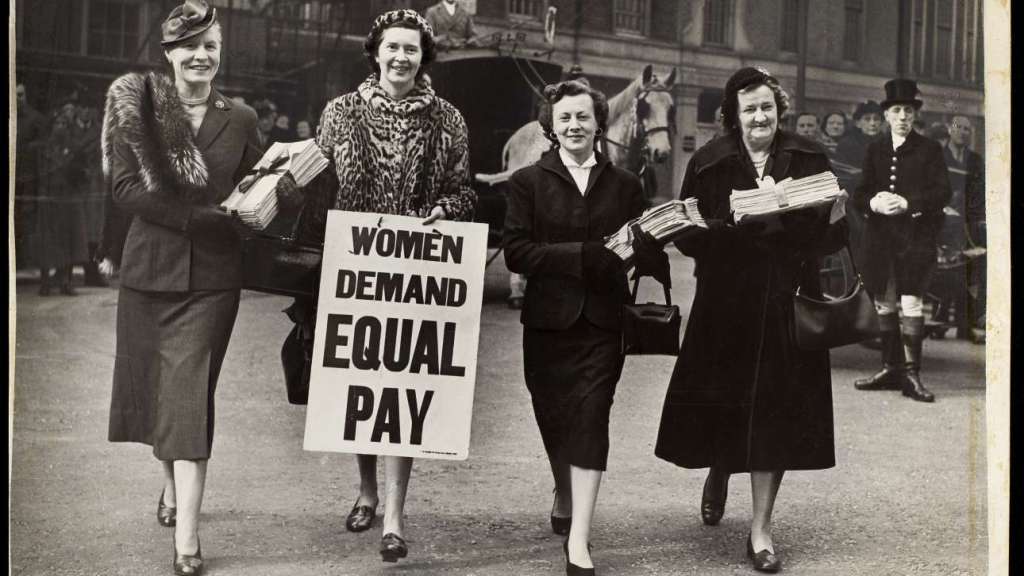
When it comes to incorporating this topic into your photography, I think the line of being insensitive towards these individuals’ and groups could easily be crossed. I believe the reasons why a photographer is wanting to explore these types of situations and people, will depend on how derogatory their work will be viewed by others. For example, are they choosing to photograph women in what could be considered ‘male orientated’ roles, to highlight that they can’t do the job, or, to emphasise that this is a serious issue and effectively promote a problem that needs to be addressed. Perhaps, what is chosen to be photographed surrounding these subject’s being discussed will also be of some importance. For example, if the photographer was doing a series on drug use, rather than images depicting the taking of drugs – which may promote negative connotations – showing the effects the use of drugs can have, for example, broken relationships, might create a more empathetic feeling towards the subject and those involved.
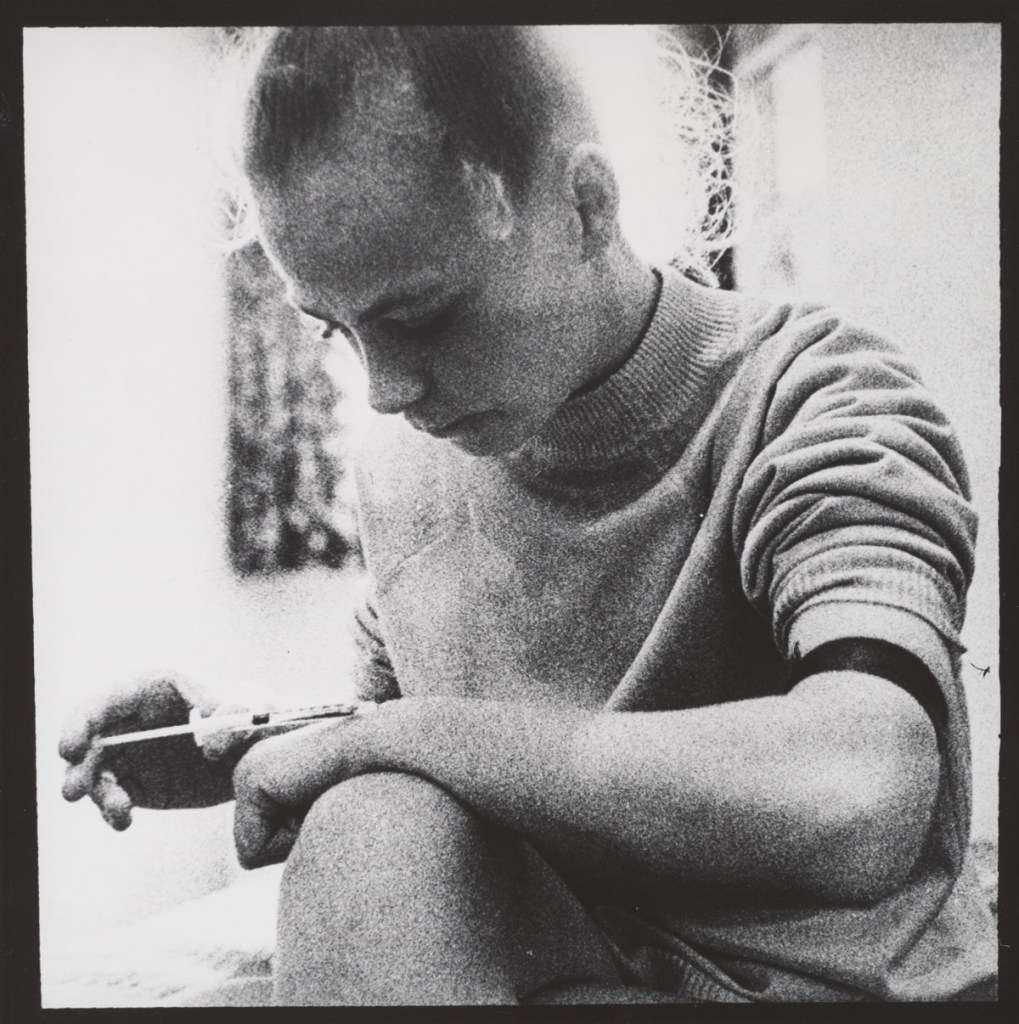
As a photographer, I think being involved with one of these marginalised or under-represented individuals or groups, would be extremely beneficial in how and why we take photographs of them. By allowing photographers to have a better understanding of those involved and build relationships with them, we can ultimately present them and the situation in an empathetic way. I believe being unbiased about the topics you are photographing is favourable, however, in this instance, it still leaves room for misinterpretation by the viewer, that could lead to prejudice. It would also make us – the photographer’s – reflect on how we would want to be portrayed if in a similar situation, and therefore, may be more selective in what we decide to photograph.

References

University of London. (2020). ‘Equal pay for equal work: Jill Craigie’s To Be a Woman’ [Online] Available from: https://london.ac.uk/news-and-opinion/leading-women/equal-pay-equal-work-jill-craigies-be-a-woman

On Curating. (2020). ‘Shooting Up in the Museum: Intravenous Drug Use in Brian Weil’s The AIDS Photographs’. [Online] Available from: https://www.on-curating.org/issue-42-reader/shooting-up-in-the-museum-intravenous-drug-use-in-brian-weils-the-aids-photographs.html#.XqH9OGhKjIU
Exercise 2: Your Personality

When I first thought about what aspects of my personality made me unique, I must admit that I did struggle initially. I started to think that very few of us are truly unique in this instance and, as we all share the same, or similar personality traits, perhaps we are not so different from one another in this regard. However, after doing further research into this topic, I now know that not to be the case. Theoretically, the moment one becomes ‘unique’, is the moment we are born. DNA is fundamentally what makes people unique – unless you’re an identical twin – and though it is often said that people are 99.9% identical – effecting the variety of behaviours that comes naturally to us and, which ultimately defines our characteristics – there are enough variables in the remaining 0.01% genomes to make us individual. It is within this 0.01% that determines if we will have red hair instead of brown, if we are more likely to be obese and/or suffer from heart disease or, how fast we will run. Of course, there are millions of people around the world with red hair, billions with obesity and, many ‘fast’ runners and, though these are all common denominators, they all help shape our unique personalities, which is determined by not one single gene, but a combination of many working together.

It’s certainly true that we all have our own individual differences when it comes to our personalities. For example, where one person might be sensitive, another may be thick skinned. What’s interesting and, not something we usually think of when growing up, is how our personalities can change over time. Theoretically, this also means our ‘uniqueness’ can change throughout our lives too. Perhaps, this is a possible reason why people who we haven’t seen for a while might appear ‘different’ to us when we reconnect. As this is such a complex field, phycologists no longer measure our personalities into ‘types’, but rather into ‘traits’. There are five personality traits that are widely accepted by those in the field and they are openness, conscientiousness, extraversion, agreeableness and neuroticism. Of course, each category has a ‘high’ and ‘low’ level – opposites if you will – of how, for example, conscientious a person may be and, this will ultimately show variable differences in an individuals’ personality relatable to the same ‘trait’. Taking into consideration these traits, I have come up a list of some aspects that makes my personality unique.

Openness – high level

Adventuress, eager to learn new things, artistic, imaginative.

Conscientiousness – high level

Organised, trustworthy, disciplined, planner, achievement focussed.

Extraversion – low level (introvert)

Reserved, Thoughtful individual, Solo activities, small group interaction.

Agreeableness – high level

Trusting, Helpful, Compassionate.

Neuroticism – high level

Anxious, Stressed, Self-conscious

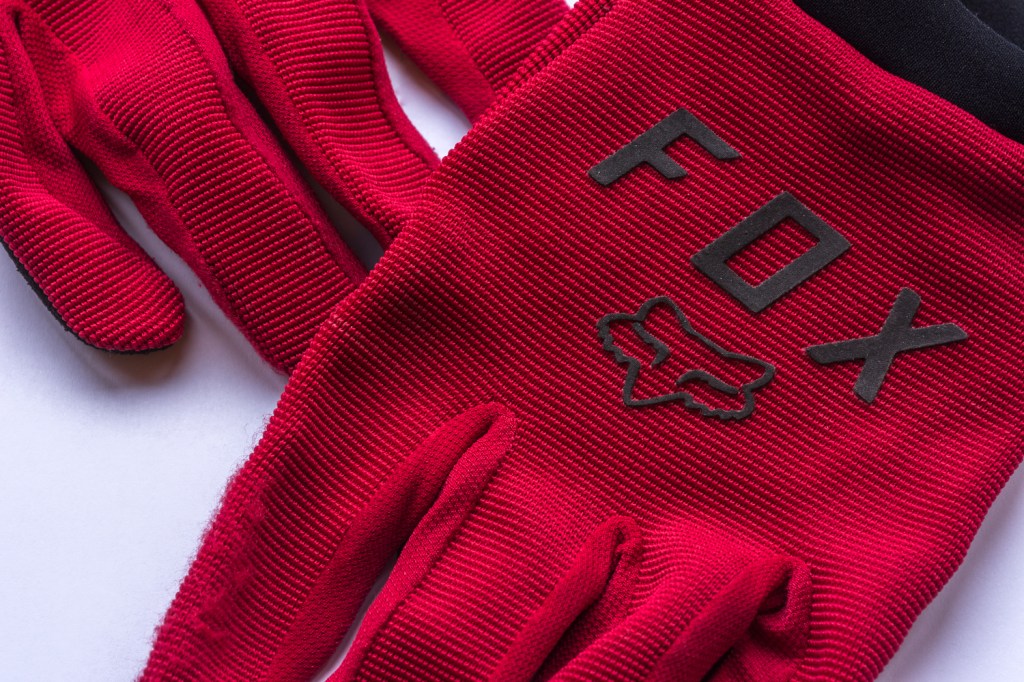
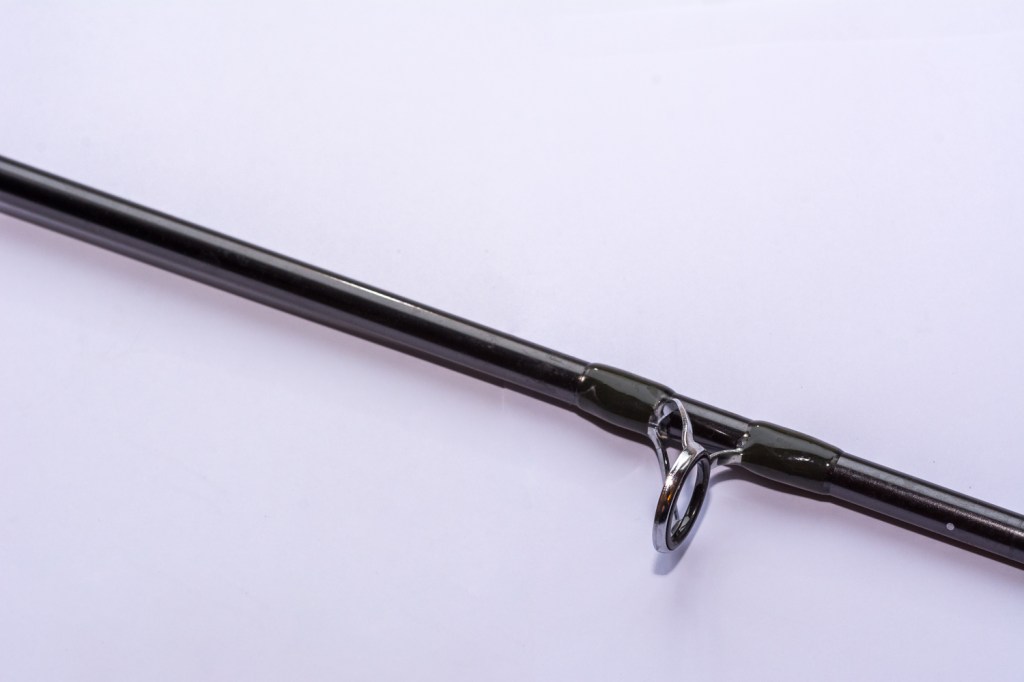
I think the trait that represents me the most is ‘Openness’. The photographs I have taken for this exercise specifically relate to the topic of ‘adventuress’ and, allows the viewer to see elements in my life that gives me this type of personality. I think there are a couple of ways in which to develop on what I’ve done in order to make a larger piece of work. Firstly, I could select one subject, for example, fishing, and create a series of images based around the fishing community I’m involved in, or perhaps not. Taking into consideration the notion of ‘mirrors’ and ‘windows’, I could make a comparison set of photographs between a community I’m familiar with and one that I’m not – even though the sport is the same – and document the differences, if any. Secondly, and an idea I actually really like, is to make a typology series of my favourite wild fishing lochs in Scotland. By depicting the remote locations I often visit, I think this would highlight well the adventurous side in me.

References

Quartz. (2017). ‘Genetics has proven that you’re unique—just like everyone else’ [Online] Available from: https://qz.com/936525/personal-dna-testing-and-genetic-scientists-are-proving-that-youre-unique-just-like-everyone-else/

BC Campus. (2020). ‘12.3 Is Personality More Nature or More Nurture? Behavioural and Molecular Genetics’ [Online] Available from: https://opentextbc.ca/introductiontopsychology/chapter/11-3-is-personality-more-nature-or-more-nurture-behavioral-and-molecular-genetics/ Live Science. (2017). ‘Personality Traits & Personality Types: What is Personality?’ [Online] Available from: https://www.livescience.com/41313-personality-traits.html

Elina Brotherus

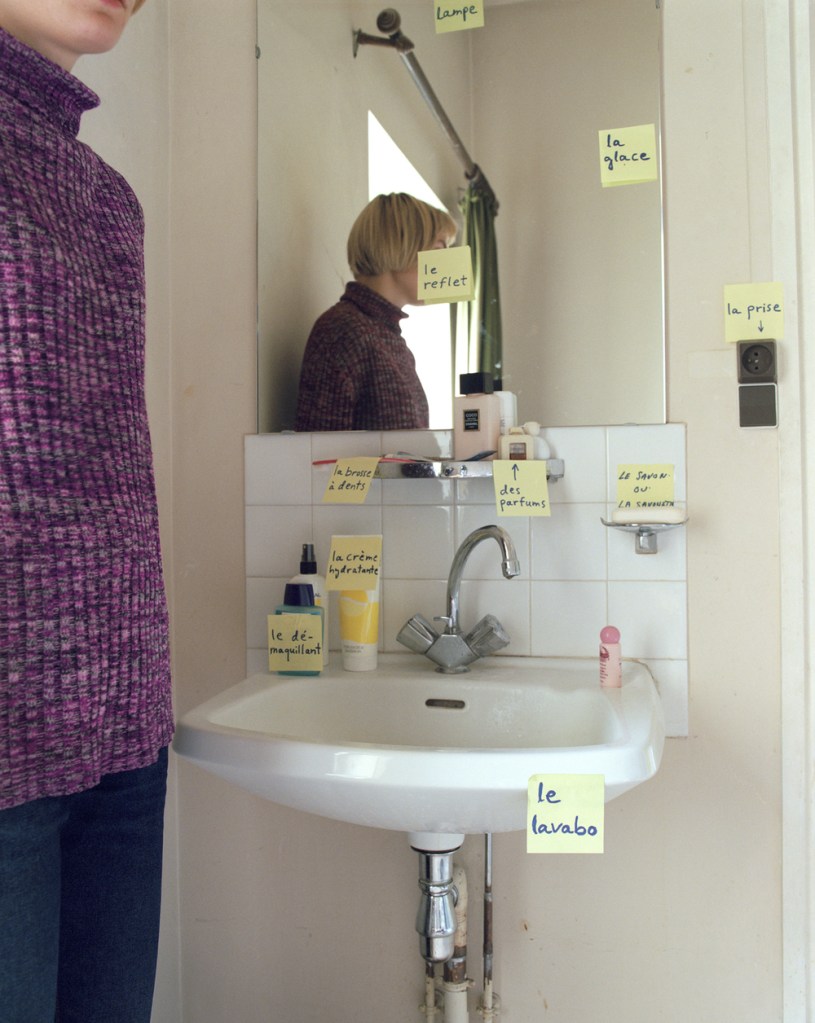
I thoroughly enjoyed watching the video of Elina Brotherus talking to OCA students’ about her work and in particular, how you can use yourself – the photographer – as the subject. It was evident to me that even simple tasks we do, could possibly lead to a photography project, and as ‘artists’, we need to be more aware of this. I’m specifically referring to the period in Brotherus’s life when she moved to France and stuck post-it notes on to everyday objects, in order to learn them. For most, this would have been a requirement, simply to learn a new language. But, Brotherus saw this as an opportunity to turn this into a personal and meaningful project that explored her experiences living in a foreign country, whilst trying to adapt to cultural and environmental differences. What I find inspiring, is that she continued with the theme of using post-it notes, in her series ’12 years later’. However, the descriptions this time, often consist of lengthy dialogues, which describe her thoughts and feelings about looking back on her life from when she first visited her residency in 1999, and how her life, if at all, has changed. What I find particularly interesting about this, is that despite the timeframe between the two projects, they just work, both visually and contextually. That got me thinking about my future assignments, and how under the current circumstances, the theme should be relatable from one to the next, in order to from a larger piece of work. This will hopefully show an evolution of my experiences, where, like Brotherus, I could draw up a conclusion or even write a ‘position statement’ of how I’ve changed – again, if at all.  

I think if photographers are to use themselves as the subject’s in their own work, they need to think carefully about what was, or is, meaningful in their lives, in order to draw inspiration for possible themes, where the end result will be a series of images that are genuine and has significance to them. That, I think, is the most important factor to be considered and hopefully achieved when creating a piece about yourself, and what others interpret from viewing your images, is perhaps irrelevant. One thing that is evident in a lot of her work, is the inclusion of the cable release. Asked, why she decides to keep this visible for all to see, she replied “it’s important to show me as both the model and the author”. I find this to be such a fantastic response, and reconfirms to me the personal aspect of her entire process. Where some photographer’s may find this unsightly, perhaps unprofessional, for Brotherus, it’s what makes her images unique to her.

References

The Open College of the Art. (2015). ‘Here is Elina Brotherus’ [Online] Available from: https://www.oca-student.com/content/photographers-talking?page=1

Elina Brotherus. (2018). ‘12 ANS APRÈS (1999 / 2011-2013)’ [Online] Available from: http://www.elinabrotherus.com/photography#/12-ans-apres/

Design a site like this with WordPress.com
Get started