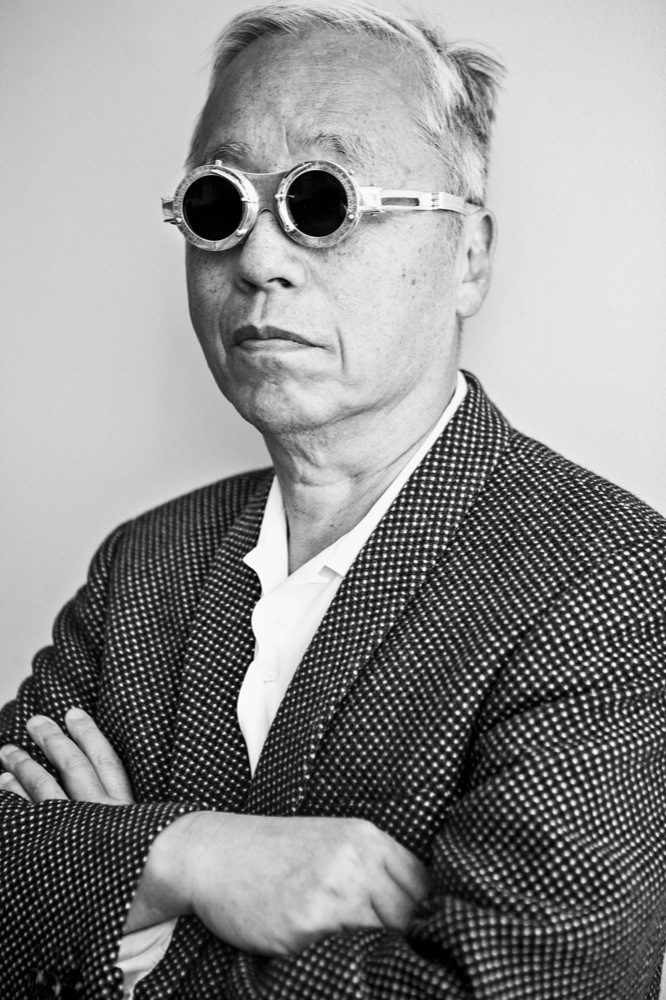
Since the initial planning phase, I’ve discovered Japanese photographer, Hiroshi Sugimoto, whilst researching Todd Hido for a previous exercise. In a short clip, Hido was reflecting on his early photographs’, and produced an image that depicted an overly exposed television screen. He went onto explain that he took this image in homage of Sugimoto. Interested in its visual qualities, and curious on how such a photograph is created, I began to look into Sugimoto’s work for myself.
250, 1/5/00, 3:14 PM, 8G, 4725×6300 (300+400), 87%, Normal 8, 1/30, R328, G274, B620,
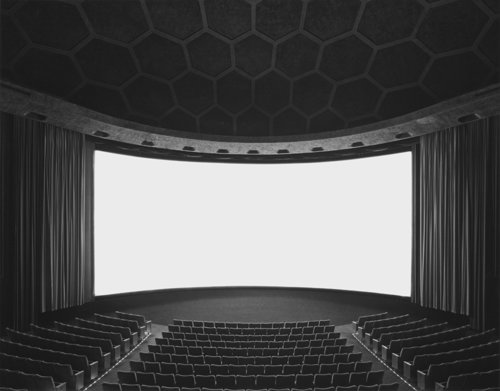
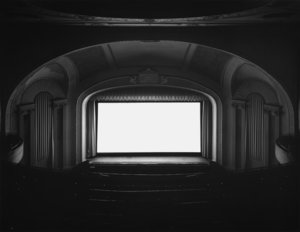
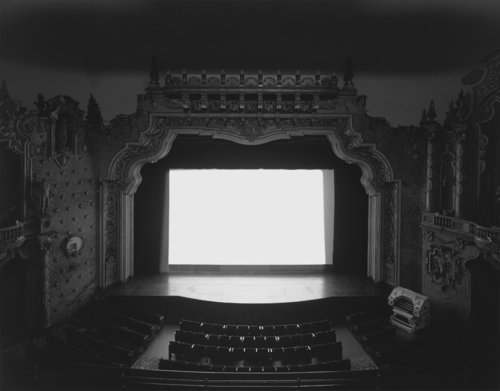
The photograph in question, was inspired by Sugimoto’s most famous project, Theatres. This saw Sugimoto enter movie theatres built in the 1930’s – with his large format camera – and photograph the entire film with a single exposure. This resulted in each of the still images to amalgamate into one, essentially creating an overexposed screen. Sugimoto himself said “My dream was to capture 170,000 photographs on a single frame of film. The image I had inside my brain was of a gleaming white screen inside a dark movie theatre”. What makes these images’ particularly beautiful, is the architectural detail that has been captured, and softly highlighted from the bright, white screen. Due to the length of the exposure, other movie goers have been erased from the scene, creating an eerie atmosphere, and making it appear that Sugimoto is alone.
212, 1/10/00, 9:19 AM, 8G, 4593×6125 (375+500), 87%, Normal 8, 1/30, R328, G274, B620,
The concept of ‘time’ surrounds a lot of Sugimoto’s work, and Theatres is no exception. Done so in an abstract way, the past, as well as the present, has being documented, and at no point during that single exposure, has ‘time’ – relatable to the moving image – been lost. As a viewer, we question our own existence, whilst reflecting on where we’ve been, and contemplating on where we might go.
254, 12/15/99, 1:39 PM, 8G, 4331×5775 (525+700), 87%, Normal 8, 1/25, R328, G274, B620,
My idea now is to attempt to incorporate Sugimoto’s methods of taking images’, as seen in Theatres, into my work, whilst thinking about the relationship between the subtheme of ‘journeys’, and ‘time’. I feel this is the perfect opportunity to naturally conclude the recurring theme of Coronavirus and lockdown, and believe it would be most appropriate, if the assignment was based on my personal thoughts and experiences surrounding the pandemic. With that said, I will reflect on – through spoken text – my journey from the beginning of lockdown, to now, and plan for my images’ to depict important moments I discuss, which will be recorded prior to starting the photographic process. I’ve made the decision to include myself and others in the photographs’ – unlike Sugimoto – as I feel in this instance, the exclusion of people would negatively impact on the intended narrative. And, even with my verbal reflection, the images’ would be incredibly difficult to interpret. I’m also aware of the challenges I could encounter, by choosing to incorporate people into the scene, whilst taking long exposures. However, I feel I could use this to my advantage, and create an effect that will actually help strengthen the notion of ‘time’. One other thing I must consider, is how I will demonstrate the ‘bright light’. In theory, any device with a screen that can produce a moving image will work, and though this will obviously take a bit of experimentation, I’m looking forward to the process.
References
Hiroshi Sugimoto. (2020). ‘Hiroshi Sugimoto’ [Online] Available at: https://www.sugimotohiroshi.com/new-page-7
Interview Magazine. (2016). ‘Hiroshi Sugimoto’s Future’ [Online] Available at: https://www.interviewmagazine.com/art/hiroshi-sugimoto-sea-of-buddha-pace
Public Delivery. (2016). ‘What is Hiroshi Sugimoto’s Theaters photography project all about?’ [Online] Available from: https://publicdelivery.org/hiroshi-sugimoto-theaters/
YouTube. (2009). ‘Contacts: Hiroshi Sugimoto 2’ [Online] Available from: https://www.youtube.com/watch?v=rY3nGoZqw9U

 Iain Barbour - BA (Hons) Photography