As suggested by my tutor, I’ve created prints of my photographs seen in assignment five, in order to decide whether or not, the series works best when viewed as standalone images’, or, through the multimedia format of video, as I had originally created. Though, my lockdown story was of course an important element within the assignment, it was felt that the overall narrative was hindered slightly, due to the length of each verbal description that supported that specific image, possibly leading to missed opportunities to include additional photographs within that period of reflective commentary.
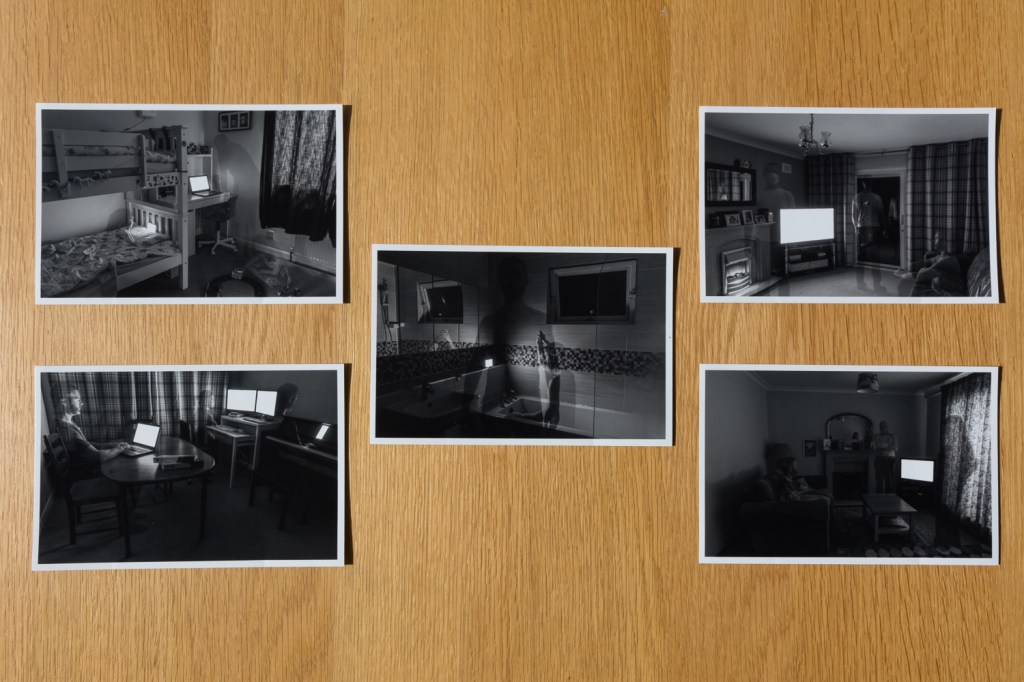
I chose to order 9 x 5 prints, as I felt these would be large enough to examine satisfactorily, but would also help keep the printing costs down – after all, this is more for research purposes than anything else. Unfortunately, the images’ appeared much darker in print form, than when viewed on my computer, and in a lot of instances, details – more so in the shadows – have been lost completely, resulting in less ‘attractive’ photographs. After some additional research into why this may have occurred, it’s most probable that my computer screen hasn’t been calibrated correctly, if at all. Though, I consider this to be an annoyance, I must remember that this is one reason why I carried out this exercise – to analyse, find potential flaws, and understand how to resolve them when printing in the future. Another issue, more so seen in images 2 and 5, relates to the screens and the noticeable black fringing, most likely caused by the exposure times not being long enough. I now understand the importance of creating test prints, in order to make amendments where necessary, prior to displaying your photographs in an exhibition, or submitting them for assessment, for example.
In conclusion, I feel my photographs – once amended – are visually strong enough to be presented as standalone images’. I don’t believe that without the supporting narration of my lockdown story, the series is too obscure, or difficult to interpret. There are certainly visual elements depicted, to suggest the underlying theme is relevant to ‘lockdown’, and if the viewer is familiar with Hiroshi Sugimoto’s work, they should understand the relevance to the overexposed screens and how they represent the passing of time. That’s not to say I wouldn’t use spoken text – my lockdown story – to support my images’. However, this would be highly dependent on how, and where I was presenting my work. I can imagine this use of multimedia working well in an exhibition, for example, where my story could be played over a sound system, whilst the public leisurely viewed my photographs. This would give additional content and further meaning to the series, without solidifying a specific part of my ‘story’, to a particular image.
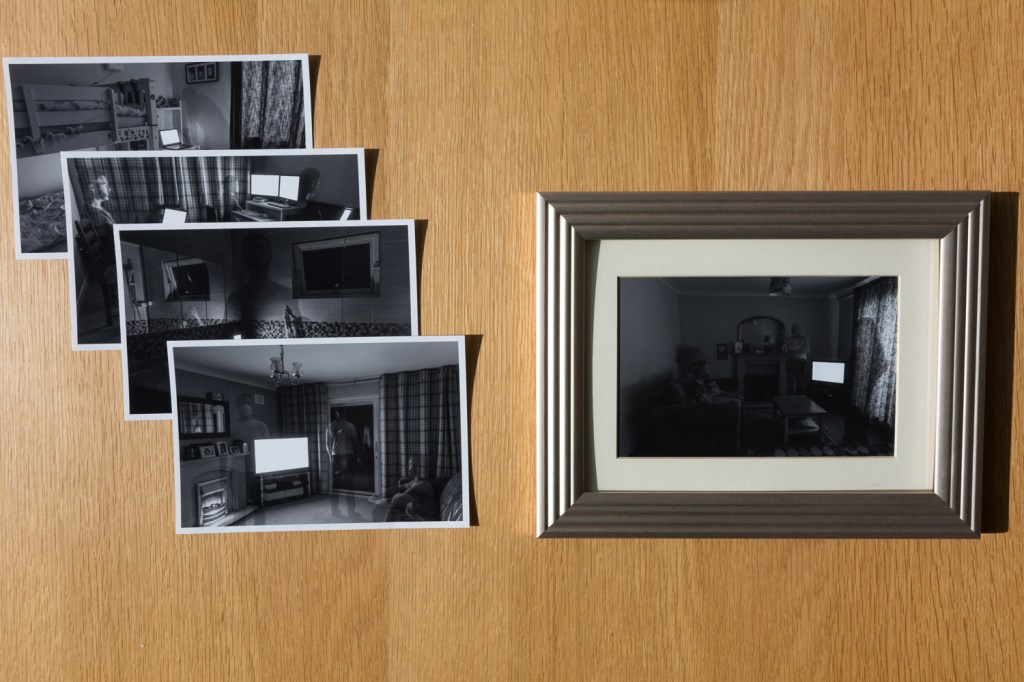
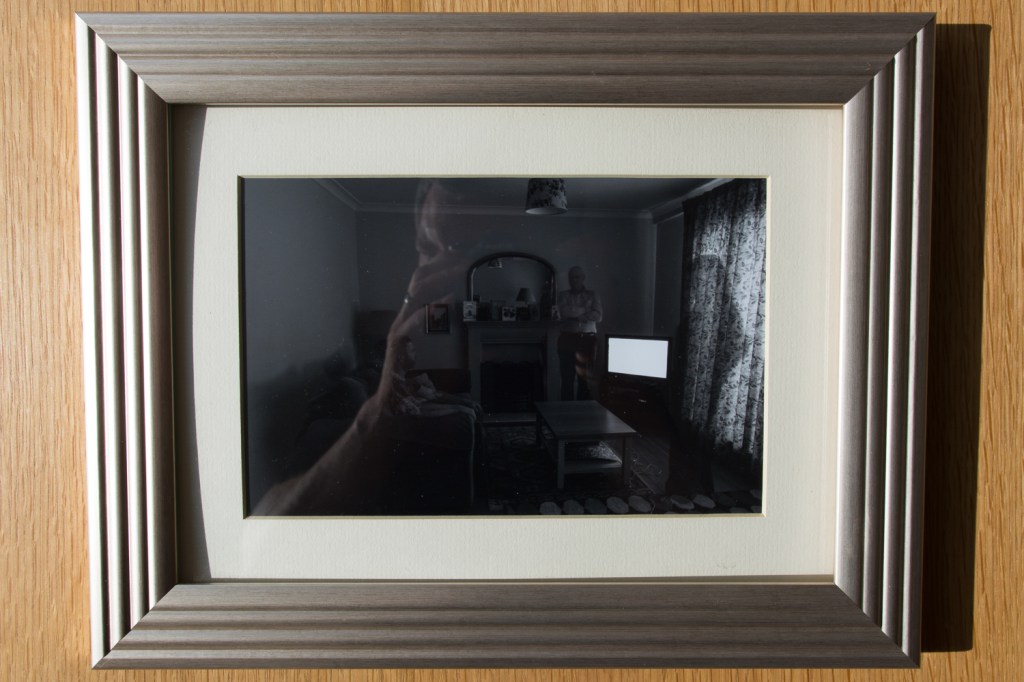
To show evidence of creating prints, I photographed them displayed on a table. These photographs have been unedited, as I wanted the prints to be represented in their truest form. I also framed one of the prints, to highlight how it may look if on display in an exhibition, for example, though I appreciate that the print size would be much larger. I also tried to photograph the framed print parallel to the camera, but as is evident, the reflections captured on the glass, negatively affect the visual appearance.

 Iain Barbour - BA (Hons) Photography
I FOUND YOU HAD TO REMOVE THE GLASS TO TAKE PICTURES OF FRAMED PHOTOS!
LikeLike
I can’t believe I didn’t think of that! Oh well….next time. Thanks for the tip.
LikeLike