Elina Brotherus

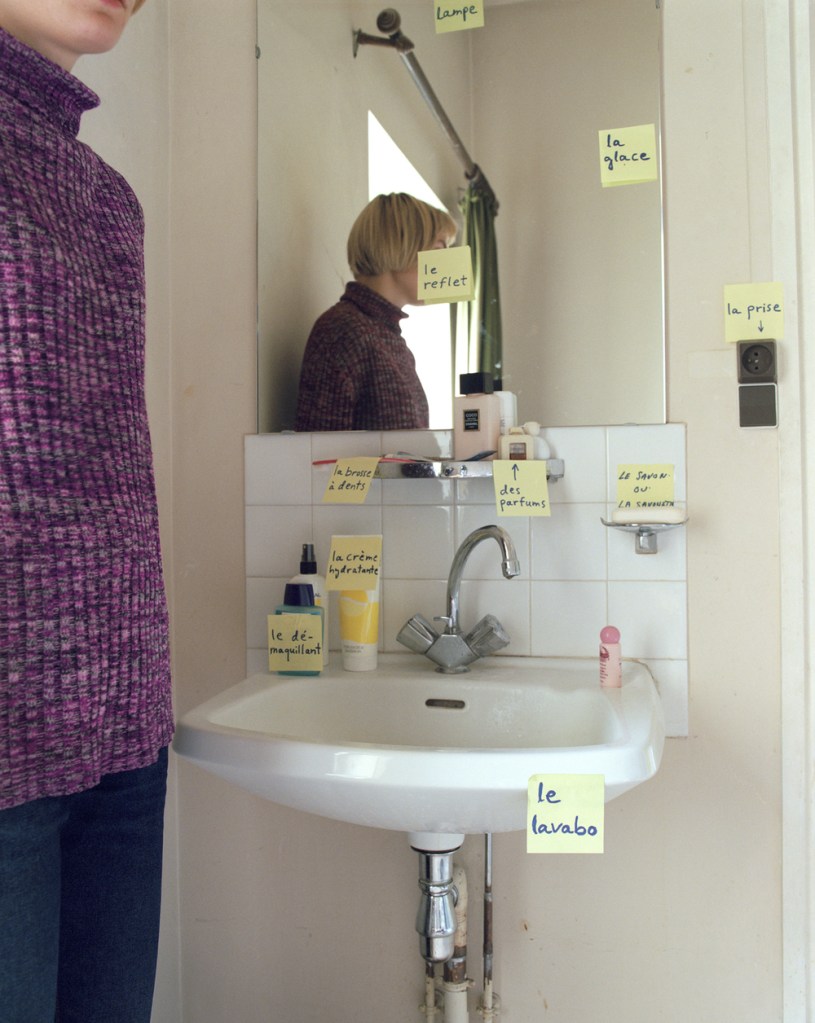
I thoroughly enjoyed watching the video of Elina Brotherus talking to OCA students’ about her work and in particular, how you can use yourself – the photographer – as the subject. It was evident to me that even simple tasks we do, could possibly lead to a photography project, and as ‘artists’, we need to be more aware of this. I’m specifically referring to the period in Brotherus’s life when she moved to France and stuck post-it notes on to everyday objects, in order to learn them. For most, this would have been a requirement, simply to learn a new language. But, Brotherus saw this as an opportunity to turn this into a personal and meaningful project that explored her experiences living in a foreign country, whilst trying to adapt to cultural and environmental differences. What I find inspiring, is that she continued with the theme of using post-it notes, in her series ’12 years later’. However, the descriptions this time, often consist of lengthy dialogues, which describe her thoughts and feelings about looking back on her life from when she first visited her residency in 1999, and how her life, if at all, has changed. What I find particularly interesting about this, is that despite the timeframe between the two projects, they just work, both visually and contextually. That got me thinking about my future assignments, and how under the current circumstances, the theme should be relatable from one to the next, in order to from a larger piece of work. This will hopefully show an evolution of my experiences, where, like Brotherus, I could draw up a conclusion or even write a ‘position statement’ of how I’ve changed – again, if at all.  

I think if photographers are to use themselves as the subject’s in their own work, they need to think carefully about what was, or is, meaningful in their lives, in order to draw inspiration for possible themes, where the end result will be a series of images that are genuine and has significance to them. That, I think, is the most important factor to be considered and hopefully achieved when creating a piece about yourself, and what others interpret from viewing your images, is perhaps irrelevant. One thing that is evident in a lot of her work, is the inclusion of the cable release. Asked, why she decides to keep this visible for all to see, she replied “it’s important to show me as both the model and the author”. I find this to be such a fantastic response, and reconfirms to me the personal aspect of her entire process. Where some photographer’s may find this unsightly, perhaps unprofessional, for Brotherus, it’s what makes her images unique to her.

References

The Open College of the Art. (2015). ‘Here is Elina Brotherus’ [Online] Available from: https://www.oca-student.com/content/photographers-talking?page=1

Elina Brotherus. (2018). ‘12 ANS APRÈS (1999 / 2011-2013)’ [Online] Available from: http://www.elinabrotherus.com/photography#/12-ans-apres/
Exercise 1: Mirrors and Windows

First and foremost, I found this exercise to be much more difficult and thought provoking than I initially anticipated. It was a lot easier for me to find examples of ‘windows’ than ‘mirrors’, and after some consideration into why this might be, I think it simply comes down to the subjects’ that I historically have an interest in photographing. I believe its human nature to be immediately fascinated with anything we witness that isn’t considered the ‘usual’ in our daily lives, and when we have a camera at our disposal, a picture of this event is usually taken. For me personally, ‘windows’ photographs are taken with the conscious decision that I want to record this ‘unusual’ moment. I don’t think it’s any surprise that the majority of the images’ I have chosen for ‘windows’ were taken in China, as culturally, socially and historically, it is – on the most part – very different to where I live in the U.K. Of course, it’s hard to say, but I wouldn’t be surprised if most photographs in individuals’ archives contain more images that can be placed within the category of ‘windows’. I found choosing ‘mirrors’ images that allow us to learn something about ourselves, to be a challenging task. It wasn’t until I really looked at the images, did I then decide, if in fact it did say something about me and why. I believe these types of images are taken in the moment, and with little consideration about why we are taking them. Perhaps, subconsciously, we do take them because we feel at the time, that person or scene does tell us something about ourselves, but, it isn’t until we review them in a more concentrated manner, do we actually realise this.  

Mirrors

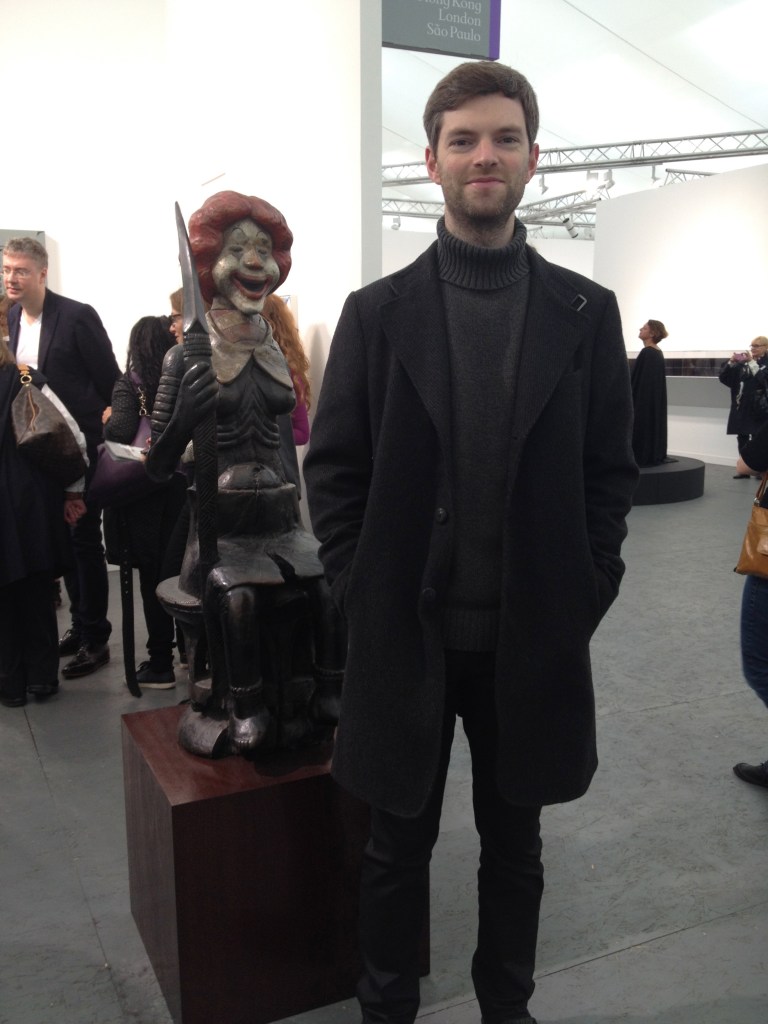
This image was taken by my girlfriend, at a prestigious art exhibition in London. This was a period of my life when I was trying very hard to be someone I wasn’t, and this image reconfirms that for me. Reflecting on the photograph, I found the majority of the art work to be terrible and I would never wear what I was wearing then, now. But, I felt at the time, to be accepted into a ‘group’ that I would realistically never be a part of, those were the types of events I should be attending, whilst dressed in that manner.

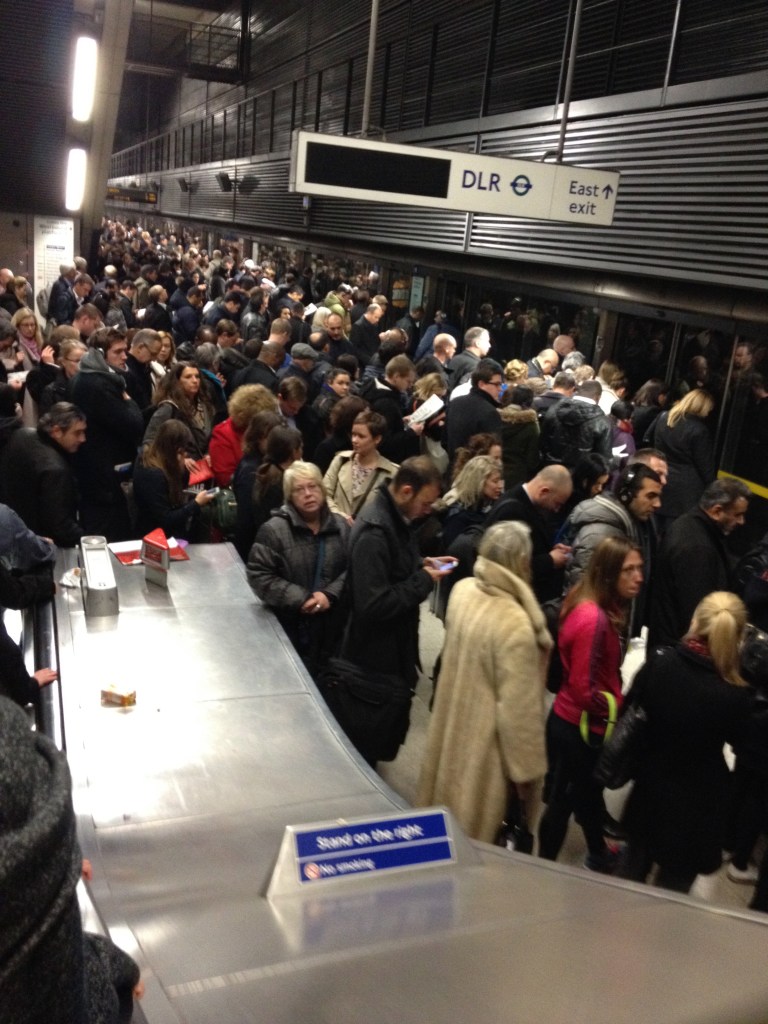
I took this photograph when I first moved down to London. It depicts something which I cannot stand – crowded spaces – and during my two years living there, it was something I never got used to. This image shows me that I am far more suited to a quieter, simpler life, and even though I love London as a city, I would never move back there.

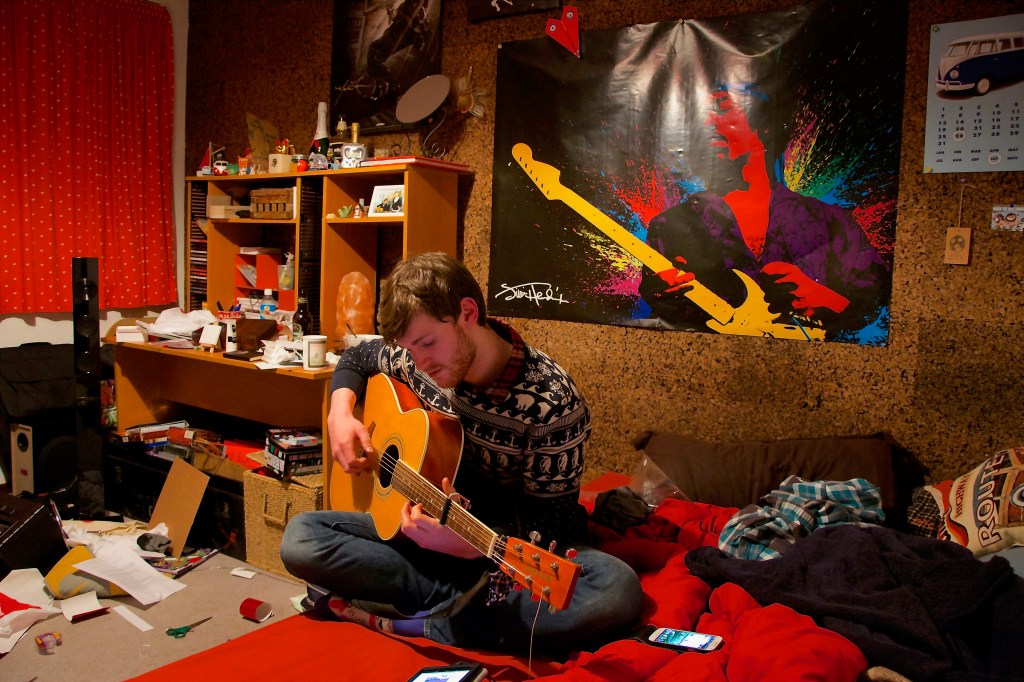
I took this photograph of my brother playing his guitar a few years ago, through his bedroom door and without his knowledge. What I’ve learnt about myself from this image is how different we are from each other. Musically, he is very gifted, and though I wish I was too, I never will be. Also, he is more of a free spirit in the way he lives his life, and I am certainly more highly strung and calculated in the way I do things.

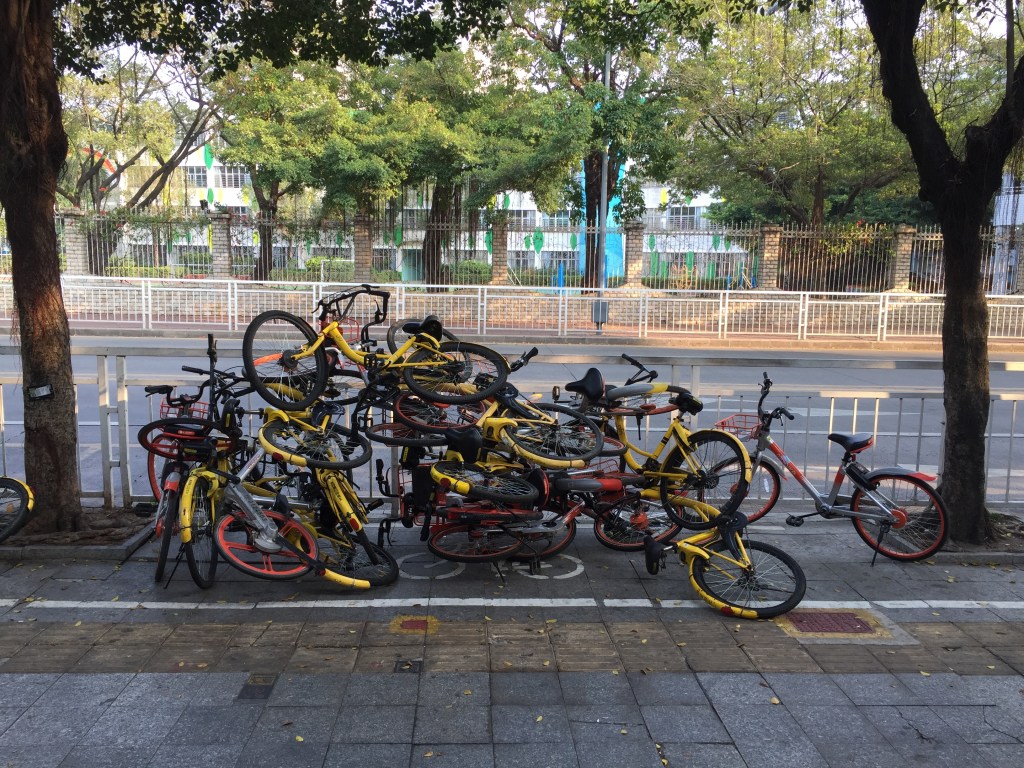
I took this photograph when I was living in Shenzhen, China. The image depicts a mountain of ‘mobai’ – effectively ‘Boris Bikes’. Unlike in the U.K where there are dedicated parking stations where you can return the bikes after use, in Shenzhen at least, there isn’t, and this is the result. This image reconfirms to me that I like a degree of order in my life and don’t appreciate unnecessary mess. I understand this isn’t a portrait, but I feel in this instance, it doesn’t need to be.

Windows

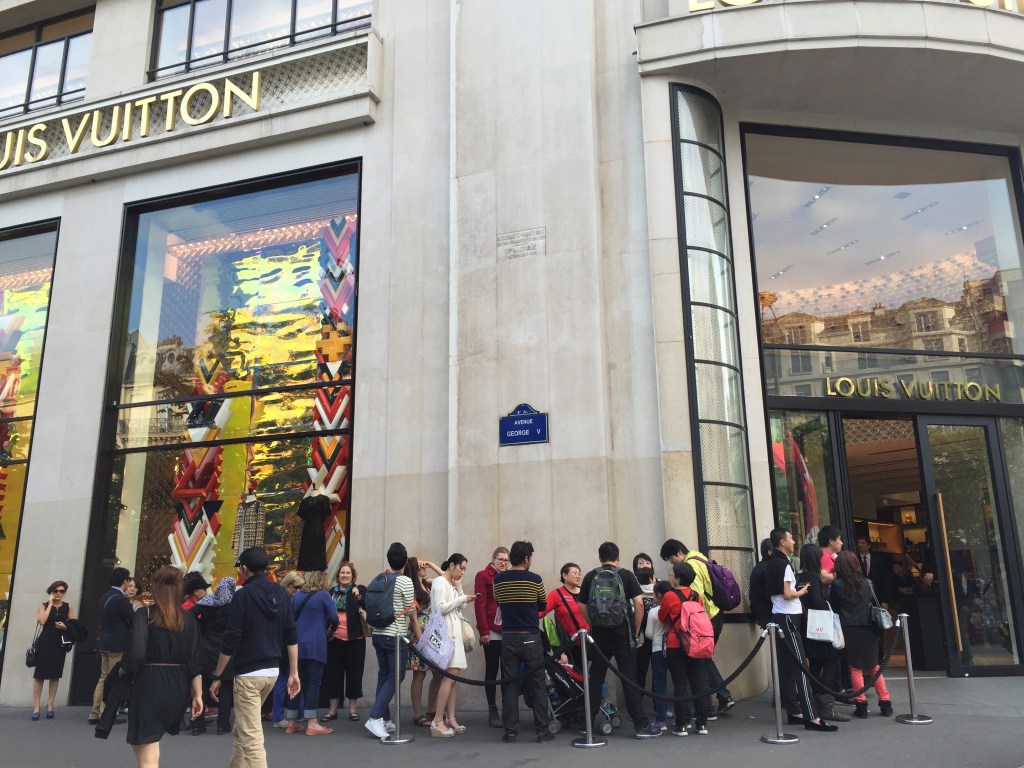
I took this photograph when in Paris, France. It depicts a long queue of people waiting to get into Louis Vuitton. I find this image interesting, as it shows me to what extent people are willing to go to, in order to gain access to a shop, where realistically they couldn’t afford to buy anything and fundamentally it’s more about being seen by others. Perhaps, this image does show us how the ‘other half’ live, but I think it’s tells us more about those who dream to be the ‘other half’.

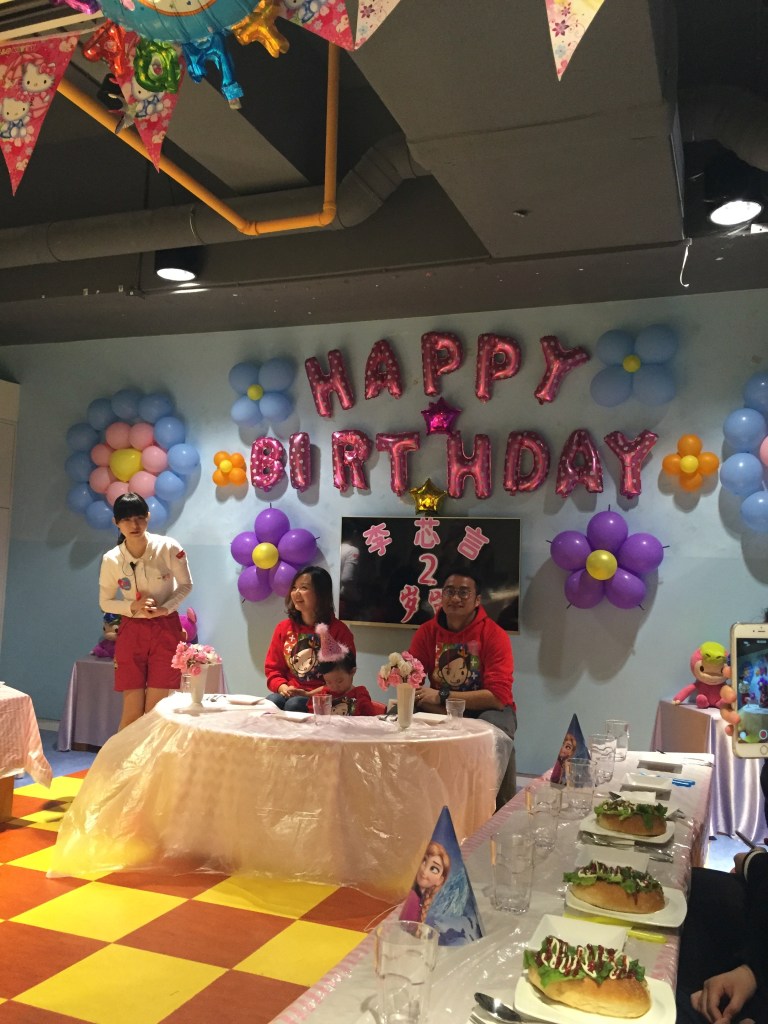
I took this image at a kids Birthday party in China, which my daughter was invited to. Celebrations there are often more elaborate than in the U.K and children’s birthday parties are no exception. These types of birthday parties are very expensive and ultimately are a sign of the family’s wealth. I think this photograph shows how these events are often more about the parents than the child – the way they are dressed the same and sitting at the head of the table for all to see.

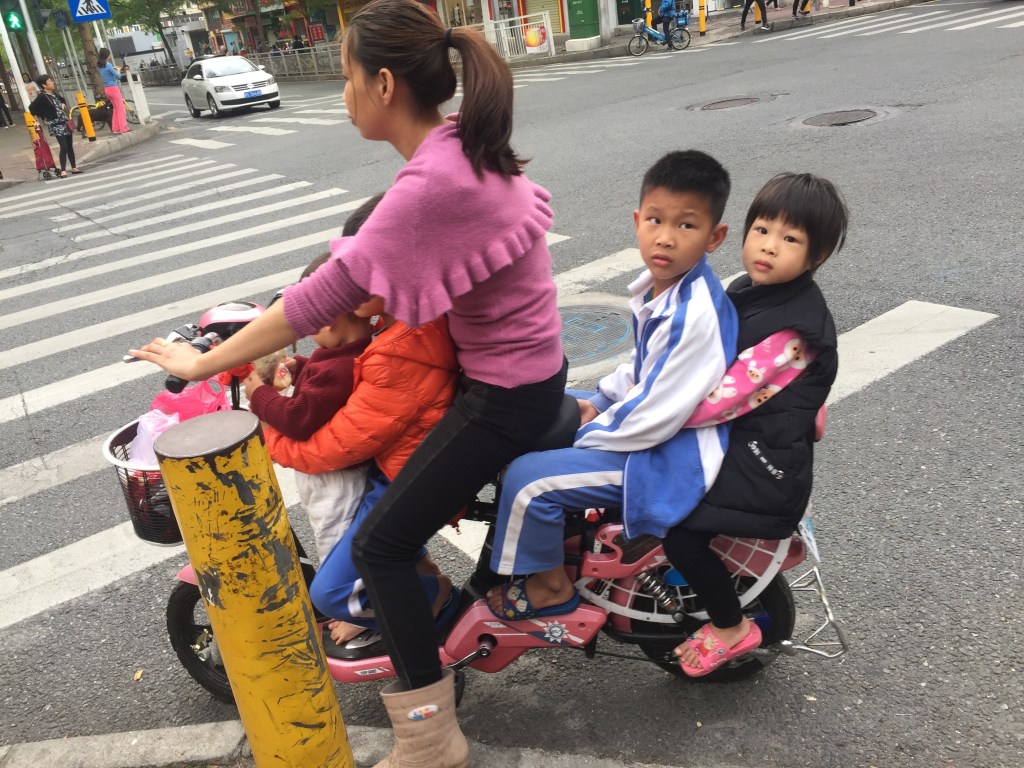
I really like this photograph, but at the same time, it sends chills down my spine every time I look at it. I took the image in China and it shows not one, but five people on a scooter – four being children. I think this shows that even though China is the second richest country in the world and leading in so many areas, they are years behind in health and safety practices.

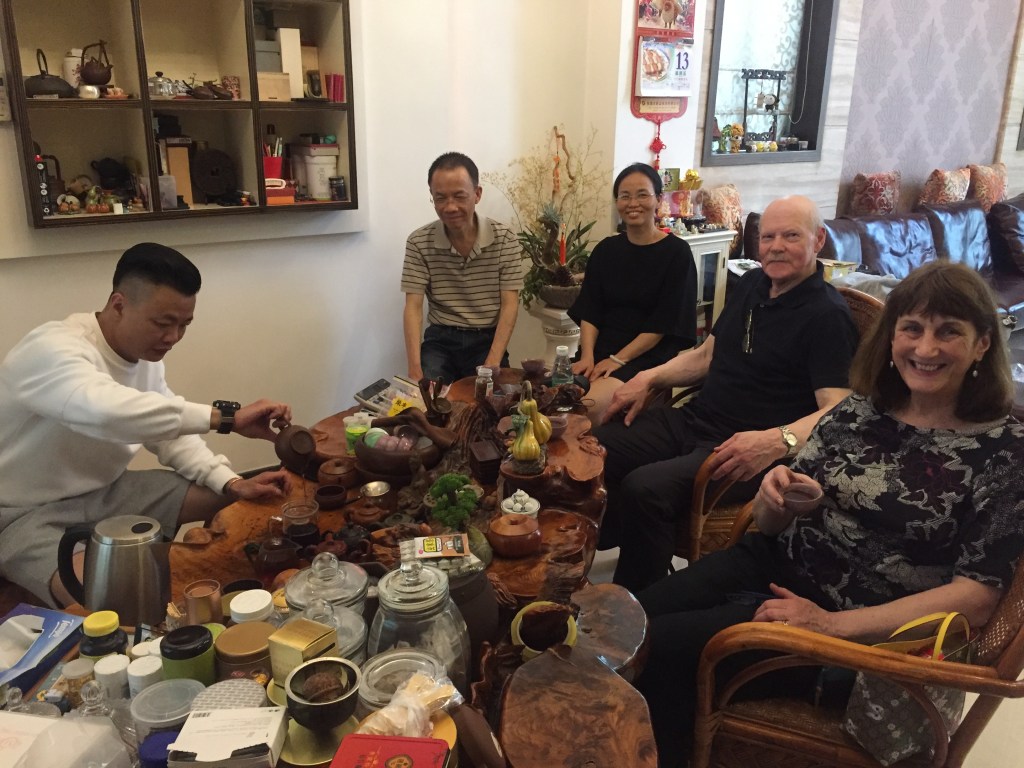
This is a picture of my wife’s cousin – who is an extremely wealthy businessman in China – serving tea at his ‘tea table’. When guests are invited to his home – like myself and my parents were – it’s polite for the host to sit everyone around the table and serve various teas – very different to what we drink in the U.K. But, it’s also an act to show of the wealth of that individual. Some teas in China are stupidly expensive and are collected as an investment, rather than to be drunk.

Design a site like this with WordPress.com
Get started