“The portrait is a sign whose purpose is both the description of an individual and the inscription of social identity.”
Tagg. J. ‘The Burden of Reprsentation: Essays on Photographies and Histories (1988)
Thinking about this quote from Tagg, I believe a “description of an individual” related to portrait photography is simply what the viewer sees from the individual being photographed and what information can be obtained about them. Take this portrait of King Edward VII, for example. Depicted, is a white and fairly large man, who is slightly balding with a black and grey beard and hair. This would suggest to the viewer that this individual was in his 60’s and possibly unfit and/or unhealthy.
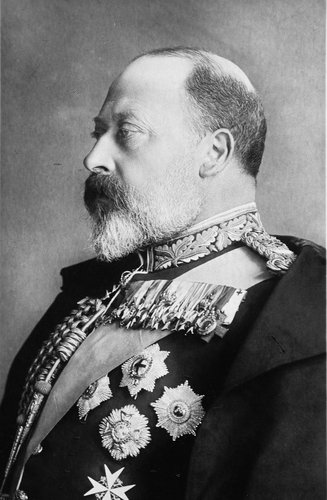
The “inscription of social identity”, on the other hand, are things which have been adopted by that individual to give the viewer some understanding as to what social group they belong to. In this example, we see the individual wearing extremely smart attire and presenting his medals for all to see. From this, the viewer can perceive that this man is of some importance, though, not having prior knowledge of who he is or having an understanding of what the uniform and/or medals represent, that ‘importance’ would remain unknown. Another difference between the two is that, to a certain extent, the latter is a choice or a requirement the individual has to abide by. Royal portraits are incredibly important, so, if the King was to wear nothing but his best this could possibly bring ‘in-house’ tensions and scrutiny from the outside.
‘Social Identity Theory’, as defined by social psychologist Henri Tajfel, is a “person’s sense of who they are based on their group membership” which in this example, would be the Royal Family. Being part of a specific group can give that individual a sense of immense pride, especially if that group is part of an ‘elite club’, so to speak. However, Tajfel’s theory suggests, that members of any ‘ingroup’ for example, the Royal Family, will hold prejudice against all ‘out-group’ individuals, for example, all non Royal Family persons. However, in present day, I don’t necessarily believe this to be true.
References
Royal Collection Trust. (2020). “Portrait photograph of King Edward VII (1841-1910) in military uniform, c. 1902”[Online] Available from: https://www.rct.uk/collection/2107471/portrait-photograph-of-king-edward-vii-1841-1910-in-military-uniform-c-1902
Simply Psychology. (2019). “Social Identity Theory” [Online] Available from: https://www.simplypsychology.org/social-identity-theory.html
 Iain Barbour - BA (Hons) Photography