Overall, I’m happy with the feedback that I received, and feel the issues that were raised – specifically around the presentation of my images – will benefit me greatly now that I have a better understanding of why that particular element didn’t work. Of course, my tutor took into account the limitations I had surrounding this assignment, and for him to describe my work as “critically interesting” and “appropriate under the circumstances” was certainly reassuring that I had in fact stuck to the brief to the best of my abilities and produced strong images that were a current record of the times – which was ultimately what I hoped to achieve.
My tutor’s main concern wasn’t at all to do with the images themselves, and though he felt each portrait had a place within the final series, he wasn’t sure the sequencing that they were presented in necessarily worked. We discussed further the potential issues of ‘narrative’ within photography, and more so, when as photographers, we want to present our images in chronological order. His thoughts were that producing a narrative in this manner could be problematic, as gaps in the timeline are more evident – unlike in film, for example – and therefore, the sequencing may not be as fluent as one intended it to be. I must admit, it took me a while to get my head around this concept. But, when reviewing my images again, I understood my tutor’s mind-set. I feel that the sequencing between images one and two, and four and five, shows evidence of gaps within the timeline, and though this makes sense to me, for the viewer, it may be confusing. My thinking now is that does the narrative need to be literal in terms of its timeline, or, should I just present my portraits as standalone images that are all relatable to a common theme. After some consideration, I will change the way I present my images for assessment. As I know many others will have felt the experiences that I documented, I feel it’s not necessary to present them in chorological order, which I believe will help with the overall narrative.
We also discussed what the role of the captions was and how I could make them more personal towards the individuals mentioned. This was similar to what was brought up for my last assignment, so I should have really applied that notion here. My tutor said I could adopt a more photojournalistic approach, where they usually consider who, what, why and when (dates). Again, this is something I shall change for assessment.
Lastly, we talked about future assignments and how the situation – in regards to taking images in my home due to the lockdown – will most likely be the same. My tutor had a great idea that each assignment hear after should tie into one another, meaning that I’m creating a large body of work all related to my time in isolation with my family. He suggested that I take more group photographs of my family, though that may depend on the brief of the assignment.
This was a very difficult exercise for me to undertake – in relation to the brief – because of lockdown, and the social distancing restrictions put in place. Ideally, I would have liked to photograph strangers, in front of a background, which I had a connection with. However, as I knew from the offset that this would not be possible, I never thought about what that background might actually be.
Instead, I was limited, though incredibly fortunate, to have my family take part in this exercise. The biggest challenge I faced, was how I make the work interesting and relevant to ‘us’. As I knew the likelihood that all of my exercises / assignments from this point forward, and for the foreseeable future, would be associated to Coronavirus / lockdown in some way, I thought this would be the perfect time to start.
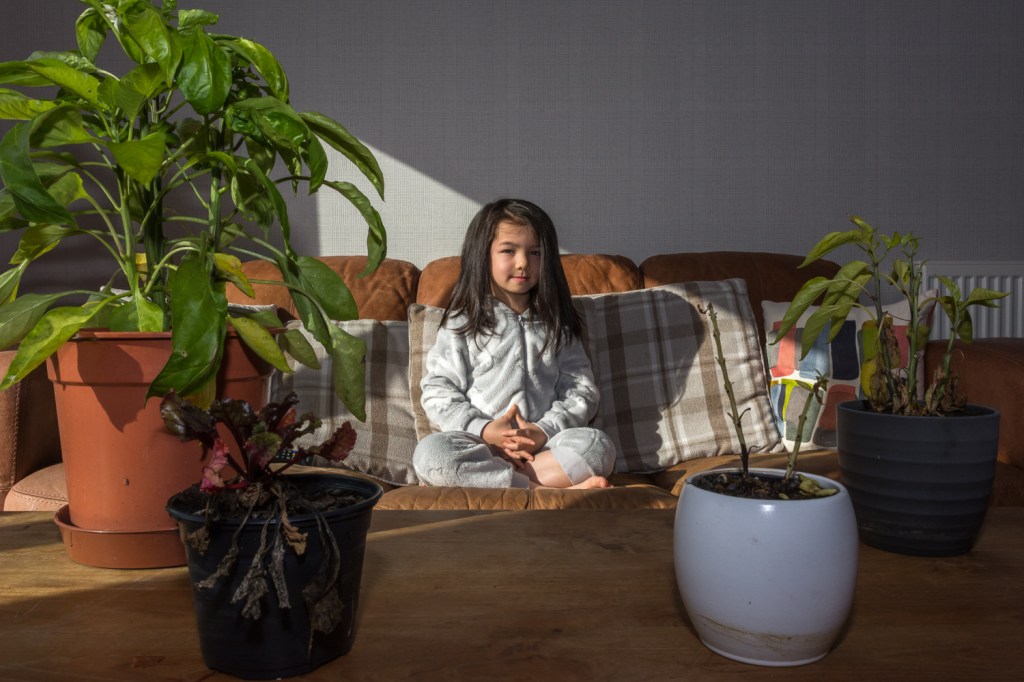
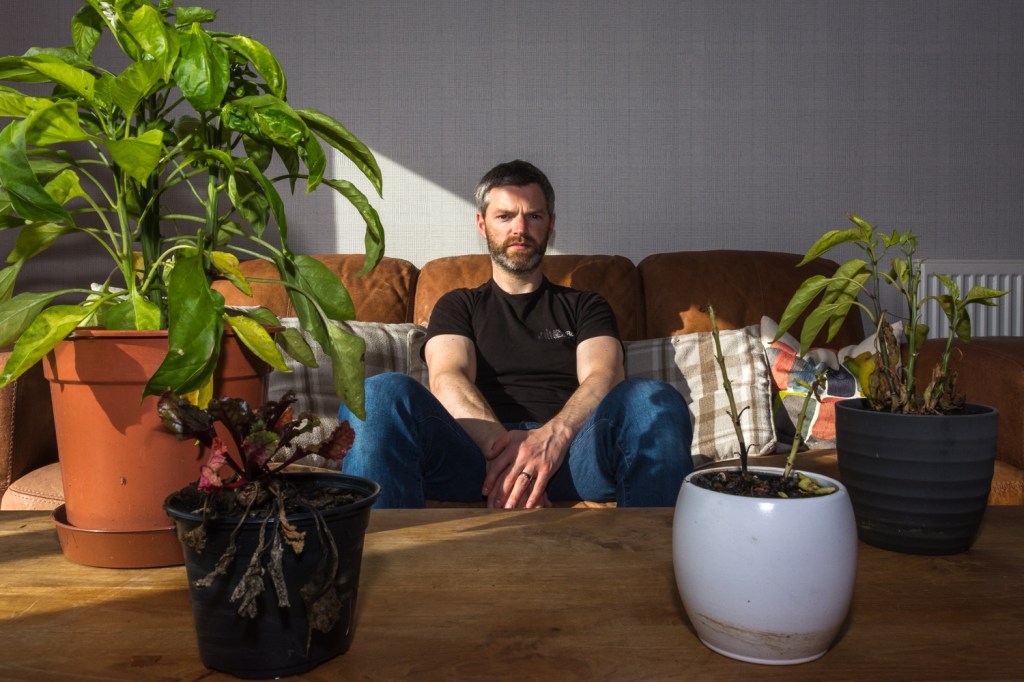
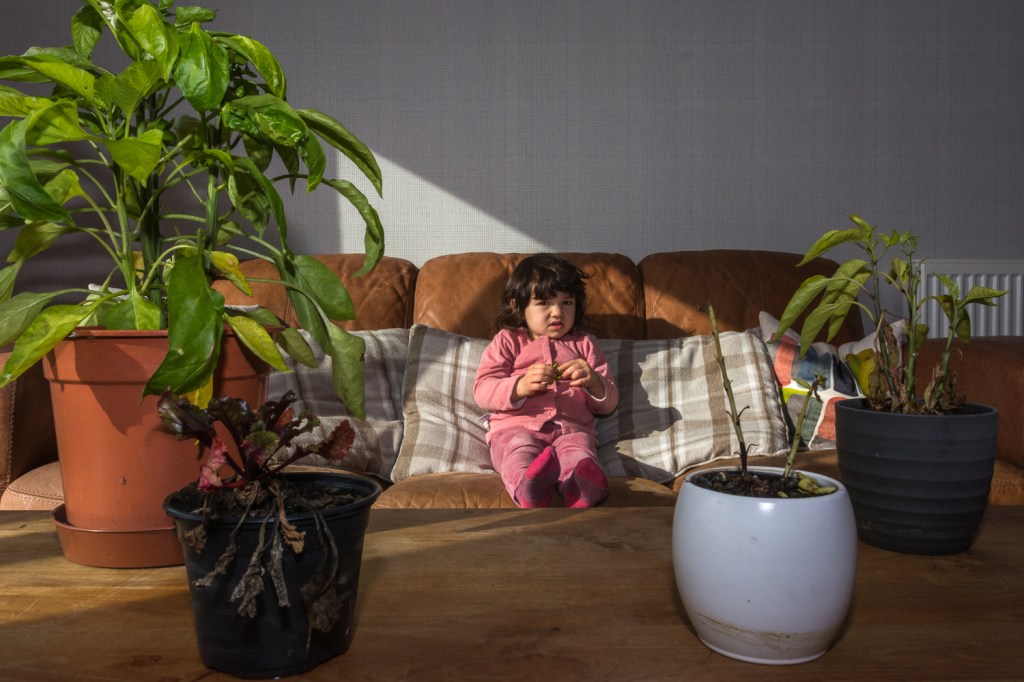
I must admit that I was finding it rather challenging to find a suitable background in my flat, and as frustrations slowly crept in, I found that this exercise was put on the back burner for a few weeks, perhaps hoping that by then, lockdown would have ended, or at least eased slightly. Unfortunately, that wasn’t the case. However, I received a message from a fellow gardener at the allotment, who said they had been there recently and saw that our vegetables were looking “a bit worse for wear”. As the allotment was slightly outside the five mile travel limit, we were unable to go there to attend our plants. As this was something I had been doing with my children for some time, it did make the situation rather difficult. However, I saw this as an opportunity to incorporate this misfortune into the exercise – as it had relevance to my family and lockdown – with the most obvious background being the allotment itself. But, as I didn’t feel comfortable taking my children there, I came up with an idea – I’ll bring the allotment to them! The next morning I left early, which felt like a covert operation to bring my vegetables back home safely. The plan was to pot up those I felt could be ‘saved’. Unfortunately, most had perished, with the exception of only a few.
My final images’ represent a family activity, which was affected, and ultimately ended by lockdown. I think the dying plants symbolise how some people are coping mentally, and physically, at present, and reconfirms the importance of carers in people’s lives. I understand the background is rather uninspiring, and that the interest within each image, lies in the foreground. However, this was done intentionally, as the plants wouldn’t have been as noticeable if situated behind the subject, and because they help frame the subjects incredibly well.
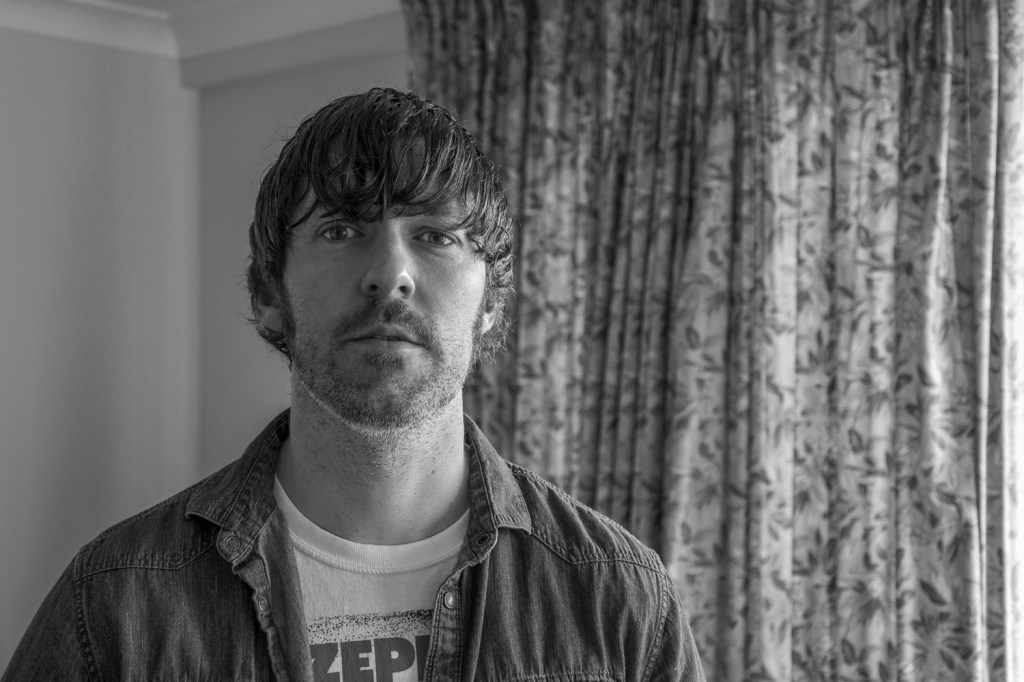
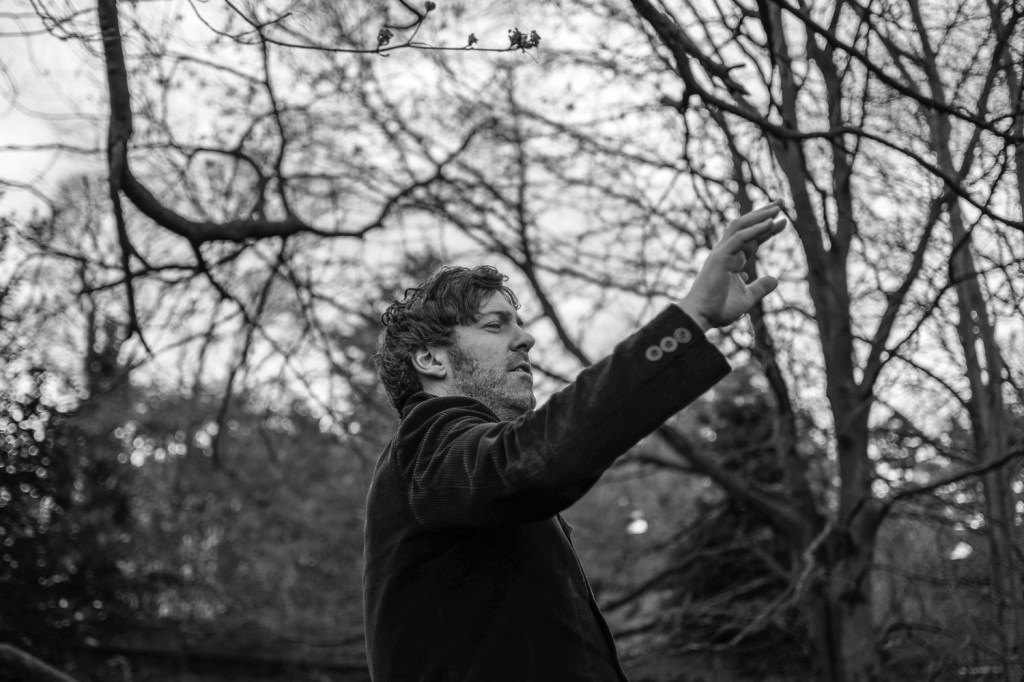
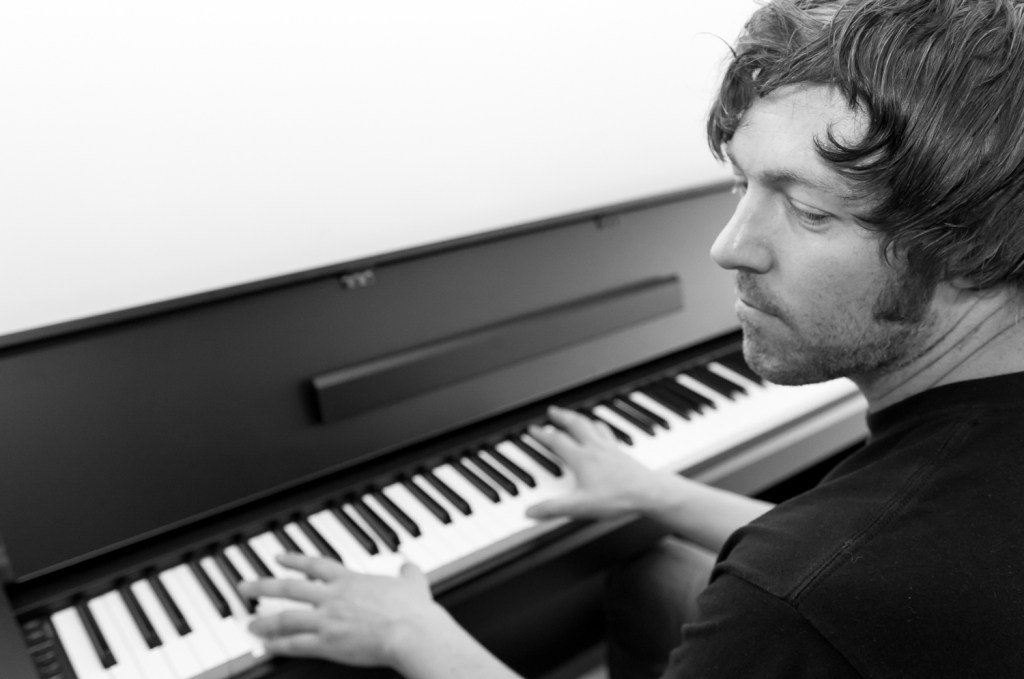
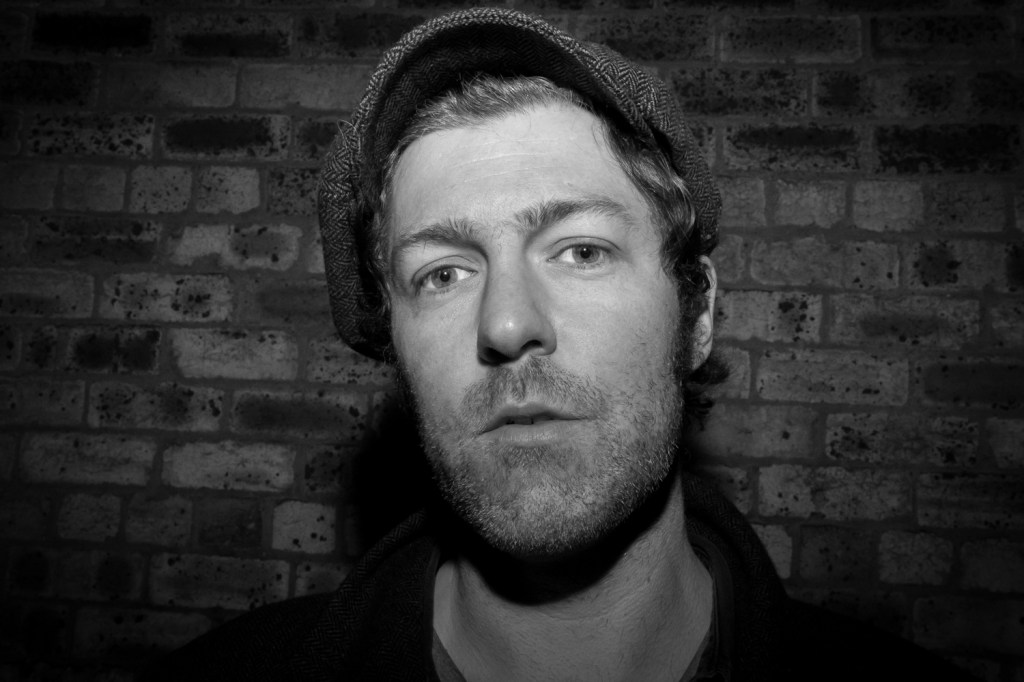
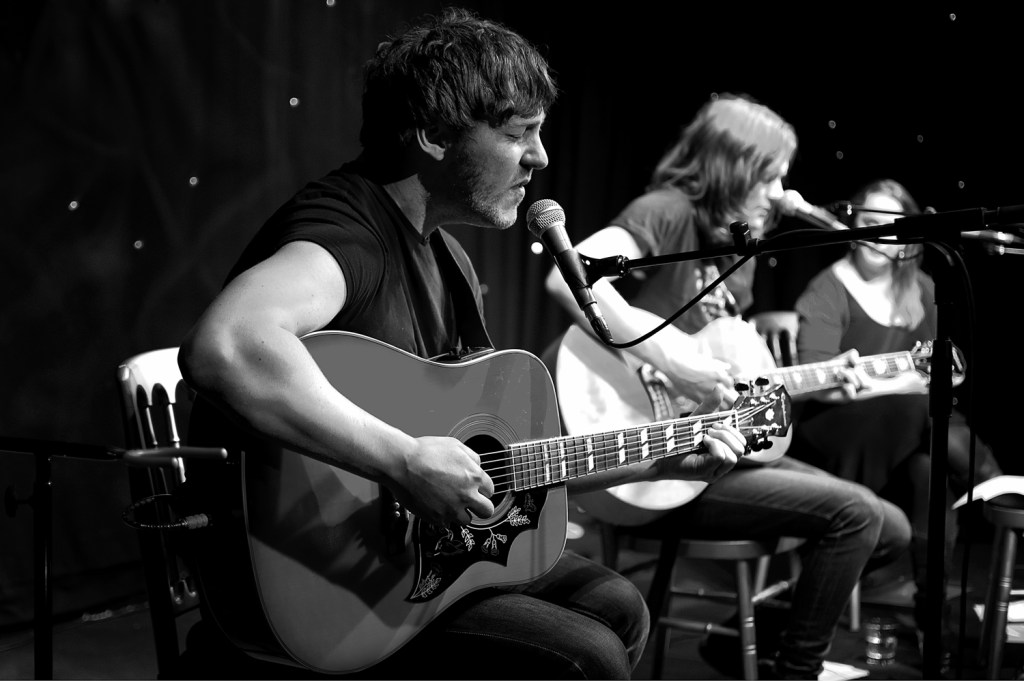
I chose to use my older Brother, Andrew, as my model for this exercise, and decided that the series of images would be a documentation – in chronological order – of a specific day in his life. As a musician, I have always wondered what my brother’s daily routine consists of on the day of a gig. I understood that this would vary depending on where the gig was and the enormity of it, but was interested to witness for the first time what he actually did, prior to his performance.
After researching both Harry Callahan and Julian Germain’s work, I felt inspired to use a combination of their photographic methods and believed by doing so, my series of images would perhaps be visually more interesting. I wanted to capture images of my brother in two ways. Firstly, in posed positions, where I would purposely place him in specific spots and direct him in regards to his actions, before taking the shot. And secondly, in situations where my brother was aware of my presence but unaware of me taking photographs of him. In both instances, there were times my brother was looking directly at the camera and times where he would be acting more ‘natural’, so to speak. The purpose of me implementing both Callahan and Germain’s practices’ to this exercise was to differentiate between what was a posed portrait and not – according to the viewer. However, with a couple of the portraits, the viewer should be able to easily tell which method had been adopted for that specific shot, though may find it harder with the remaining few. Deciding on how to present my images – colour or monochrome – was a difficult decision, as Germain tends to use colour, and Callahan, monochrome. In the end, I felt the images presented better in monochrome, mainly due to the fact that the majority of images showed a lot of contrast.
Overall, I’m very happy with the portraits’ I have produced and think the series works well together. I think it shows, in this situation anyway, that my brother is very calm and almost unfazed by performing live and depicts the gradual progression of preparation to performance.
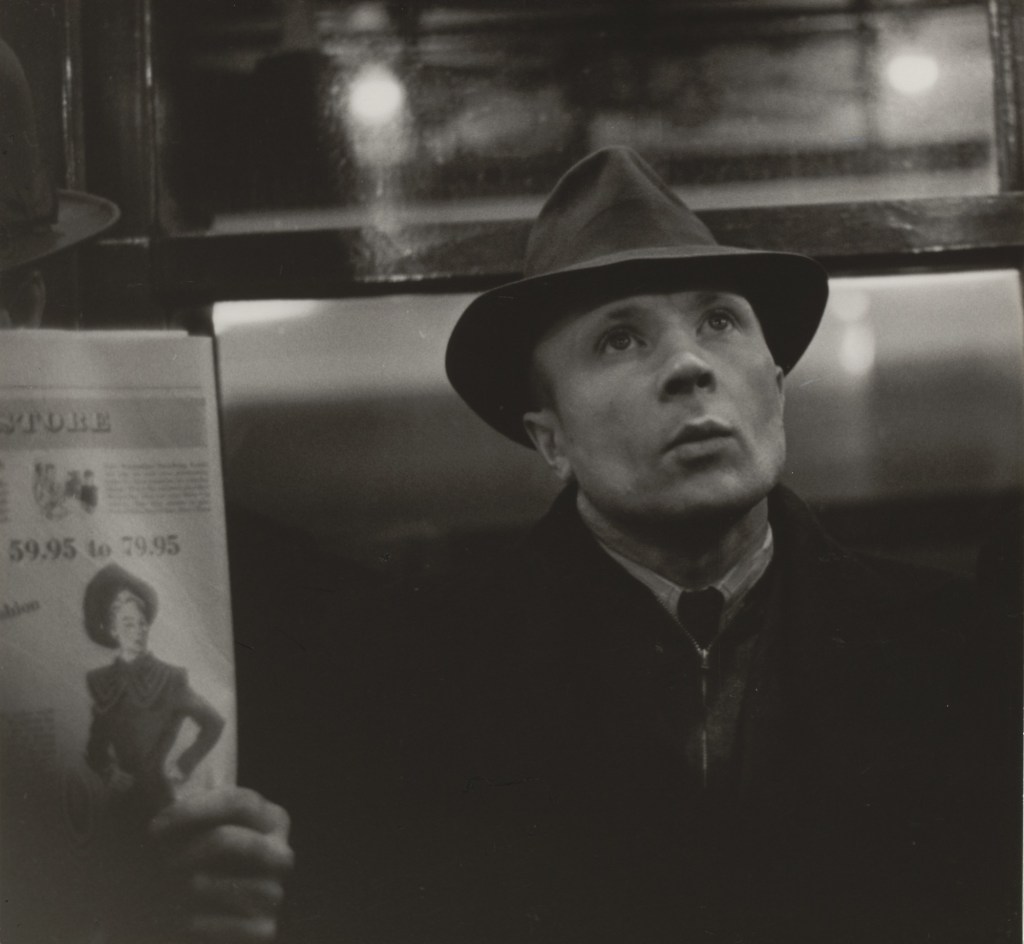
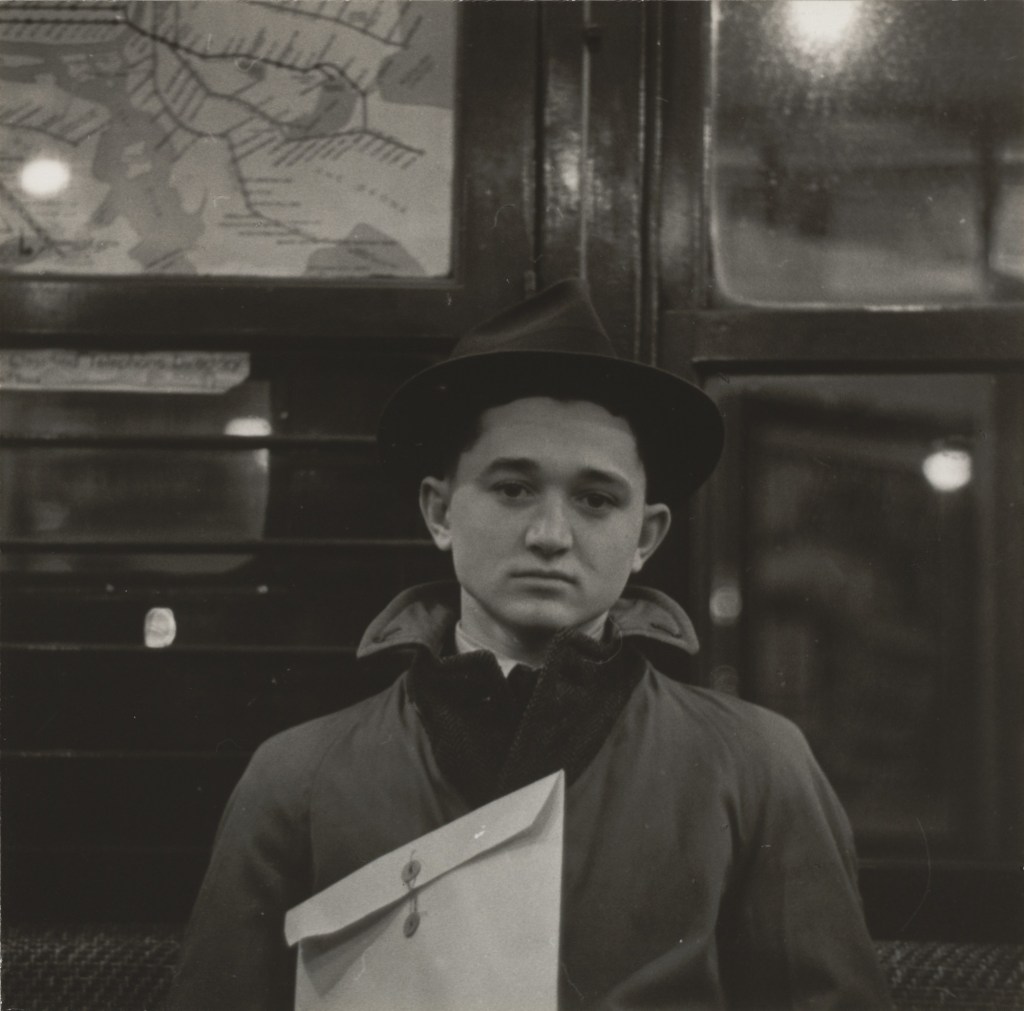
Comparing Walker Evans and Martin Parr’s subway portrait’s, I find it interesting that though both photographer’s had the same desires of photographing the general public using this mode of transport, their methods, and ultimately their final portrait’s, are in total contrast to each other. Evans’s perhaps inappropriate way of photographing his subjects’, gives the impression that it is in fact us – the viewer – who is sat where he is, observing these peoples’ behaviours, totally unaware that they are being photographed. I particularly like how the subjects’ body language and expressions are consistent throughout, depicting a sense of boredom and realism to the fact that, everyone on the train is in the same position as them. He has managed to capture a variety of ‘gazes’, so to speak, which are so often seen when observing others’ whilst using the subway. The ‘adverted gaze’ is more commonly seen in Evans’s work, where his subjects’ are looking away from him and the camera, perhaps observing other people or an advertisement board. But, some of his portraits’, the ‘bystander’s gaze’ is evident, which I find more fascinating as it’s impossible to know if they have spotted Evans’s camera hidden inside his jacket, or if at that very moment, Evans was himself looking away and the subject was simply making an observation of him before being noticed.
The Adverted Gaze
The Bystander’s Gaze
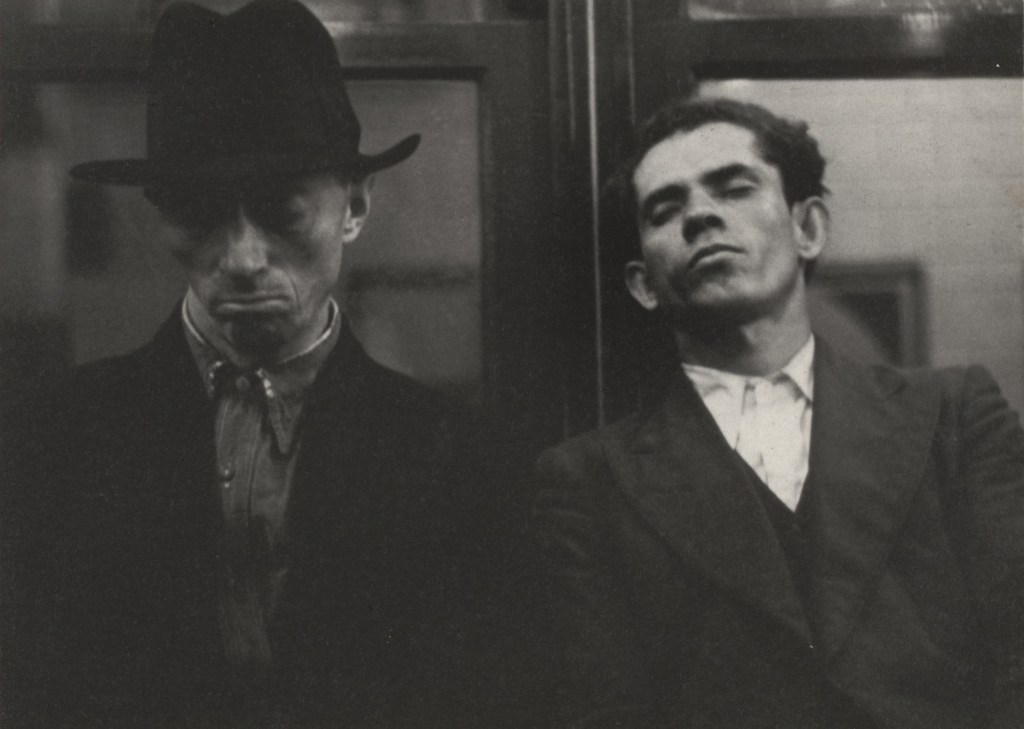
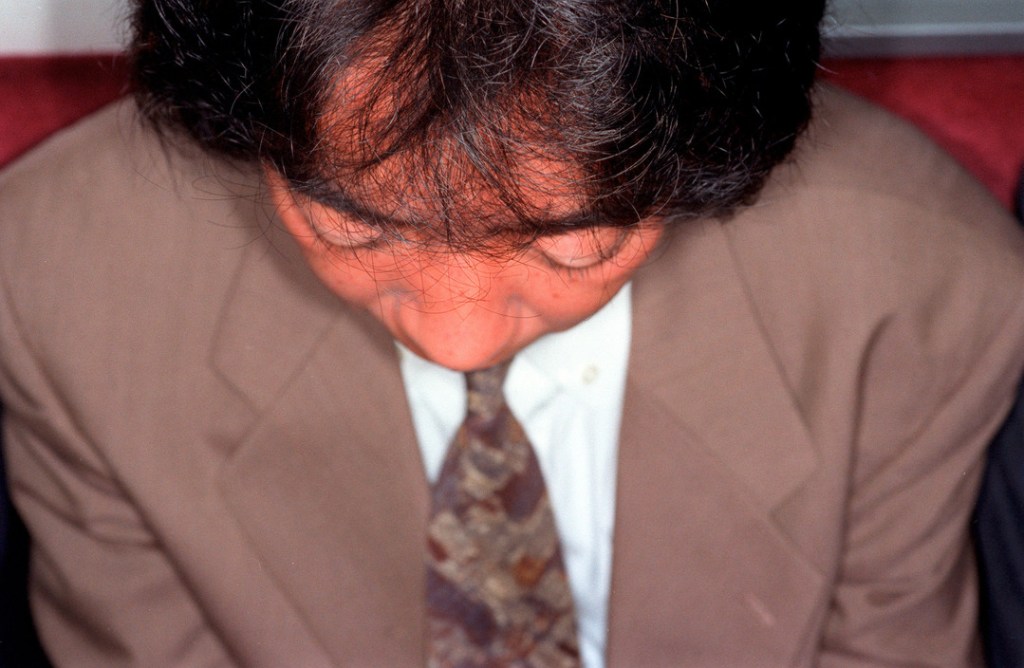
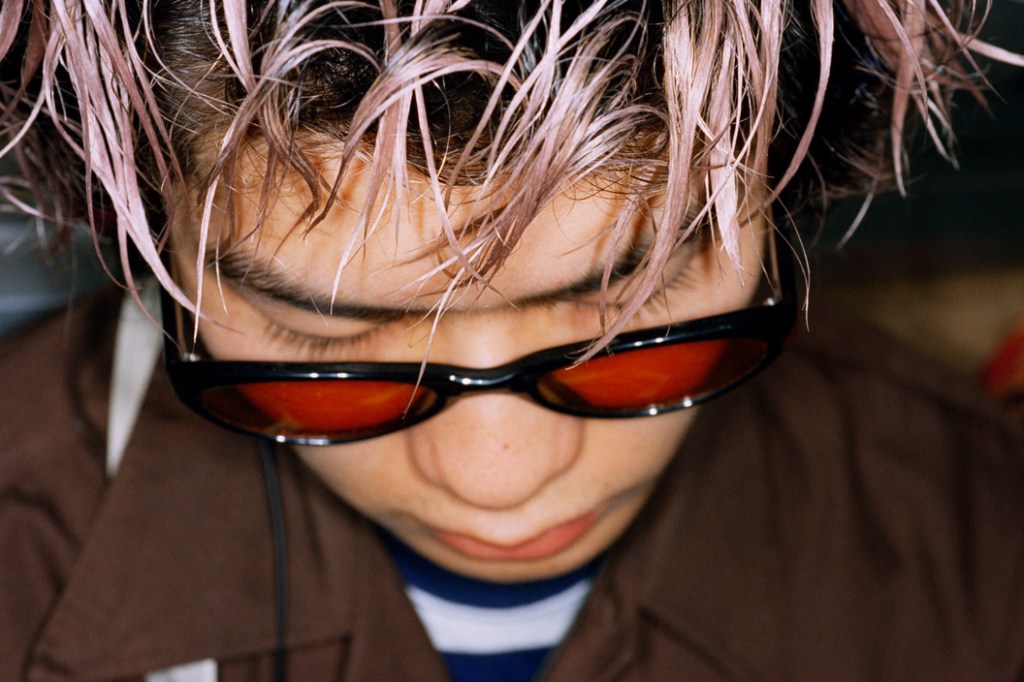
Like Parr, Evans has also captured images of his subjects’ sleeping. But, as the perspective is natural in the sense that we are used to this view when observing people, the viewer is able to obtain different information and can easily process that the individuals’ are in fact asleep. As Parr has chosen a different perspective when photographing his subjects’ – almost directly above them – it’s very hard to tell if they are asleep or awake, as only the top of the eye lids are visible. This may leave room for interpretation by the viewer, where they may have similar thoughts as I did, that these people are simply looking down at their phones, for example. Of course, if they understood prior to seeing the portraits’, when they were taken – 1999 – they would most likely form a conclusion that this wasn’t what they were doing. I found it incredibly difficult to determine when these images were taken, due to the perspective and tight framing he used. Visual information is minimal and to be honest, the hairstyles and clothing worn by the subjects’ could easily be seen on individuals in present day.
Commuter, Tokyo. 1998.
JAPAN. Tokyo. From ‘Japanese Commuters’. 1998.
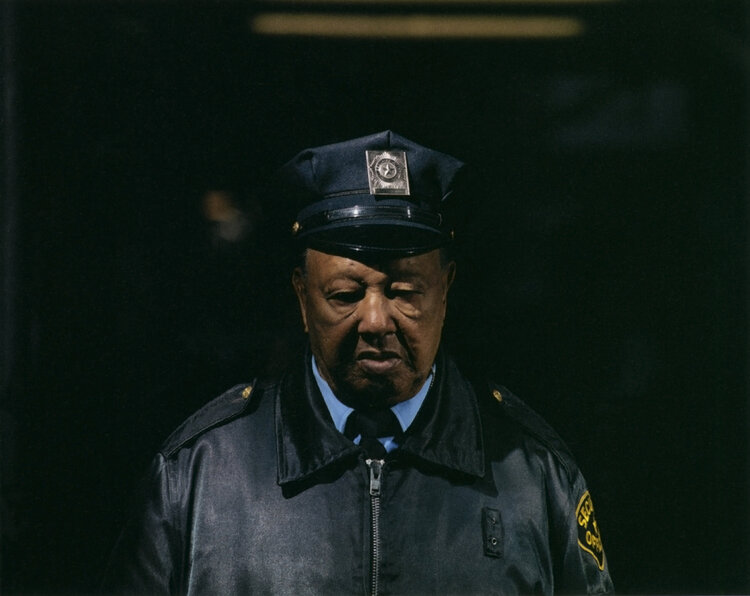
I find Philip-Lorca diCorcia’s portraits’ in his series ‘Heads’ absolutely stunning, with a sort of cinematography feel about them. He does so well to blur the lines between what’s fiction and real, and as a viewer you are unsure if his subjects’ are unaware of his actions or in fact a model involved in the photographic process. Due to the interesting technique adopted by diCorcia, where he uses strobe lighting – placed some distance away from his subject – to illuminate them, the background appears darker than normal. DiCorcia said himself that the “strobe light made full daylight into night time”. I find this fascinating, as on some of his images, the background seems so dark that it almost appears that he has used a black backdrop. I’m not sure if this was his intention, but I think this would be a great technique if trying to produce a project which demonstrated incorporating studio and location photography. As this is the premise for this part of the module, maybe this is something I could explore for my next assignment.
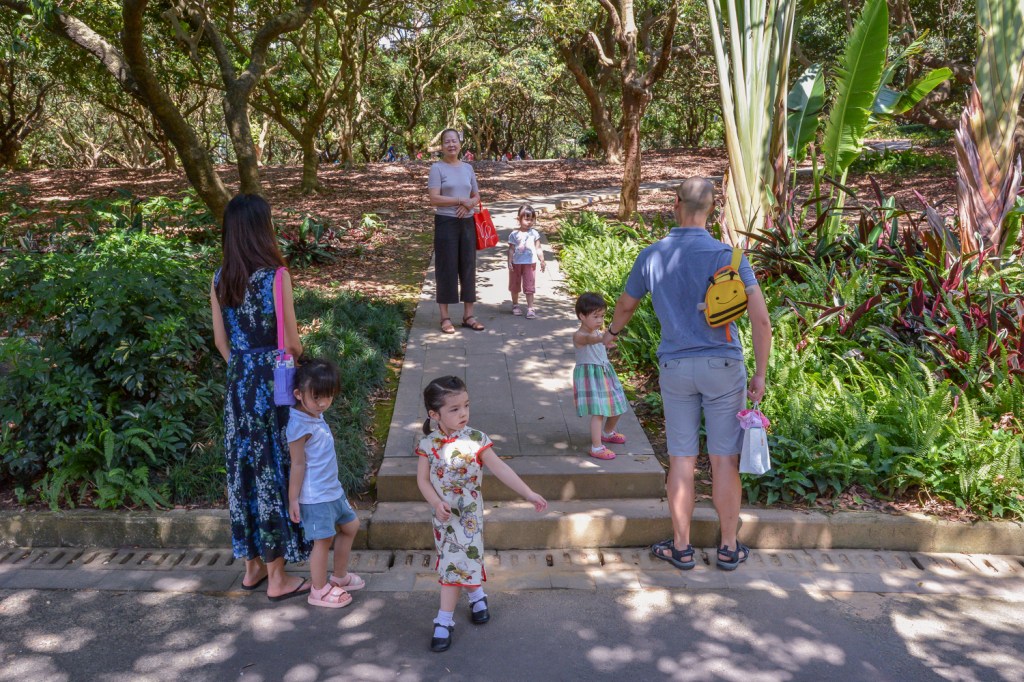
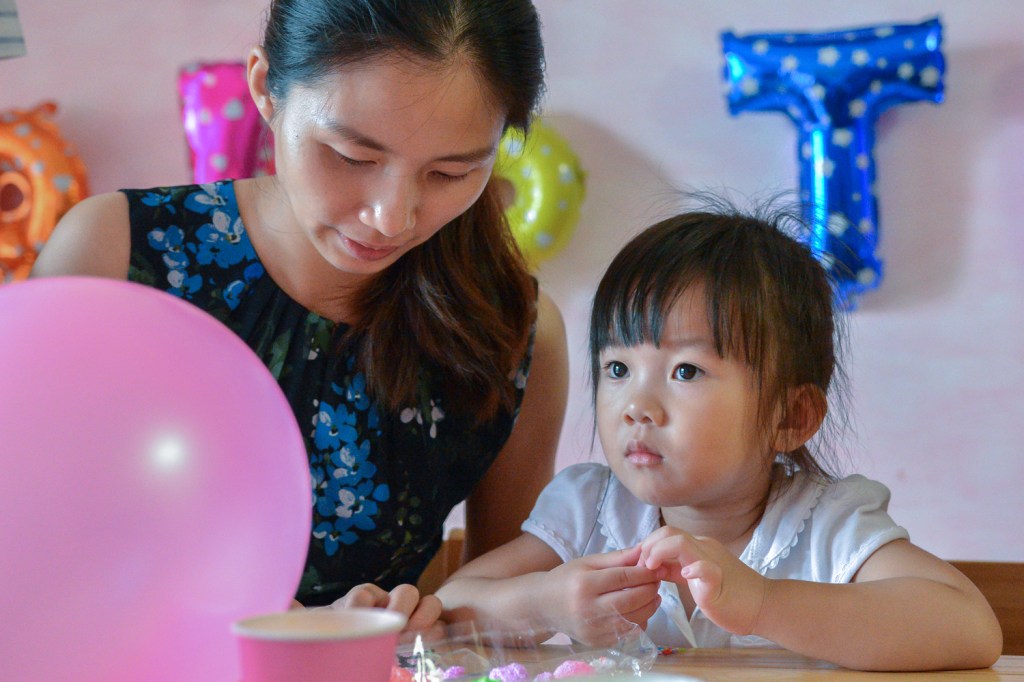
In early January, I went on a family holiday to Malaysia. Thankfully, we arrived, and left, before the Coronavirus affected the country. As I received the paperless version of the module beforehand, I was able to quickly read through it to see what would be involved. I had no intention of doing any course work whilst I was away, as, I never do when on vacation. However, whilst I was there, a family friend invited our daughter to her son’s birthday party. I remembered back to this particular exercise, and thought this would be a great opportunity to execute it due the nature of the event being held. As this was a children’s party, I asked our friend in advance if it would be ok that I take photographs, and, if the other parents – who I didn’t know – would mind. The answer was no, which wasn’t a surprise, as Asians are fairly reserved when it comes to others taking photographs of them. I told our friend not to tell the other guests’, as I wanted them to be unaware of what I would be doing, but, was prepared in the event of having to stop due to a disgruntled parent.
Due to the nature of the party and some of the subjects’ who would be attending, I had to carefully think about how I was going to approach this process. From the research I had done into the photographer’s discussed, I felt most comfortable using Lukas Kuzma’s technique, which, for all intents and purposes, is taking images of subject’s whilst in plain sight, but in a unobtrusive way, where people know you are there but don’t necessarily realise they are being photographed. From the video ‘Click’ – about Lukas Kuzma – it appears that he uses a relatively small camera with a 35mm prime lens, making his actions ‘non-aggressive’. Ideally, I would have liked to have used my DSLR, but coupled with my rather large and obvious 18-35mm lens, I would have stuck out like a sore thumb. Luckily, I also brought with me my Canon compact camera. Though, optically not as strong, I felt it was best suited in a situation where I was trying to go unnoticed.
I kept the camera on and in my hand at all times. When I felt there was an opportunity to take a strong image, I quickly did so, then returned my camera by my side without checking to see if I had got the shot, so to speak. Unlike Kuzma, I wasn’t purposely waiting for someone to do something interesting in order for me to take a photograph, but was more fascinated in photographing random interactions between people and discovering later on what expressions and responses I captured. I feel my final selection of images best show this and couldn’t have been achieved if my methodology and intended meaning behind the series was done differently.
I think as photographer’s and perhaps more so, portrait photographers, the decision on who to photograph and where, is usually our choice. Obviously, I have limited experience with this particular style of photography, but would assume that the subjects’ usually have very little say, or understanding, regarding the photographic process they are involved with. It would be interesting to know how many photography projects take into consideration a collaborative effort between both the photographer and their subject, where discussions are made pre-shoot, to determine such things as a location of significant importance and possible themes. This is why this exercise excited me, as the portrait’s I have created in the past disregarded all of that. I was curious to find out, having already discussed with my subjects’ what they wanted included in their portraits and why, whether or not, the process would be easier and ultimately, would the portraits’ offer something different in regards to how the subjects’ appear in the image. What I mean by this is, would there be a noticeable difference in how an individual presents themselves if they were photographed in a location that meant something to them personally.
The theme that I chose to represent my three portraits was ‘happiness’, and asked each of my subjects’, “Where brings you the most happiness and why?” It was interesting to see the reaction when I asked them this and I was surprised each gave me an answer so quickly, as I believe most people can instantaneously tell you what their happiest moment is and when it happened, but rarely consider which place gives them such contentment.
We discussed in length a particular location where they would like to be photographed and why this was their ‘happy’ place. A couple of my subjects’ were very specific about this, which was fantastic, as I felt they were really getting involved with the process. We talked about how we could incorporate the surroundings into their portraits’, to make them more meaningful and correspondent to their feelings of ‘happiness’. Once we arrived at the location, it was my job as the photographer to choose the best composition, whilst trying to include my subject’s requirements in regards to what they wanted to be included in their image. I actually gave them very little direction, as I wanted the process, and fundamentally, their captured expressions, to be as natural as possible. I did ask them before I started photographing them, “to think about why we are here and the happiness it brings you”. I found this helped my subjects’ to relax and I could see after a few seconds of deep thought that their expressions had changed, as they allowed the feeling on contentment to consume their bodies. As I believed this feeling could only truly be felt briefly, I purposely chose to take a few images and no more.
This is a portrait of my mother. The place which makes her happiest is our family home. She specifically chose the sitting room, as this is the room she has the fondest memories of ‘family life’.
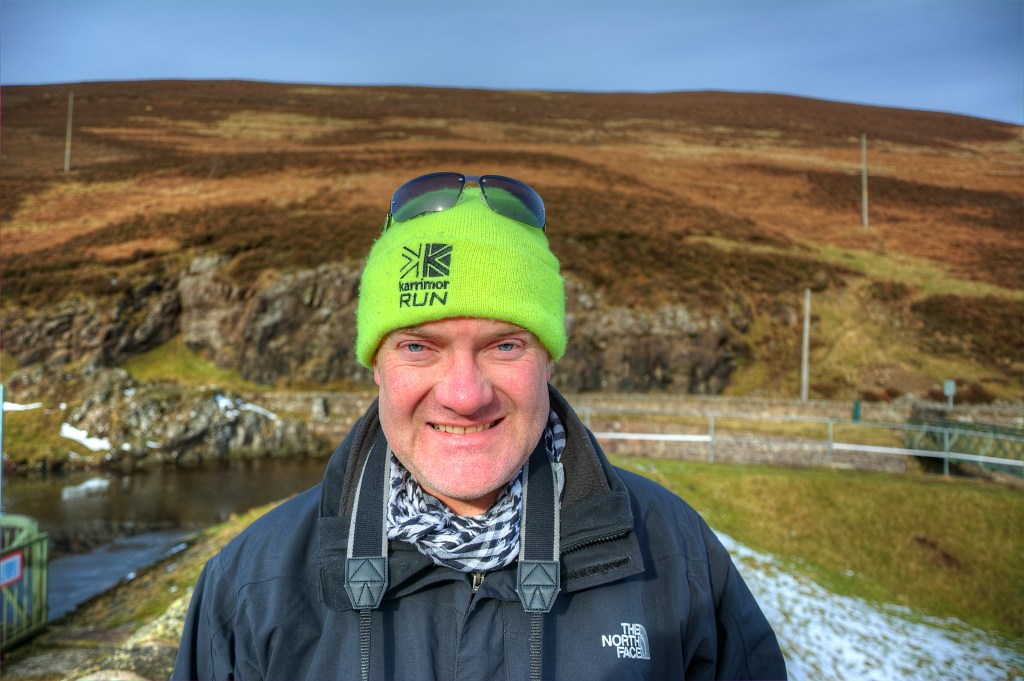
This is a portrait of my good friend, George. He loves nothing more than being outside in the wilderness. The location he chose was the Pentland Hills. He specifically chose this spot, to depict the two things that make him happiest – fishing and hill walking. Loganlea Reservoir – seen to his right – is where he caught his first fish.
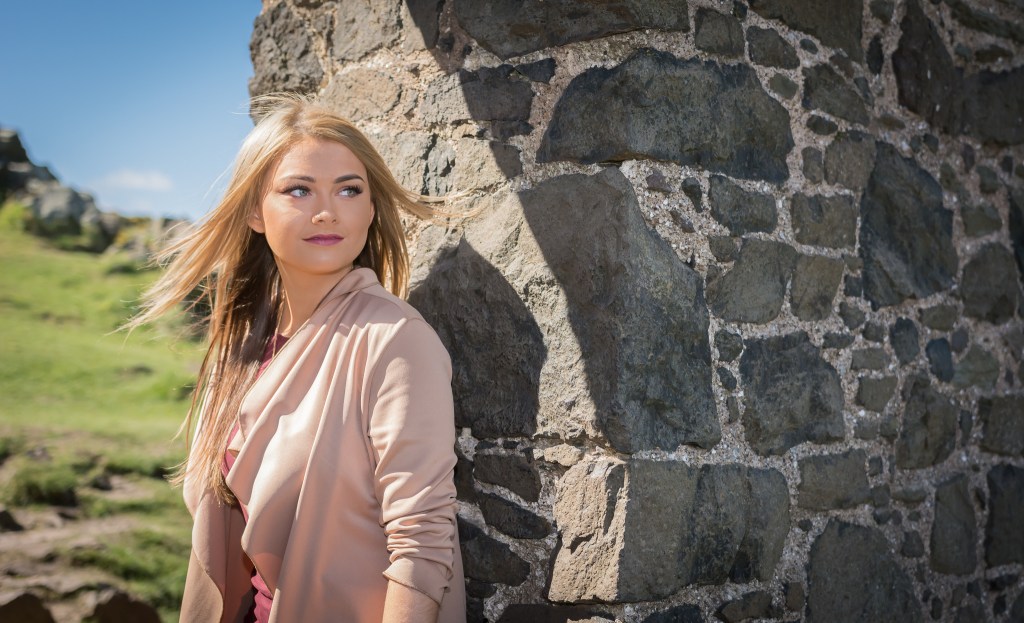
This is a portrait of Jade. The location she chose were the ruins of Saint Anthony’s Chapel. This is the place she comes to write music, specifically about Edinburgh, and feels happiest doing that here, as the magnificent views across the city inspire her to write her best material.
Catching a break between the showers and high winds caused by storm Dennis, I ventured into Edinburgh to begin my challenge of photographing strangers’. To say I was nervous would be an understatement, but, I felt my preparation going into this assignment was good enough to give me some confidence.
I had a couple of strong ideas, which I wanted to explore, but I must admit that even on the day of the shoot, I still didn’t know which one I was going to act on. My preference was to create a series, inspired by fellow Scottish photographer Niall McDiarmid, which would focus on bright colours, depicted on both the subjects’ clothing and in the purposely selected backgrounds. Unfortunately, though, absolutely no one was wearing anything that could be described as ‘vivid’ on the day and only muted tones seemed to be on show – the type of colour scheme McDiarmid tries to steer clear of when creating his portraits. I’m not sure if the time of year, or weather plays a part in what colour palette is seen on peoples’ clothing, but it would have been interesting to see if I had different results if I was carrying out this assignment in the summer, for example. So, I needed to resort to my other idea, which to be fair, seemed more imaginative and ‘original’ as it wasn’t based on another photographer’s proven methodologies. I felt that if I was indeed successful in creating a set of strong portraits, the whole process for me would seem more satisfying.
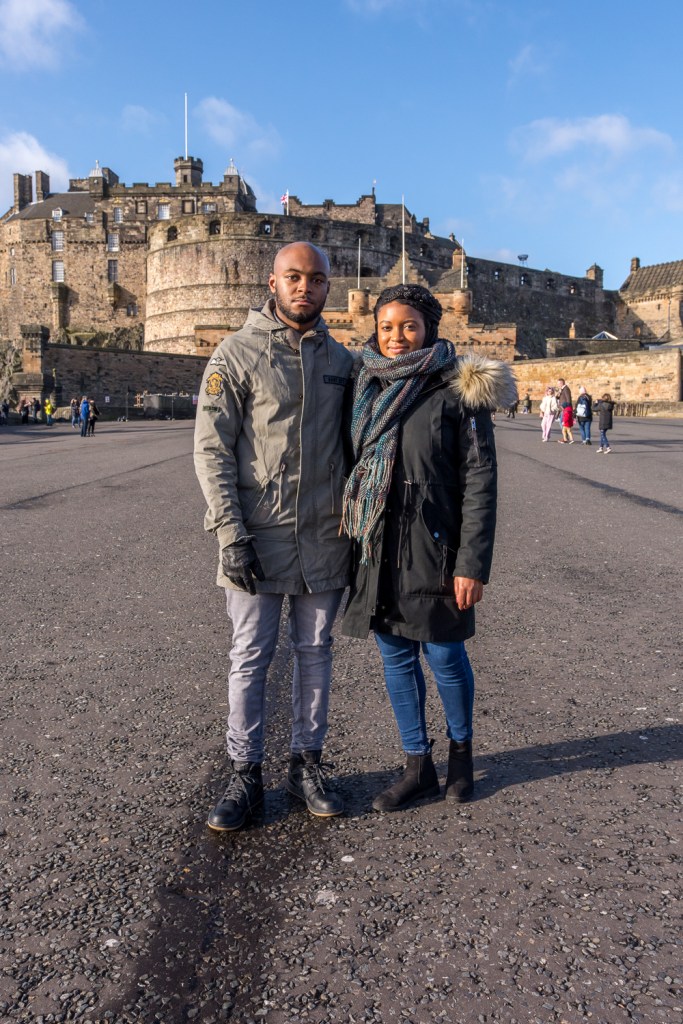
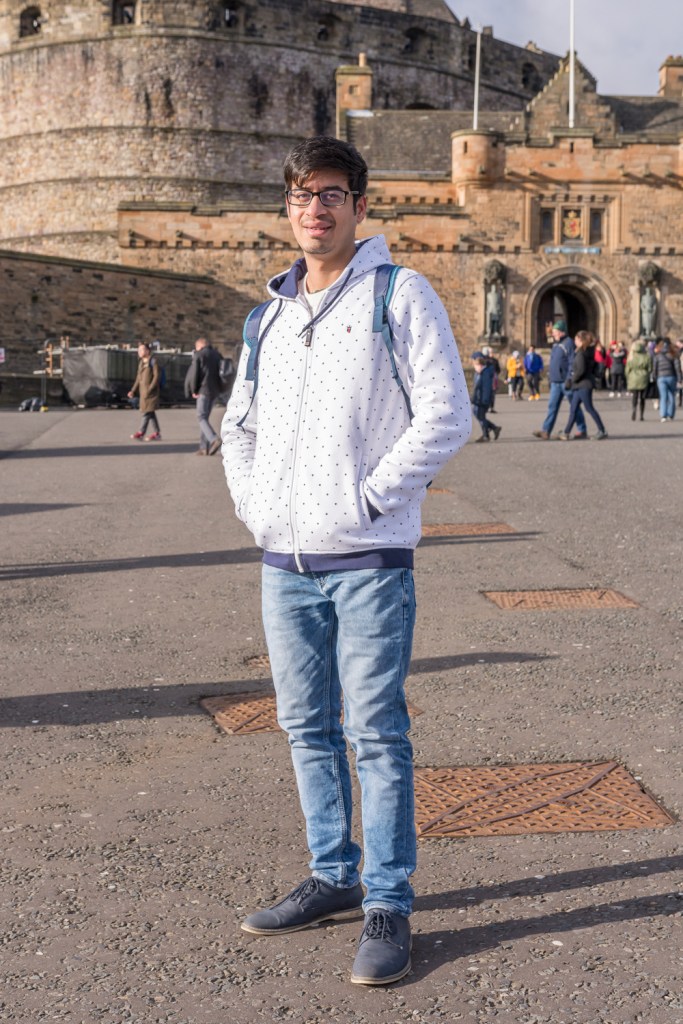
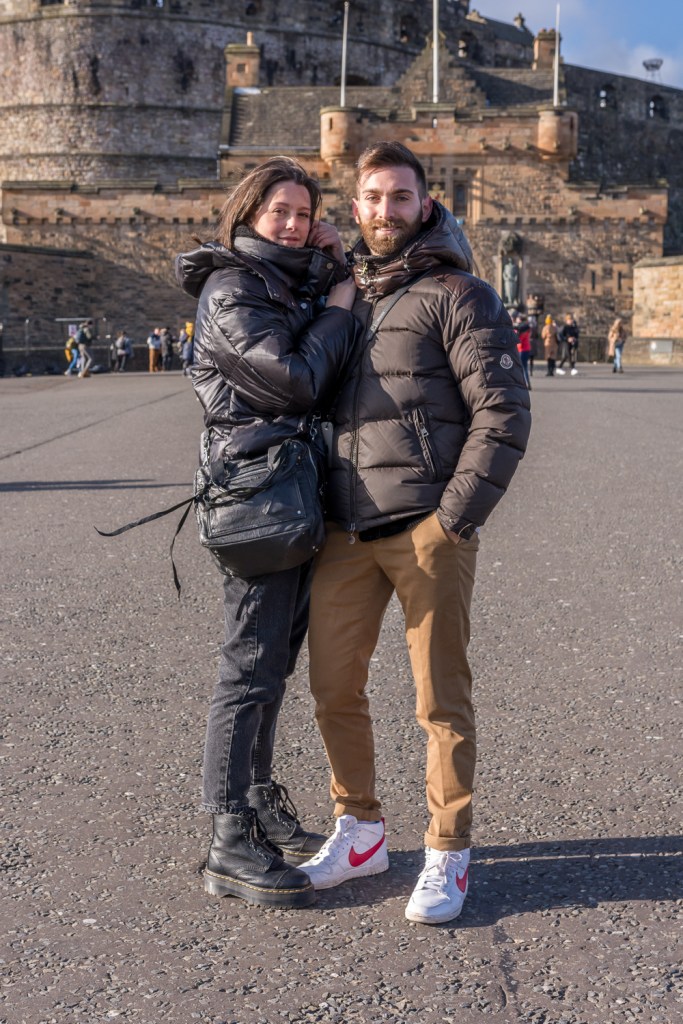
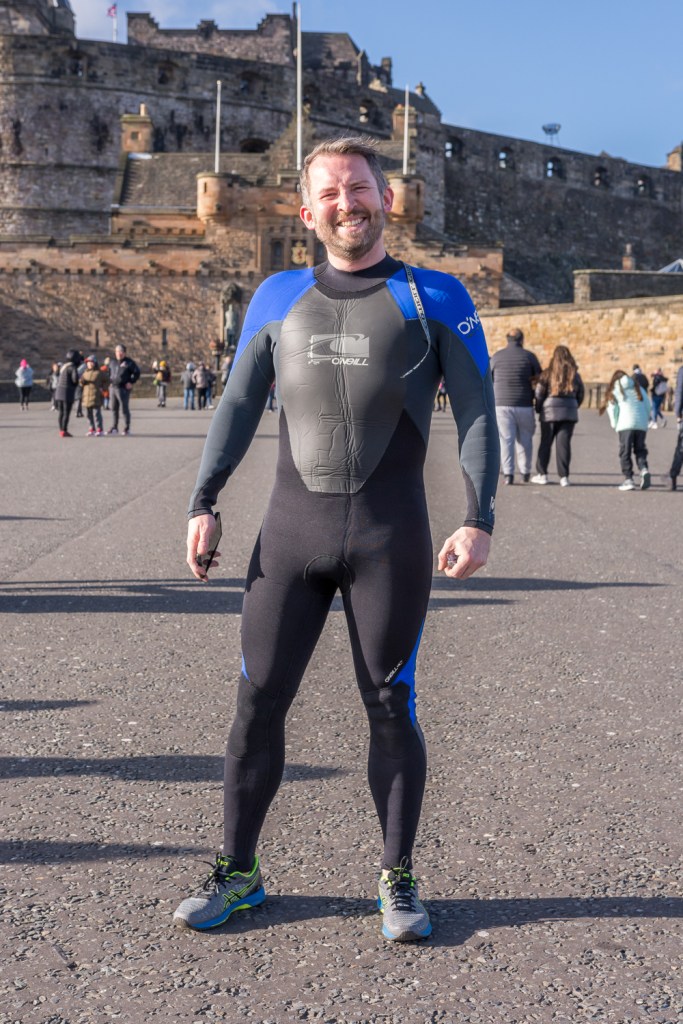
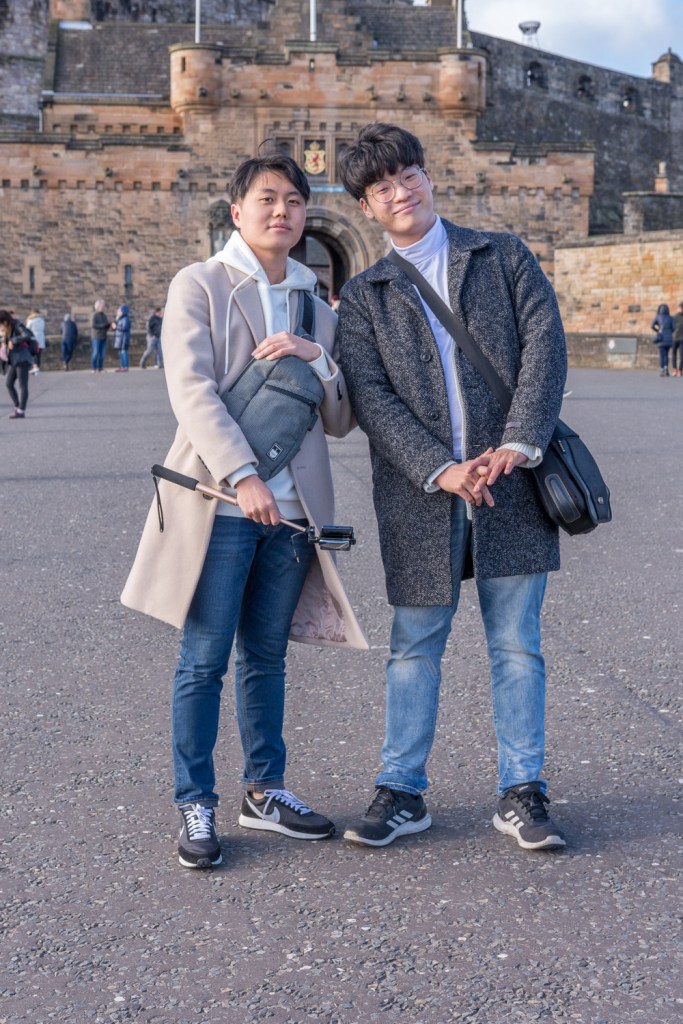
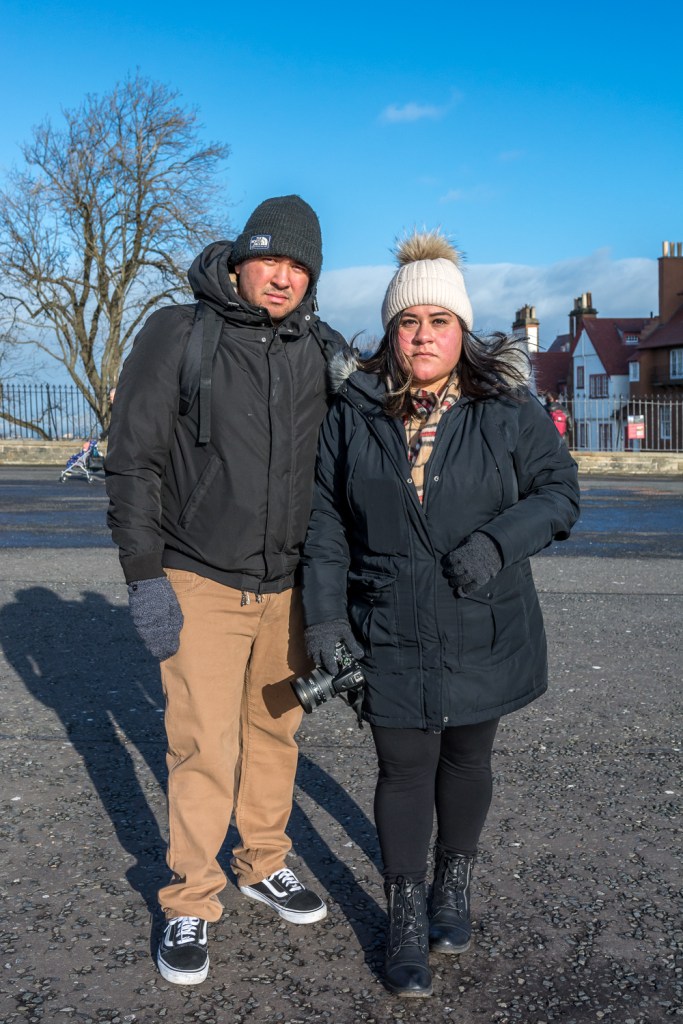
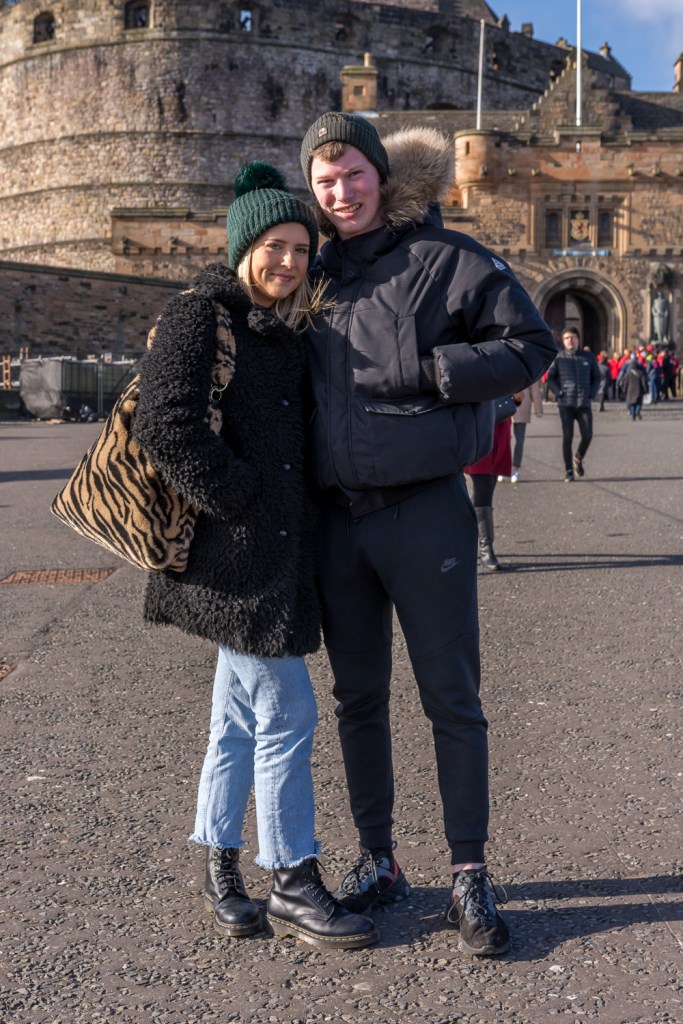
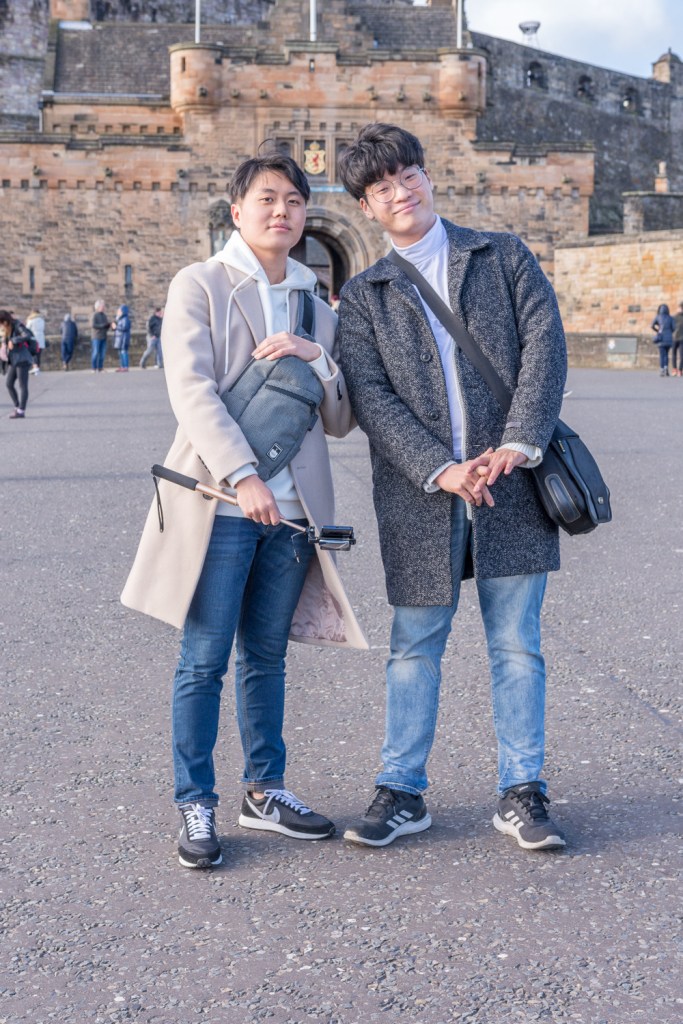
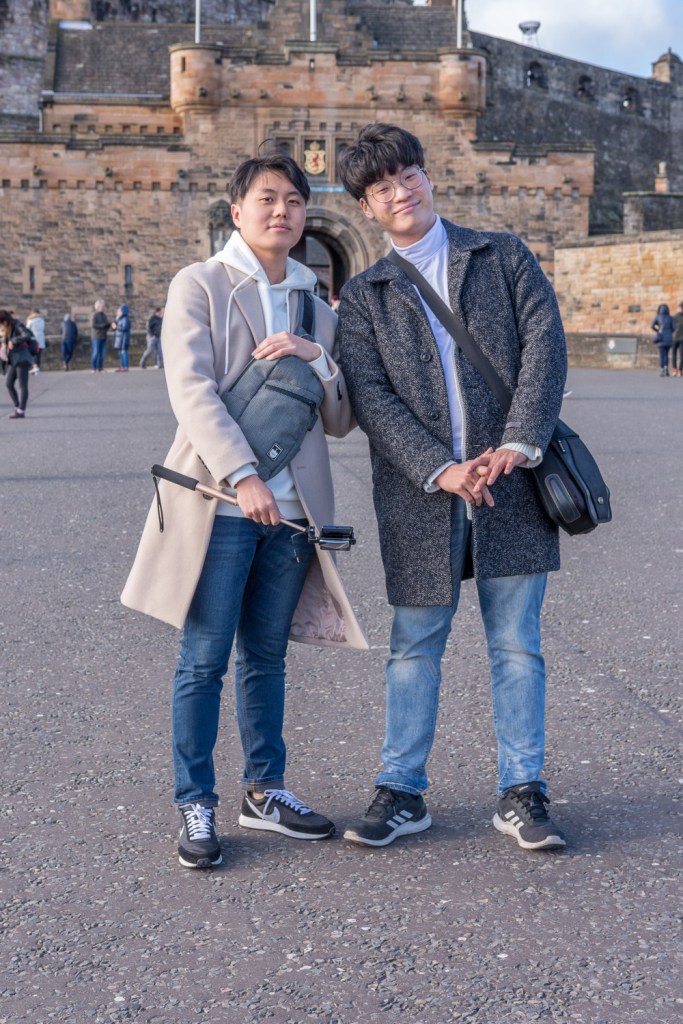
Edinburgh attracts over two million tourists’ each year, and more often than not it’s obvious to the locals who they are. However, it’s sometimes very difficult to determine what country of origin these individuals’ are from, as someone’s ethnic looks or the language they speak doesn’t necessarily give you a definitive answer. This has ultimately led me to use this topic as the main theme of my assignment, and have created five portraits of strangers’, who I believed at the time, were tourists’. However, it’s how I communicate this information to the viewer, regarding the subjects’ nationalities, which initially seemed problematic. My initial thought process was to use the GPS coordinates that relate specifically to the city where the individual I’m photographing is from. Though, this would have been an incredibly thought provoking way to achieve this, which would offer some ambiguity surrounding each image and allow room for interpretation, I wasn’t sure how much value would be added to the series by including them. As well as this, the viewer must first have an understanding of what these coordinates mean and then investigate them further to know the intended meaning behind each portrait. Instead, I have provided supporting text, which simply states the name of the subject(s) and the city they are from. This is a method Niall McDiarmid uses regularly, and by doing so, I feel makes the portrait more personal and gives each subject a sense of identity and feeling of involvement with the photographic process. I feel that because each of my images’ contain relatable information, in regards to the subjects’ personal details, the set would be best suited as a typology series.
It’s not difficult to locate tourists’ in Edinburgh, but to make the process easier, I intentionally went to the main attraction in the city – Edinburgh Castle. Apart from tourists’ being in abundance at this location, I wanted additional, but subtle elements to feature in my portraits’, which would support my chosen theme. By incorporating the castle in the background, along with large groups of other visitors’, the viewer wouldn’t necessarily know the exact location, but would certainly appreciate that it is of some importance. This may help with their understanding of what ‘type’ of person is depicted in each portrait. I made the decision not to have each subject photographed in the same spot, as I wanted to offer the viewer a number of perspectives of the castle. I feel by doing this, the viewer will receive different information each time, ultimately helping them form a conclusive understanding about the series.
One reason for me wanting to photograph tourists’ in particular, was my notion that there would be possible language constraints between us. Prior to this day, I had only ever asked three foreign tourists’ if I could take their photograph and found the process to be relatively easy due to the lack of communication. However, in this instance, this was not the case, and most people I spoke to had a good level of English. This meant that I couldn’t simply wave my camera in front of their faces and indicate to them through hand gestures that I would like to photograph them. With my first two attempts being unsuccessful, probably due to the fact the individuals’ could sense my anxiety and made the decisive decision to say “No!” my confidence was certainly dented. However, with a new found attitude of ‘nothing ventured, nothing gained’, my confidence slowly grew, and within a short space of time I had taken seven portraits, consisting of both individuals and couples. Unfortunately, the bad weather soon returned and the large crowds that once littered this famous Edinburgh landmark soon disappeared. I quickly followed suit, satisfied with what I had achieved, not just in terms of the portraits I had taken, but also for breaking down barriers in regards to my confidence.
These two portraits were taken on the same day but did not make it into my final selection.
This was the first portrait I took that day and I think it definitely shows. The couple were from Colombia and I’m not sure they really understood what I was asking of them. I remember the gentleman looking at his partner with a look of confusion on his face and this made me feel very anxious, which ultimately led me to producing some rushed images’. So much so, I forgot to place them with the castle in the background – an important factor within my portraits. Regarding technical aspects, this was the period when I was experimenting with different focal lengths and this image wasn’t consistent with the others I took that day. Compositionally, I don’t think the subjects are well placed within the frame, and as a result, the image looks rather compact. Also, this is the only portrait where the stranger’s appear uncomfortable, more so in their facial expressions, and to be honest, I don’t think they enjoyed the process.
This couple, from Wigan (technically not foreign) were absolutely lovely and had no qualms with me taking their portrait. I actually really like this image, but unfortunately there was only one reason it didn’t make my final selection. It’s a small thing that maybe only I would notice, but I think the ladies bag slightly affects the composition. Even though they are dead centre within the frame, the image as a whole appears unbalanced, due to the fact the bag is protruding too much into the negative space to her right side. With more experience, I may have spotted this and instructed her to place it to one side before taking their portrait.
During my feedback session with my tutor, he mentioned that he thought the portrait of the Korean couple – though his favorite – was slightly brighter than the rest, and suggested I re-tweak this before sending my work over for assessment.
I now understand the importance of checking images against each other in post production, especially when creating a series, to make sure things like – in this instance – exposure, is similar throughout. I believe by getting the exposure correct when out on the field and understanding what the histogram is telling you to make the necessary adjustments is vital, and is something I will definitely familiarise myself with for future projects.
I must admit that this is an assignment that I’ve been dreading as it requires me to approach, talk to and photograph total strangers. I’m not a shy person, but certainly lack confidence when talking to people I’ve never met. When it comes to photographing individuals, I would rather do it from a far and without them knowing. From memory, I believe I have only ever asked three people if I could photograph them – they were all foreigners’. I found that by not being able to communicate with them verbally, the process was a lot easier and perhaps more natural, in regards to their mannerisms and expressions. The fact that I was unable to give them ‘direction’ meant their response to being photographed seemed organic.
Struggling to think of an ‘ice breaker’ I can use on these strangers’, perhaps this is an approach I should adopt for this assignment. A possible theme could be based around foreigners’ visiting Edinburgh – the city I reside in. However, being able to communicate their nationality to the viewer may prove to be difficult. One idea I have, is to use the GPS coordinates – specifically related to the city or town the subject is from – as a reference, which would support their portrait. I feel by using this method, there would still be some ambiguity surrounding each image, allowing room for interpretation by the viewer. I feel this method would be best suited as a ‘typology’ series, as each portrait will contain different, but relatable information. Having done some extensive research into photography projects using GPS coordinates, specifically related to portraiture, I’ve been unable to find anything documented. Perhaps, though, it would be more beneficial for my photographic development and confidence, if I were to bite the bullet, so to speak, and not specifically approach those who I believe to be foreign.
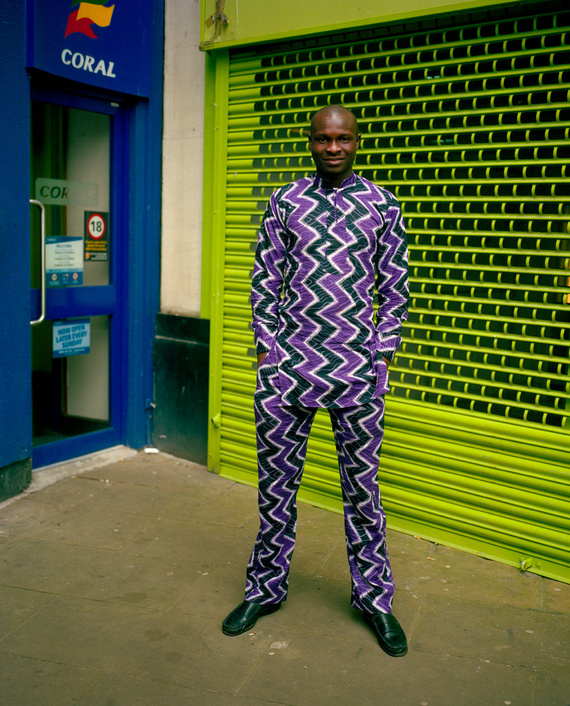
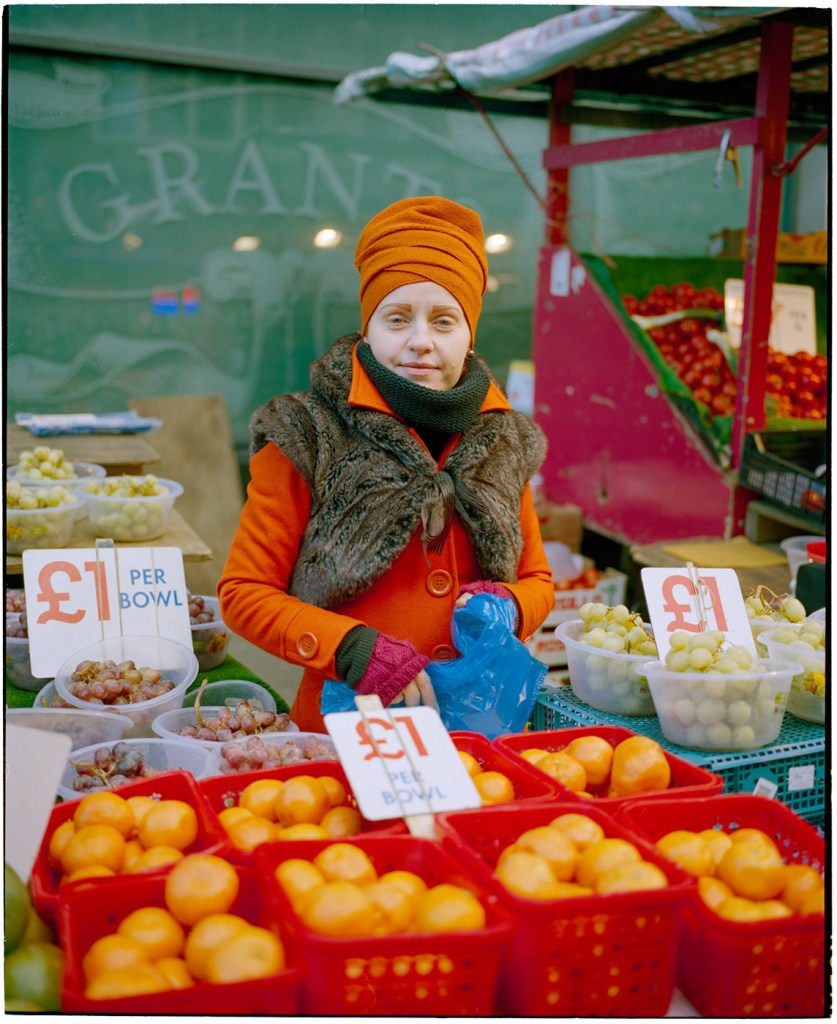
I have been doing a lot of research into Scottish photographer, Niall McDiarmid. His photography style incorporates documenting both the people and landscape of Great Britain and I feel his chosen practices, specifically surrounding his portraiture, are ones which I could apply within this assignment. The first thing I noticed when reviewing his portraits are how colourful and vibrant they are which, according to McDiarmid, “developed naturally”. Not only are the individuals’ clothing brightly coloured, but the intentionally chosen backgrounds are also, resulting in two or more subjects that often complement each other. McDiarmid has a desire to move away from photographing the “greys and muted tones that are so often associated with Great Britain” and I think that statement is certainly true in relation to where I live, especially at this time of year. I could adopt McDiarmid’s methodology and create vivid portraits, incorporating other important elements regularly seen in his work – shapes and textures – that are depicted as being in total contrast to what the individual is wearing. This I feel would work best as a typology series, with the underlying theme being ‘colour’.
McDiarmid, also seems to have a natural talent for intentionally including objects in his portraits, which mimics a specific part of his subjects’ clothing. This is subtle, and only when the viewer studies the image as a whole, is it then realised. I’m not entirely sure what this technique is called, but it works incredibly well and is one I’m considering for this assignment. I think, though, this idea would be the hardest to achieve, as scenarios where both the individual and object are naturally placed together in unison, could be few and far between and with the limited time I have to photograph my subjects’, it could be an unrealistic undertaking.
Oranges £1 Per Bowl, Surrey Street, Croydon – Jan 2016
I have been watching a lot of videos on YouTube on how to successfully photograph strangers’. I’m not interested in the photographic techniques they use and their final results, per say, but rather how they approach and interact with the individuals’. I’ve actually found the information to be incredibly useful and have noted down a number of key points which I plan to use when photographing my subjects’.
Be friendly and explain what I’m doing (I think I’ll say something along the lines of “I’m a photography student and currently doing a project where I need to take a portrait of a stranger. Would you be happy if I took yours?”)
If they say “No”, thank them anyway and move on.
Don’t have my camera visible when I approach them, as they may get intimidated.
Take a few photographs only (This is beneficial for two reasons. 1) Makes the experience less daunting and time consuming for your subjects’. 2) I will have a number of images of the same individual to choose from for my final selection).
Give the subject some direction, if possible (It will make the process easier and more fun for them).
Offer to send your portrait to the subjects’ (I think this is a great way to show your appreciation for their time and will be a nice memory for them).
In addition to this, I realise the importance of taking more than the required amount of portraits, which in this case is five. There is always the possibility that one of my images won’t be good enough for my final selection and to have alternative options available could prove to be helpful. Also, I will not be limiting myself to how many individuals’ feature within a single image. Some may argue that if I’m creating a typology series, the number of people seen within each portrait should possibly be the same throughout, but I would disagree. I feel that this point is irrelevant and shouldn’t be treated as being more important than the actual ‘types’ I wish to explore.
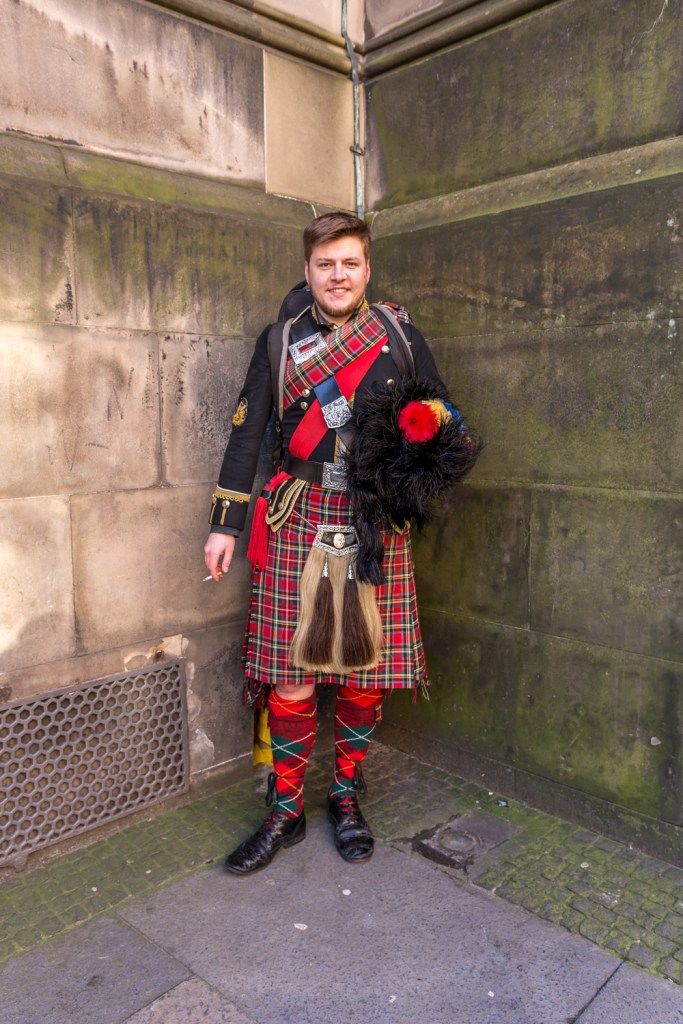
Today I was in town with my family and happened to have my camera with me. I was mainly taking snapshots of them and had no intention of photographing anyone else. However, as I past St Giles’ Cathedral, I saw a piper on his break from entertaining the tourists’, leaning up against the wall and smoking a cigarette. I thought it would make for a good image as the concept seemed quite comical. Whilst approaching him, I thought this would be a great opportunity, and practice, to ask him if I could take his portrait. My thinking was he must get asked that all the time so wouldn’t be phased by the idea. Unbelievably, I wasn’t nervous, and I calmly explained who I was and what I was doing. With a big smile he said “yeah man, cool.” I took one shot only – not sure why – thanked him for his time and walked away. After reviewing the image, I must admit, it’s not great and certainly not good enough to be part of a series. However, I don’t really mind, as this exercise was never about the end result and more to do with confidence building in regards to asking a stranger to take their portrait.
 Iain Barbour - BA (Hons) Photography